How to Choose the Right Lycopene Powder for Supplements
When selecting lycopene powder for supplements, it’s important to know what makes the difference between a high-performing ingredient and one that causes formulation headaches down the road. In a word: source transparency, statistics on bioavailability and physical stability are what you need to be looking for. Standard lycopene extract has quantifiable benefits over fermentation-based microencapsulated lycopene powder such as that from Easy Health employing Blakeslea trispora. It contains >85% cis-isomers via low temperature processing, it disperses cleanly in cold water and has no hexane residue. If you are a B2B buyer for supplements, drinks or fortified foods, this is what you want to construct your sourcing checklist around.
Understanding Lycopene Powders: Types and Features
Not all lycopene ingredients behave the same in a production environment. Before comparing suppliers, it helps to understand what the main product categories actually offer.
Standard Lycopene Powder
Lycopene is usually obtained from tomato oleoresin by use of organic solvents and consists of all-trans isomers. The all-trans form occurs naturally as well, but is less effectively absorbed in the human gut. It also oxidizes fast in the presence of light, heat or air – causing stability concerns in tableting, baking or beverage processing.
Lycopene Oleoresin
Oleoresin is an oil precursor widely utilized in numerous compositions. It is effective in softgel capsules but produces oil leakage in tablets and ring discoloration in liquids. Retailers have complained about oil separation in the bottle for a lot of functional beverage brands. That is a direct effect of employing unencapsulated oleoresin sources.
Microencapsulated Lycopene Powder
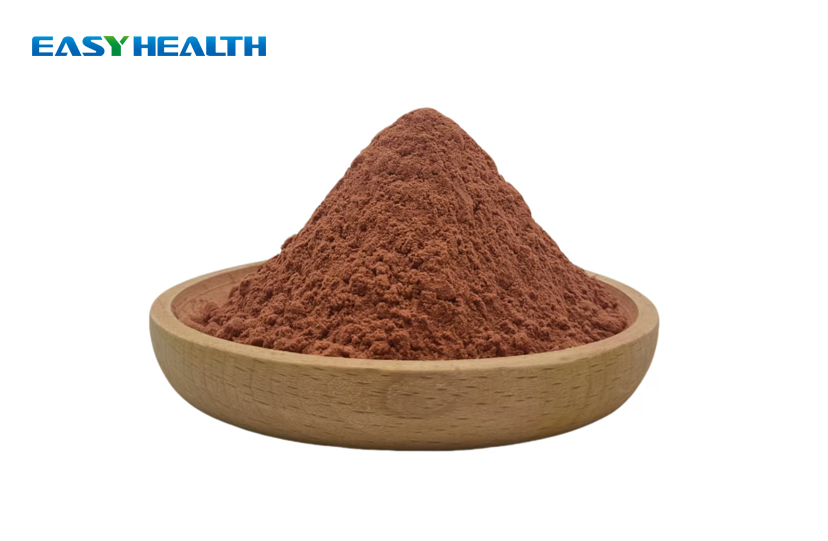
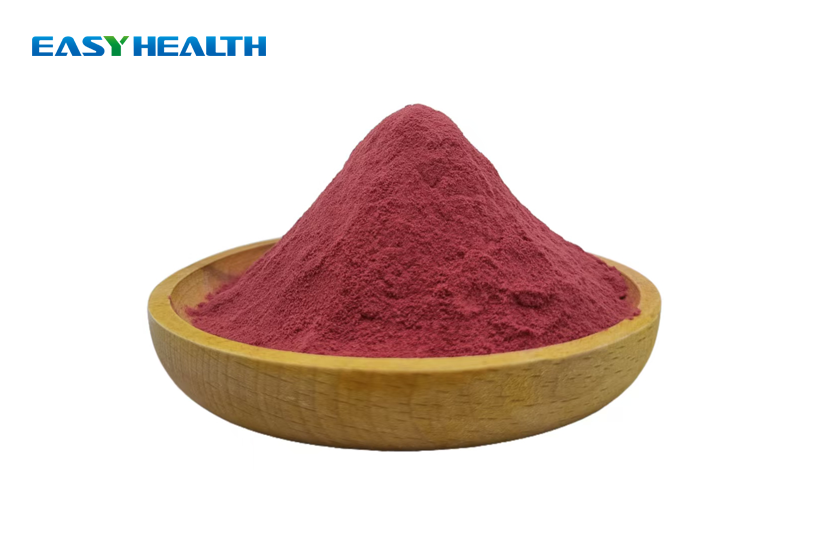
The encapsulation process converts lipophilic lycopene into a free-flowing, water-dispersible powder. The protective matrix—typically modified starch or maltodextrin—shields the active compound from oxidation and heat. Easy Health's fermentation-based version retains >85% cis-isomers, shows 3× higher bioavailability than conventional all-trans lycopene, and disperses in cold water at ≤25°C without sediment or surface oil rings. These properties make it the most formulation-friendly format currently available. These advantages make microencapsulated lycopene powder a superior choice for beverage and supplement formulations.

Key Criteria for Selecting Lycopene Powder for B2B Supplement Formulation
It's time to pick the one that fits your production needs and the rules best once you know what kinds are out there.
Bioavailability and Isomer Profile
In human plasma and tissues the levels of lycopene cis-isomers, especially the 5-cis and 9-cis ones, are higher than those of the all-trans. This has been proven in studies published in journals such as Molecular Nutrition & Food Research. So, it is most probable that cis-isomers have better absorption. If the manufacturer labels it as lycopene powder, then you may trust the claim that it can keep more than 85% of the cis-isomer.
Source and Clean Label Status
If you can show how the lycopene was made, you can put a clean label on your product.” Lycopene was extracted using a solvent from tomatoes, however from Blakeslea trispora, obtained by fermentation, there was no hexane. This enables optimal positioning of natural, non-GMO and clean label foods. This is a huge challenge for OEM/ODM supplement companies that are selling in Whole Foods, iHerb or European health-forward stores.
Heavy Metal and Microbiological Compliance
Both the purchasing and regulatory teams should look at a full Certificate of Analysis for any lycopene ingredient before they give their OK. As levels of 1.0 mg/kg, Cd levels of 1.0 mg/kg, Hg levels of 0.1 mg/kg, and Pb levels of 2.0 mg/kg are thought to be safe for use in food supplements. The Total Plate Count should be less than 1,000 cfu/g, and there should be no E. coli or Salmonella. The lycopene powder from Easy Health meets all of these needs and has batch-level proof. This batch-level compliance documentation makes microencapsulated lycopene powder from Easy Health suitable for food supplement applications in regulated markets.
Comparative Analysis: Microencapsulated Lycopene Powder vs. Other Forms
When you compare each lycopene format to how it is made in real life, it is easier to decide what to buy.
- Standard powder vs. microencapsulated: Standard lycopene powder breaks down faster, doesn't mix with cold water, and doesn't have the cis-isomer profile that backs up claims of bioavailability. Microencapsulated versions address all three gaps with an OSI ≥15 hours, confirmed cold dispersion at ≤25°C, and >85% cis-isomer retention.
- Oleoresin vs. microencapsulated powder: Oleoresin suits softgel manufacturing but fails in tablets, functional beverages, and baked goods. Separation of oil and surface staining in drink bottles are still issues. Encapsulated powder eliminates oil rings and works across tablet presses, extruders, and filling lines without additional emulsifiers.
- Synthetic vs. fermentation-derived: Synthetic lycopene sources carry labeling restrictions in many markets. Fermentation-derived lycopene, especially when verified as hexane-free, supports transparent ingredient declarations and aligns with current clean-label expectations among US and European consumers.
These differences have a direct effect on how well the product sells, how the government positions it, and how much trust people have in it. Any of these things can change sell-through, not just production costs. These commercial and regulatory factors are just as important as unit cost when evaluating microencapsulated lycopene powder for a product launch.

How to Procure High-Quality Lycopene Powder for Your Business?
Identifying the right product is half the process. Getting procurement right requires a structured approach to supplier qualification and order management.
Supplier Certification and Traceability
Work solely with suppliers who have globally recognized certifications. ISO, HACCP, Halal, Kosher, FDA registration, and USDA Organic are the standards for the US and European markets. Raw material to final COA traceability protects you in audits and quality issues. Easy Health keeps complete traceability records on all manufacturing runs.
Sampling and Trial Formulation
Purchase samples first before registering for bulk purchase. For functional beverages, evaluate cold water dispersibility directly by adding powder to water at ≤25°C and observing the mixture for 30 minutes. The pass requirements include no oil ring, no sedimentation and no evident clumping. Check flowability of supplement capsules or tablets . Check for oil leaking after tableting .
Custom Concentration and MOQ Flexibility
Standard quantities of 10% and 20% lycopene may cover most uses for supplements and beverages. If your recipe needs a particular potency, check the supplier can provide unique concentrations ranging from 5 to 30% within an agreed development timescale. Most requests for special OEM/ODM specs may be fulfilled in 3-5 days. Export consolidation packing in 25 kilogram drums.
Conclusion
If you want a lycopene ingredient that is going to function in your product, not only meet specifications on paper, take a hard look at the source, the quality of the encapsulation, the isomer profile and the regulatory documents. Fermentation leads to the production of microencapsulated lycopene powder that is cold water soluble. It is validated by HPLC to work with an OSI of at least 15 hours. Now, a consistent & scalable source of enhanced vitamins drinks & meals. If the seller can provide you batch COAs, let you figure out the concentration, and help you with the technical testing, you have a sourcing relationship that will go beyond product launch.

FAQ
Does fermentation-derived lycopene perform differently than tomato-extracted lycopene?
Yes. Blakeslea trispora fermentation generates lycopene without the need for organic solvent extraction and leaves no hexane residue. The component enables clean label claims that a tomato oleoresin treated with hexane cannot. The procedures designed for fermentation preserve more of the cis-isomer, resulting in similar or superior bioavailability profiles.
Will microencapsulated lycopene powder cause off-flavors in beverages?
At normal use levels, the tomato taste profile is low and is not detected in flavored drinks. It contains the sensory impression in the encapsulation matrix. It provides freedom for formulators in the formulation of flavors without masking chemicals.
What documentation should I request before placing a bulk order?
Request comprehensive COA containing HPLC potency test, heavy metals (Pb, As, Cd, Hg), microbiological counts, moisture and surface oil content. Check also allergy declaration, place of origin and shelf life date. Request separate declaration for Non-GMO and hexane-free, for OEM/ODM brands.
How should bulk lycopene powder be stored?
Store in the original sealed container below 25°C, away from direct light and moisture. Under these conditions, the shelf life is 24 months from the date of manufacture.
Can this ingredient support cardiovascular or skin health claims on supplement labels?
Lycopene's antioxidant mechanism—neutralizing singlet oxygen and free radicals—has been studied in the context of cardiovascular and skin health. Structure/function claims referencing antioxidant support are generally permissible in the US under DSHEA guidelines, provided they are accurate and substantiated.
Partner with Easy Health for Reliable Lycopene Powder Supply
There is microencapsulated lycopene powder for sale at Easy Health. This powder is made from fermentation. It usually comes in 10% to 20% concentrations, but you can also order it in concentrations from 5% to 30%. We can offer brands with microencapsulated lycopene powder that they can count on for both scientific accuracy and supply reliability. We are registered with the FDA, ISO, Halal, Kosher, and other organizations, and we can fully track each batch and help with R&D trials. You can email devin@easyhealthbio.com to ask for a sample or COA.
References
1. Shi, J., & Le Maguer, M. (2000). Lycopene in tomatoes: Chemical and physical properties affected by food processing. Critical Reviews in Food Science and Nutrition.
2. Böhm, V., et al. (2012). Bioavailability of lycopene isomers from a supplement source. Molecular Nutrition & Food Research.
3. Rao, A. V., & Rao, L. G. (2007). Carotenoids and human health. Pharmacological Research.
4. Pérez-Magarino, S., et al. (2020). Microencapsulation of lycopene: Stability and release mechanisms in food systems. Food Chemistry.
5. Stahl, W., & Sies, H. (1996). Lycopene: A biologically important carotenoid for humans? Archives of Biochemistry and Biophysics.
6. Nara, E., et al. (2001). Absorption of cis-isomers of lycopene in human subjects. British Journal of Nutrition.