What Affects the Quality of Microencapsulated Lycopene Powder?
The quality of microencapsulated lycopene powder depends on several interconnected factors: the purity and source of the lycopene itself, the choice of encapsulation wall material, the processing method used during manufacture, and the rigor of quality testing applied to every batch. When any of these variables shifts, the final product's stability, dispersibility, bioavailability, and shelf life can change significantly. For B2B buyers sourcing this ingredient for functional beverages, dietary supplements, or fortified foods, understanding these factors is the first step toward making a confident procurement decision.
Lycopene Source and Purity: The Foundation of Quality
Before any encapsulation takes place, the quality of the raw lycopene sets a ceiling on everything that follows.
Natural Fermentation vs. Solvent Extraction
Lycopene made by fermentation with Blakeslea trispora is significantly different from lycopene made from tomato extracts using hexane. Fermentation makes the ingredients cleaner because there are no solvent residues left over, which could make a clean-label claim less accurate. The source is important for brands that market their goods as natural or non-GMO.
Cis-Isomer Content and Bioavailability
In the body, not every lycopene molecule acts the same. It was found in the British Journal of Nutrition (2002) that cis-isomers of lycopene are more easily taken than all-trans forms. Using low temperatures to make lycopene powders that keep more than 85% of their cis-isomer can make them about 3 times more bioavailable than regular all-trans lycopene powders.
HPLC Verification and Concentration Accuracy
Active ingredient assay by HPLC is the standard way for the industry to confirm the concentration of lycopene. Commercial grades often have specifications of 10–20%, and OEM customisation is possible from 5–30%. If there isn't HPLC data on every batch, concentrations that are given are just claims and not proven facts.
Key Quality Dimensions: Encapsulation Materials and Method
How lycopene is enclosed within its protective matrix shapes nearly every downstream performance characteristic.
Wall Material Selection
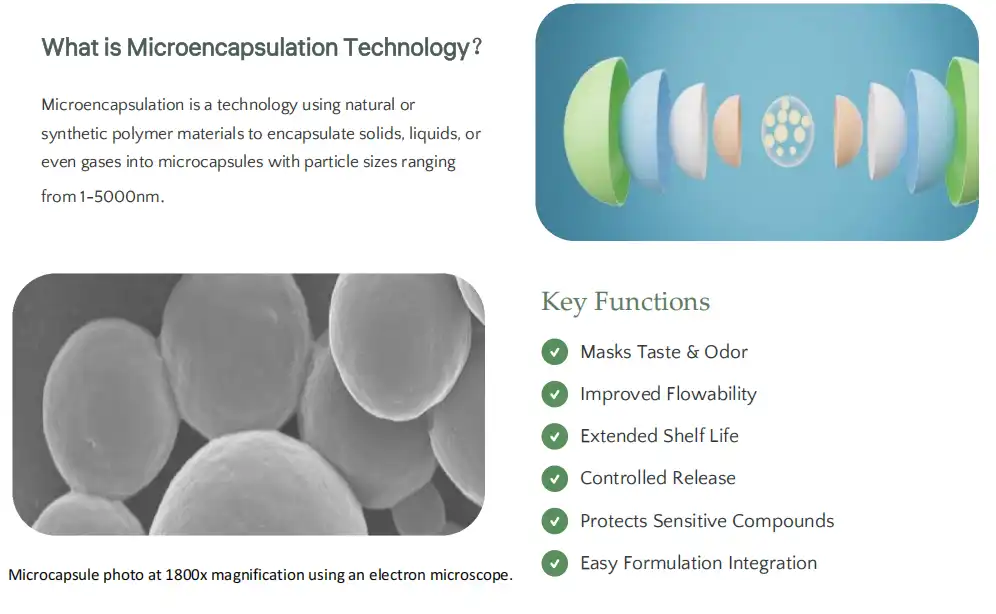
Common encapsulation carriers for microencapsulated lycopene powder include modified food starch, maltodextrin, and gum arabic. Each one has a different mix of resistance to water, ability to spread cold water, and protection against oxidation. For example, a triple-wall architecture provides a better oxygen barrier than single-layer coatings. This directly extends the shelf life and keeps the colour true in retail settings.
Encapsulation Technology: Spray Drying vs. Other Methods
Spray drying is the most common industrial method. It works well for large-scale, consistent production where all the parameters need to be carefully managed. There are other options, like coacervation and fluid-bed coating, which have different release profiles. The way you choose changes the distribution of particle sizes, the amount of oil on the surface, and how evenly the active ingredient is spread out in the powder.
Surface Oil as a Quality Indicator
Surface oil, which is lycopene that is on the outside of the capsule wall instead of inside, shows how well the capsules are sealing. When there is more surface oil, more of the active ingredient is exposed to light and oxygen, which speeds up the oxidation process. If the specification says ≤1.0% surface oil, it means that the lycopene is really protected by a good encapsulation process.
Production and Processing Parameters That Influence Quality
Just as the starting ingredients have an effect on the finished powder, so do the conditions of production during encapsulating.
GMP Environment and Temperature Control
It's not strong in light or heat. The cis-isomer profile is kept when processing is done in a GMP-approved facility with controlled temperature and humidity. This also stops oxidative degradation from happening too soon. Spray drying at low temperatures is very important to keep the bioactive isomer ratio that sets a high-performance ingredient apart from a normal one.
Particle Size and Flowability
Both how the process works and how well the finished product works depend on how the particle sizes are spread out. There are particles in powder that are only 95% small enough to fit through a 40-mesh screen. The powder always moves through tablet presses and filling machines. When particles of different sizes get mixed together, they lead to uneven doses, caking in hoppers, and issues with quality further down the line.
Oxidative Stability Index (OSI) as a Shelf-Life Benchmark
OSI checks how long something that has fat in it can stay fresh before it goes bad. It means that the product has strong oxidation protection if the OSI number is ≥15 hours. This means that the colour and strength will stay the same during its shelf life. This number is important for everyone in the supply chain for a functional drink that will be sold for 12 to 18 months.
Application-Specific Quality Considerations for B2B Buyers
Wherever it goes, the same microencapsulated lycopene powder does different things. By matching the ingredient requirements to the end use, you can avoid expensive cycles of reformulation.
Here are the three main areas of use where high standards are different:
- Functional beverages and wellness shots: Cold water dispersibility at ≤25°C is the top priority. Poor dispersibility produces oil rings, sediment, and container staining—problems that trigger retailer complaints and delistings. A high-quality encapsulated powder disperses uniformly in cold liquid without any emulsifier additions, giving formulators a visually clean product with a natural red color derived from the carotenoid itself.
- Dietary supplements (tablets and capsules): Flowability and compression behavior determine tabletting efficiency. Oil bleeding from under-encapsulated powders causes sticking, uneven tablet weight, and storage instability. The absence of hexane residues is an essential claim for clean-label supplement brands subject to third-party audits.
- Fortified foods and baked goods: Heat stability during extrusion and baking separates encapsulated lycopene from raw oleoresins. A well-engineered matrix protects the active ingredient through processing temperatures while keeping the tomato flavor contribution negligible at standard usage levels.
Foods and baked items that are fortified: The ability to withstand heat during molding and baking is what sets encapsulated lycopene apart from raw oleoresins. A well-designed grid keeps the active ingredient safe at high temperatures while the tomato taste doesn't make a difference at normal usage levels.
Supplier Selection and Procurement Strategies
There's no point in having a good product if the supplier can't deliver it quickly, consistently, and with good documentation.
Certifications and Traceability Documentation
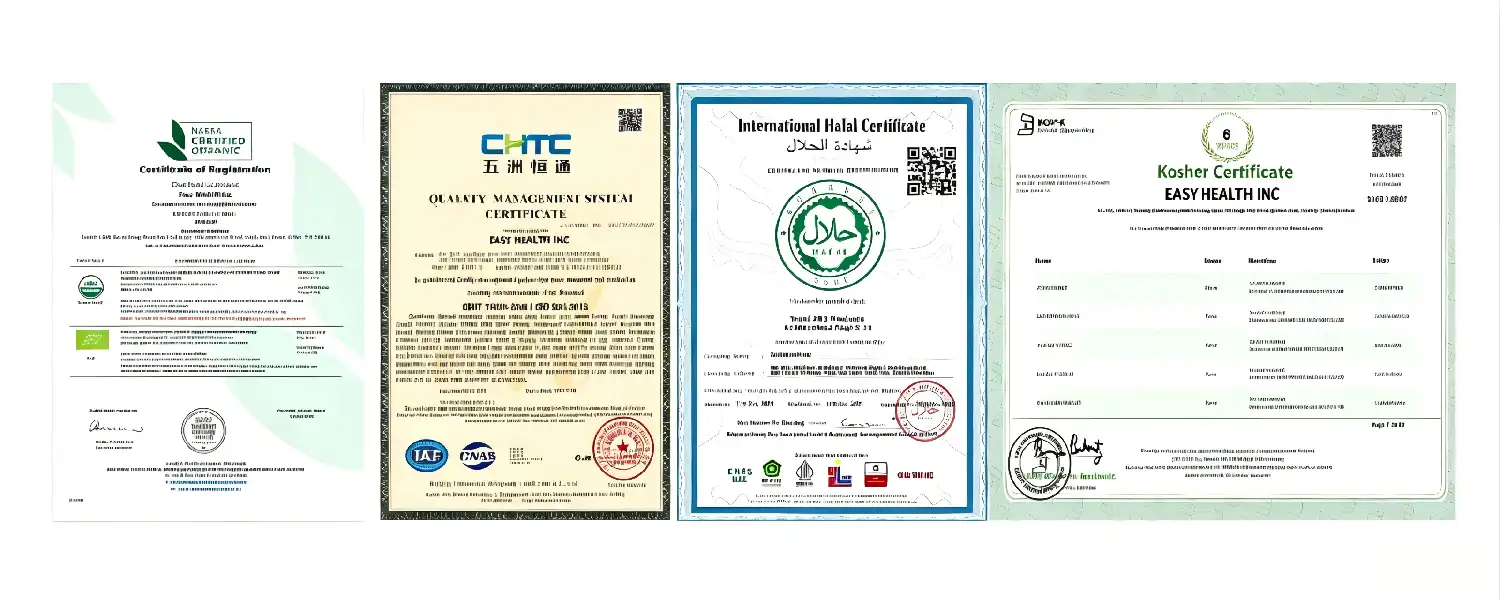
People who buy OEM/ODM goods in North America and Western Europe need to start following the rules with the seller. A finished product needs to have ISO approval, FDA registration, Halal, Kosher, or USDA Organic credentials in order to get through pre-market review. These credentials aren't just for marketing. When regulators ask for supply chain documentation, buyers are safe because they can track each batch from the time the raw materials are received until the final COA is signed.
Evaluating Heavy Metal and Microbial Data
The government decides how little heavy metal (Hg) is safe for food. ICP-MS tests confirmed that the product has Pb levels of less than 2 mg/kg, As levels of less than 1 mg/kg, Cd levels of less than 1 mg/kg, and Hg levels of less than 0.1 mg/kg. These levels are well below the limits set by regulators in major markets. Pharmaceutical-grade ingredient supplies should not have any E. coli or Salmonella bacteria and should have a microbial count of less than 1,000 cfu/g total plate count.
OEM Customization and Lead Time Commitments
When a brand has a certain date they want to release a product, they need to be able to make different levels of lycopene from 5% to 30% within a certain amount of time. It's safer to buy when suppliers can finish custom orders in 3–5 days for standard requests and keep 10% and 20% grades in stock as a safety measure. Tight start dates mean more buying risk.
Conclusion
Quality in microencapsulated lycopene powder isn't just a single specification; it's the result of choosing the right sources, being disciplined in the manufacturing process, and holding suppliers accountable. When buyers look at each of these layers separately instead of just comparing price per kilogram, they always find ingredients that work well in the final product. The most important specs are cis-isomer retention, OSI value, cold water dispersibility, surface oil content, and heavy metal and microbial data that can be checked.
FAQ
Does fermentation-derived lycopene differ from tomato-extracted lycopene in quality?
Yes. Fermentation using Blakeslea trispora produces lycopene without hexane or other organic solvents, which enables a clean-label declaration. The isomer profile can also be more consistent batch to batch compared to agricultural tomato crops, which vary with season and origin.
What does OSI ≥15 hours mean for my product?
OSI measures oxidative resistance under accelerated conditions. A score of ≥15 hours indicates strong protection against rancidity and color fading, which supports a 24-month shelf life for finished products stored under standard conditions.
Why does surface oil content matter?
Surface oil is the fraction of lycopene sitting outside the capsule wall. It oxidizes quickly and can cause premature color degradation and off-odors. A surface oil specification of ≤1.0% confirms that encapsulation efficiency is high.
Can I get custom lycopene concentrations for an OEM product?
Yes. Concentrations from 5% to 30% are available for OEM and ODM projects, with full COA and batch documentation provided for each production run.
Is there a minimum order for custom specifications?
Sample quantities are available for trial and formulation testing before committing to production volumes. Contact the supplier directly to discuss MOQ and development timelines for your specific application.
Partner with Easy Health for Verified Microencapsulated Lycopene Powder
For more than 11 years, Easy Health Inc. has sold lycopene powder that is contained and made from fermentation to functional beverage brands, supplement makers, and OEM partners. Our product meets the standards of ISO, FDA, Halal, Kosher, and USDA Organic. Each shipment has a full batch traceability and an HPLC-verified concentration. We can make stock grades of 10% or 20% or a custom specification between 5% and 30%. Our R&D team can help you with your formulation from the trial sample to the commercial scale. You can email our technical team at devin@easyhealthbio.com or go to easyhealthinc.com to ask for a sample or COA. We are ready to help you start your next product as a reliable provider of microencapsulated lycopene powder.
References
1. Rao, A. V., & Agarwal, S. (1999). Role of lycopene as antioxidant carotenoid in the prevention of chronic diseases. Nutrition Research, 19(2), 305–323.
2. Stahl, W., & Sies, H. (1992). Uptake of lycopene and its geometrical isomers is greater from heat-processed than from unprocessed tomato juice in humans. Journal of Nutrition, 122(11), 2161–2166.
3. Clinton, S. K. (1998). Lycopene: Chemistry, biology, and implications for human health and disease. Nutrition Reviews, 56(2), 35–51.
4. Shi, J., & Le Maguer, M. (2000). Lycopene in tomatoes: Chemical and physical properties affected by food processing. Critical Reviews in Food Science and Nutrition, 40(1), 1–42.
5. Basu, A., & Imrhan, V. (2007). Tomatoes versus lycopene in oxidative stress and carcinogenesis: Conclusions from clinical trials. European Journal of Clinical Nutrition, 61(3), 295–303.
6. Sharoni, Y., Linnewiel-Hermoni, K., Khanin, M., Salman, H., Veprik, A., Danilenko, M., & Levy, J. (2012). Carotenoids and apocarotenoids in cellular signaling related to cancer: A review. Molecular Nutrition & Food Research, 56(2), 259–269.


_1784173402819.webp)