How To Take Curcumin Powder
Taking curcumin powder effectively requires understanding both dosage and delivery methods. For Microencapsulated Curcumin Powder, the recommended approach involves mixing 500- 1000 mg of the powder into beverages or food, ideally with healthy fats to enhance absorption. Advanced microencapsulation technology has transformed traditional turmeric supplementation by protecting curcuminoids from gastric degradation and significantly improving bioavailability. When combined with natural piperine at 5mg/g, this formulation achieves up to 15 times higher absorption compared to standard extracts, making proper administration essential for realizing the full anti-inflammatory and antioxidant benefits this powerful botanical compound offers.
Understanding Curcumin and Microencapsulated Curcumin Powder
Curcumin is one of the most studied polyphenolic chemicals in nature. It is taken from the rhizomes of Curcuma longa. Traditional curcumin has serious problems that have kept it from being used in medicine in the past, even though its healing effects are well known. The main problem is that curcumin supplements are not very bioavailable when taken by mouth. Standard curcumin supplements have absorption rates below 1% because they are quickly broken down, absorbed, and then quickly flushed out of the body.
Microencapsulated Curcumin Powder technology is a big step forward in how plant ingredients are delivered. Using high-tech methods like spray drying or fluid-bed coating, this process surrounds curcuminoid particles with protective wall materials. The end result is a stable, smooth powder that keeps its bioactive properties while making its useful qualities much better.
Key Differences Between Standard and Microencapsulated Formulations
Standard curcumin powder makes it hard to make many things. Because it is hydrophobic, it doesn't dissolve easily in water. This makes it hard to use in drinks and makes it harder to mix with digestive fluids. Not only that, but about 60% of regular curcumin breaks down in stomach acid, making it much less available for absorption in the intestines.
These problems are fixed in microencapsulated versions by changing the way they are built. The covering protects the curcuminoids from things that could damage them in the surroundings, like light, heat, and changes in pH. This layer keeps the safety of the ingredients during the manufacturing process and increases the shelf life by stopping oxidative breakdown. The technology also allows for controlled release systems, which make sure that the active chemicals get to the intestines, which is the best place for absorption.
Distinguishing Microencapsulation from Liposomal Delivery
Both technologies make things more bioavailable, but they do so in different ways. Liposomal versions put curcumin inside phospholipid bilayers that look like cell walls. This makes it easier for cells to take the medicine directly. Microencapsulation uses different coating materials, such as proteins, carbohydrates, or lipids. This makes it possible to use it in a lot of different ways and solves stability problems that some liposomal preparations still have.
These differences are important for procurement workers who are making dietary supplements, functional drinks, or nutritionally enhanced goods because they help them choose the right ingredients. When mixed with dry ingredients, microencapsulated powders stay stable and can still be mixed with cold water. This makes them very useful for ready-to-mix products and meal replacements.
How Microencapsulation Enhances Curcumin Absorption and Effectiveness
There is a lot of scientific writing about the problem with curcumin's bioavailability. Curcumin is quickly changed into glucuronide and sulfate metabolites in the liver and intestinal walls. These are then quickly flushed out of the body before they can have any cellular effects. Microencapsulated Curcumin Powder changes this pharmacokinetic profile in a basic way in a number of ways.
Protection Through the Digestive Tract
Modern enteric coating systems make walls that respond to pH and stay in place in the acidic environment of the gut. At Easy Health, our formula uses special coatings that don't dissolve until they reach pH levels above 6.5, which are normal for the small intestine. Over 85% of curcuminoids get to the gut environment in their active form thanks to this focused release mechanism. This is higher than the 40% survival rate of curcumin that is not protected.
The protection structure also keeps the curcuminoids from being broken down by enzymes as they move through the stomach. Digestive enzymes that normally break down curcumin molecules that are exposed can't get through the microencapsulated barrier. This keeps the integrity of the ingredient until it reaches the best place to be absorbed.
Synergistic Enhancement with Natural Piperine
The best bioavailability improvement happens when natural absorption promoters are mixed with microencapsulation. Piperine, a stimulant found in black pepper, stops glucuronidation in the liver and intestines, which is the main process that gets rid of curcumin quickly. This mixture is 15 times more bioavailable than regular curcumin extracts when it is made at a 5 mg/g concentration using naturally occurring piperine instead of manufactured options.
This relationship goes beyond simple measures of intake. Results from clinical studies show that higher bioavailability leads to better anti-inflammatory markers, with lower levels of C-reactive protein and inflammatory cytokines in the body. Also, the antioxidant power goes up because the protected curcuminoids keep fighting free radicals even after they've been absorbed.
Full-Spectrum Advantage
Most commercial curcumin products only have the C1, C2, and C3 compounds, which are the pure curcuminoids. These products don't have the naturally occurring synergists that are found in whole turmeric. Full-spectrum extraction keeps turmerones and volatile oils, which have molecular effects that work well together. This group of chemicals works with curcuminoids to possibly make the general therapeutic benefits stronger in ways that curcumin alone can't.
This difference is very important for business-to-business clients in the pharmaceutical and nutraceutical industries. People who want whole-food supplements like products that focus on holistic plant profiles. The preserved phytochemical diversity may offer more biological benefits than standardized curcuminoid-only formulas.
Effective Usage and Dosage of Microencapsulated Curcumin Powder
The right way to dose depends on the product and group being treated. Clinical studies and industry standards help make sure that different types of products are safe and successful when they are added.
Dosage Guidelines by Application
Most joint health and anti-inflammatory pills have between 500 and 1000 mg of curcuminoids in each dose, which should be taken once or twice a day. Because Microencapsulated Curcumin Powder formats are more bioavailable, lower doses can have therapeutic effects that are similar to those of higher doses of standard extracts. This amount of economy saves money and makes it easier for people to follow their prescriptions.
When used in functional drinks, the amount of 200–500 mg per serving is usually enough because microencapsulated powder dissolves easily in water and can be spread out evenly in liquids. The ability to dissolve in cold water gets rid of the sedimentation problems that come with regular turmeric extracts in ready-to-drink forms.
Topical formulations that aim to improve skin health and slow down the aging process usually have 1% to 3% curcumin by weight. The protective microencapsulation stops oxidation before it happens, which would hurt the product's color stability and biological activity while it's on the shelf.
Incorporation Methods for Different Product Forms
Because it is free-flowing, microencapsulated powder mixes easily with other ingredients when making vitamins in the form of capsules or tablets. The 95% passage through 40-mesh sieving makes sure that the particles are spread out evenly, which stops them from separating during blending. Keeping the moisture level below 5% reduces the chance of clumping and helps with the compression properties of tablet production.
For use in drinks, the powder mixes easily with cold water and doesn't need high-shear mixing tools. This feature makes production easier and lets forms like single-serve stick packs be made that are easier for customers to use. The stable orange-red color makes golden milk drinks, turmeric lattes, and recovery drinks look better without ruining them, like turmeric that isn't in a capsule.
Addressing Potential Side Effects Through Formulation
Some of the bad effects that come with taking a lot of curcumin are naturally lessened by microencapsulation. The enteric protection reduces the stomach discomfort that some people who take versions that aren't protected have reported. By sending curcuminoids to the intestines instead of letting concentrated chemicals touch the stomach walls, digestive pain is much less likely to happen.
The controlled release also stops sudden rises in plasma concentration, which could make sensitive people feel a little sick. Gradual absorption in the intestines leads to more stable blood levels, which improves both tolerance and cellular activity during the dose interval.
Procuring High-Quality Microencapsulated Curcumin Powder for B2B Clients
Thoroughly evaluating suppliers is the first step in quality assurance. To make sure that ingredients are safe and that all target markets follow the rules, procurement managers have to look at a lot of different factors.
Essential Quality Certifications and Testing
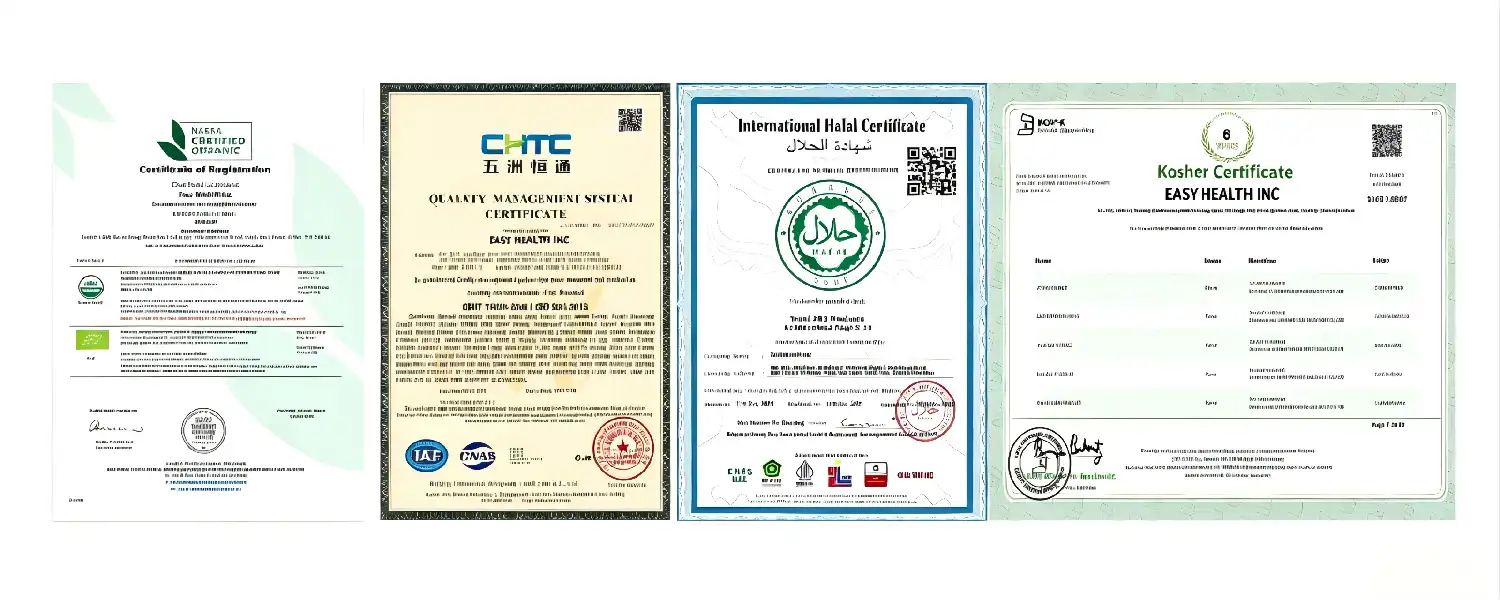
ISO certification shows that a company follows international standards for quality management. This makes sure that the manufacturing process is consistent and that the products can be tracked. GMP compliance is especially important for companies that work with pharmaceuticals because they have to keep products clean and keep records on each batch that is made, which are higher standards than those for food. Halal and Kosher approvals make it easier for brands that want to reach certain groups of people to get into new markets.
As part of the analytical proof process, HPLC testing should be used to measure the amount of curcuminoids present, usually between 10 and 20 percent of the total curcuminoids in Microencapsulated Curcumin Powder forms. This chromatographic method accurately identifies and measures the amount of natural products compared to manmade adulterants that might look the same when tested with less advanced methods.
There is no way around the need for heavy metal research. Levels of lead, arsenic, cadmium, and mercury must be kept well below strict limits. This is especially true for goods going to North America and Europe, where regulations are becoming stricter. Our standards keep lead below 2 mg/kg, arsenic below 1 mg/kg, cadmium below 1 mg/kg, and mercury below 0.1 mg/kg, which is higher than many industry standards.
Evaluating Microbiological Safety
Pathogen screens, yeast and mold counts, and total plate counts all protect end users and the brand's image. Standards that say the overall plate count must be less than 1000 cfu/g and the yeast/mold count must be less than 50 cfu/g keep microbes stable without using harsh chemical stabilizers. Bad things happened to E. coli and Salmonella, showing that there is no fecal contamination or dangerous pathogens that could cause products to be recalled.
These specs are in line with both USP requirements and EU rules, which makes it easier to sell products around the world without having to change the recipe. This compliance simplicity is worth a lot more to brands that do business around the world than just the cost of the ingredients.
Supply Chain Transparency and Traceability
Full traceability from growing turmeric to making the final powder lets us quickly address quality concerns and backs up claims of sustainability that are becoming more important to environmentally conscious consumers. The origin should be confirmed, the extraction method, the encapsulation process parameters, and the storage conditions during distribution should all be written down.
We keep detailed batch records that show every step of the production process, from getting the Curcuma longa rhizomes from trusted farming partners to making the finished microencapsulated powder. This makes it easier for regulatory reports that are needed for pharmaceutical uses and gives procurement teams trust in the consistency of the products they buy.
Customization and Private Labeling Opportunities
Flexible production skills let formulas be changed to fit the needs of each market. Curcuminoid concentration can be tweaked for different uses. Higher percentages work best for concentrated supplements, while lower percentages work best for adding to food when subtle flavor profiles are important. Particle size distributions can be changed to fit different delivery forms, like making it easier for capsules to flow or making it easier for quick drink mixes to spread out.
Private labeling services help brands stand out in crowded markets without having to spend money on making equipment. Customized package choices include everything from bulk drums for large manufacturers to consumer-ready bottles with unique labels. These options support a wide range of business models, from contract manufacturing to distributing finished goods.
Maximizing the Benefits of Microencapsulated Curcumin in Your Product Line
Strategically combining improved curcumin formulations gives companies an edge over their competitors by making products work better and telling more interesting marketing stories.
Formulation Strategies for Enhanced Consumer Appeal
Microencapsulated Curcumin Powder works best when mixed with other ingredients that help the joints, such as glucosamine, chondroitin, or collagen peptides. The natural anti-inflammatory process works with structural support chemicals to provide all-around joint health in easy-to-use forms. Because it is more bioavailable, lower doses are needed to see effects, which makes consumers think the product is more valuable and works better.
Microencapsulated curcumin is sold in recovery drinks for athletes as a natural option to manufactured anti-inflammatory drugs. Clean label appeals to athletes who care about their health and want plant-based recovery support. Adding electrolytes, amino acids, and sugars to a formula together makes healing matrices that meet many needs at once after exercise.
Case Studies in Product Innovation
Leading brands of functional drinks have successfully released drinks with turmeric in them by using microencapsulation technology to make stable, appealing products. The ability to dissolve in cold water gets rid of the chalky taste that was a problem with earlier tries, and enteric protection makes sure that people get enough bioavailable curcuminoids. The market response has been strong, and goods have been able to charge higher prices because they use better chemical technology.
Supplement companies focusing on liver health and detoxification have found particular success combining microencapsulated curcumin with milk thistle, N-acetylcysteine, and other hepatoprotective compounds. The targeted intestinal release supports healthy liver function without the gastric irritation some individuals experience with standard formulations. Consumer reviews often talk about how well something works and how well it's tolerated, which leads to return purchases and good word-of-mouth marketing.
Communicating Scientific Benefits to End Consumers
Being open about the problems with the bioavailability of standard curcumin helps people learn, which builds brand authority. Being able to explain how microencapsulation solves these issues shows that you are technically skilled and genuinely care about how well your product works. The 15-fold increase in bioavailability and the 85% rate of intestinal release should be emphasized in marketing materials as clear ways that this product is different from other turmeric products.
Third-party testing evidence and references to written studies make claims more credible. People are paying more attention to the quality of supplements, so being open about how they were tested and the results is now a competitive advantage instead of a governmental tick. Brands that share certificate of analysis data and explain what different specs mean earn the trust of their customers, who then stay loyal to those brands.
Conclusion
Microencapsulated Curcumin Powder is a big step forward in the technology of natural health ingredients. It fixes basic problems that have had a negative impact on the healing ability of this amazing plant substance in the past. Modern formulations deliver curcuminoids more effectively than ever before by using protective encapsulation, strategic bioavailability enhancement with natural piperine, and enteric release mechanisms. For business-to-business clients in the cosmetics, functional foods, and dietary supplements industries, choosing high-quality microencapsulated ingredients sets products apart by delivering better performance and customer happiness. As the market for natural products that are backed by evidence grows, curcumin formulations that combine ancient botanical knowledge with cutting-edge delivery technology are set up for continued growth and innovation.
FAQ
1. How should I store microencapsulated curcumin powder to maintain quality?
Place the powder somewhere cool and dark, away from heat sources and direct sunlight. The microencapsulation makes the product more stable, but the best way to keep it fresh for a long time is to keep the temperature below 25°C and the relative humidity below 60%. Keep containers tightly closed so that wetness doesn't get inside and change the flowability or raise the risk of rusting. If you store it the right way, it will last for 24 months and still have the same amount of curcuminoids and microencapsulation stability.
2. Can microencapsulated curcumin be mixed with hot liquids?
Yes, the powder can handle the mild heat that comes from drinks like golden milk or turmeric tea. Curcuminoids are kept safe during short periods of warmth by microencapsulation. But don't boil for too long or at temperatures above 80°C, as these can damage the enteric coating that is meant to release the food into the intestines. To get the most bioavailability out of the powder, add it to hot drinks after taking them off of direct heat, not while they are still cooking.
3. What makes full-spectrum turmeric extract superior to isolated curcuminoids?
Full-spectrum extracts retain turmerones and volatile oils naturally present in turmeric rhizomes, compounds that isolated curcuminoid products lack. These phytochemicals demonstrate complementary biological activities and may enhance overall therapeutic effects through synergistic mechanisms. While isolated curcuminoids provide standardized potency, whole-spectrum formulations offer the complete botanical profile that traditional medicine systems have valued throughout history, potentially delivering broader health benefits than single-compound approaches.
Partner with Easy Health for Premium Microencapsulated Curcumin Powder
For over 11 years, Easy Health has been working with plant extracts and is ready to help you reach your product development goals with pharmaceutical-grade Microencapsulated Curcumin Powder. As a reliable provider to the nutraceutical industry around the world, we offer full-spectrum turmeric products that are improved with natural piperine to make them 15 times more bioavailable. We also offer enteric coats that achieve 85% intestinal release rates. Our many quality certifications, such as ISO, GMP, Halal, Kosher, and FDA registration, make sure that we meet the standards of all international markets. Our flexible OEM and ODM services let you make formulations that are exactly what you need. Feel free to email our technical team at devin@easyhealthbio.com to talk about how our microencapsulated curcumin powder manufacturing capabilities can elevate your product line through superior absorption technology and consistent pharmaceutical-grade quality.
References
1. Anand P, Kunnumakkara AB, Newman RA, Aggarwal BB. Bioavailability of curcumin: problems and promises. Molecular Pharmaceutics, 2007.
2. Prasad S, Gupta SC, Tyagi AK, Aggarwal BB. Curcumin, a component of golden spice: from bedside to bench and back. Biotechnology Advances, 2014.
3. Hewlings SJ, Kalman DS. Curcumin: A Review of Its Effects on Human Health. Foods, 2017.
4. Schiborr C, Kocher A, Behnam D, Jandasek J, Toelstede S, Frank J. The oral bioavailability of curcumin from micronized powder and liquid micelles is significantly increased in healthy humans and differs between sexes. Molecular Nutrition & Food Research, 2014.
5. Jurenka JS. Anti-inflammatory properties of curcumin, a major constituent of Curcuma longa: a review of preclinical and clinical research. Alternative Medicine Review, 2009.
6. Shoba G, Joy D, Joseph T, Majeed M, Rajendran R, Srinivas PS. Influence of piperine on the pharmacokinetics of curcumin in animals and human volunteers. Planta Medica, 1998.


_1784173402819.webp)