What Determines the Quality of Beta Carotene Powder?
The quality of beta carotene powder comes down to six measurable factors: the production source, isomer profile, encapsulation technology, color stability under heat and acid, surface oil content, and certification completeness. Among all available forms, microencapsulated beta carotene powder stands apart because its protective matrix directly governs how the active ingredient performs inside your finished product. A powder that looks identical on a spec sheet can behave very differently at pH 2.5 or 130°C—and that difference shows up in your batch color, your shelf-life data, and your customer complaints.
Understanding Beta Carotene Powder and Its Quality Parameters
Beta carotene is a carotenoid that dissolves in fat and naturally turns foods orange-yellow. It works as a precursor to vitamin A. When it is subjected to oxygen, UV light, and heat above 120°C in its free crystalline state, it breaks down quickly. This problem is fixed by microencapsulation, which surrounds the active molecule in a double-wall matrix made of modified starch and a secondary barrier layer. This slows oxidation and keeps the color value stable during processing.
What Microencapsulation Actually Does?
By physically separating the core carotenoid from environmental triggers, the protective wall slows down the rate at which it oxidizes. The hydrophilic carrier makes it possible for the oil-soluble color to spread evenly in water, which is what cold-water dispersibility (CWD) is all about. This is important for making gummies, filling drinks, and making fizzy pills, where water will be present.
Why Isomer Profile Is a Hidden Quality Signal?
Most buying teams start with potency checks and stop. A more informative statistic is the ratio of the cis to trans isomer. In the small intestine of humans, cis-isomers of beta carotene are superior than all-trans solid forms in micellarization, according to a research in the Journal of Agricultural and Food Chemistry. Synthetic beta carotene has very few cis-isomers. Cis content of 10%-30% is a molecular marker that may be confirmed using HPLC (Blakeslea trispora fermentation powder naturally contains such concentration). This isomer profile renders microencapsulated beta carotene powder obtained from fermentation more bioavailable than synthetic equivalents.
Key Physical Parameters to Inspect
The moisture level (≤5%), the peroxide value (≤2.5 mmol/kg), and the sieve analysis (95% passing 40 mesh) show how the powder moves, mixes, and is stored. Surface oil at a level of ≤1.0% stops mold growth in gummy lines and oxidative rancidity while the lines are stored in a warehouse.

Core Factors Determining the Quality of Beta Carotene Powder
Quality isn't just a number. It looks at the source, the chemistry, the performance of the processing, and the company's regulatory standing.
Source: Fermentation vs. Synthetic
Beta carotene made by Blakeslea trispora fermentation is similar to the complex carotenoids found in whole foods. The fermentation process supports non-GMO third-party verification and clean label claims, which are two requirements that are becoming more and more difficult to meet in North American and Western European retail channels. No matter how strong it is said to be, synthetic all-trans beta carotene doesn't have any of these positioning benefits.
Encapsulation Material and Wall Integrity
The encapsulant matrix controls both how stable the substance is and how easily it can spread. Under acid and heat stress, a double-wall system—which has a main lipid barrier on top of a polysaccharide shell—works better than a single-wall system. At Easy Health, our double-wall technology keeps more than 90% of the color at pH 2.5 and 130°C, which is below 70% for most other encapsulated forms. This means that the color of sour fruit gummies and baked snacks will stay fixed.
Certification and Traceability
For entering the US market, you must have at least ISO, FDA registration, USDA Organic, Halal, Kosher, and HACCP paperwork. Each certificate shows a different audit scope. There is a compliance gap when a supplier can't produce a Non-GMO third-party report that is separate from their own COA. This can cause regulatory review for infant nutrition or children's supplement applications to be delayed. These certification requirements are essential when qualifying a supplier of microencapsulated beta carotene powder for the US market.
Comparing Microencapsulated Beta Carotene Powder with Traditional Forms
In tough processing conditions, both free-oil beta carotene and regular spray-dried powders don't work well. This is where the differences in how things work come together.
A single-layer maltodextrin shell is used for standard spray-dried beta carotene. It spreads out pretty well in neutral water, but it quickly loses its color in drinks with a pH below 3.5. At 120°C, things start to break down right away. Because of these restrictions, formulators have to increase the dosage too much to make up for the loss. This raises the cost per unit and increases the chance of off-notes at higher concentrations.
This problem can be solved directly by microencapsulated forms that use double-wall technology. More than 90% of the color is still there after 30 minutes at 130°C and 4 hours at pH 2.5, according to the data we make at Easy Health. For a gummy production line that pours at 85–90°C, that range means that the orange color your customers see is the color your formulator meant.
Powder made from natural fermentation also has regulatory and marketing benefits that synthetic forms can't match. "beta carotene (from Blakeslea trispora)" reads differently than "beta carotene (synthetic)" as more US parents read ingredient labels. In fact, big chain store buyers have started asking for proof of the difference.

Procurement Guide: How to Choose and Buy Quality Microencapsulated Beta Carotene Powder?
It takes more than comparing prices per kilogram to choose a supplier. The following criteria help teams that buy things lower technical and supply-chain risk.
Before making an order, every business-to-business buyer should check these key points:
- Color stability data under processing conditions: Require HPLC-verified color retention curves for your specific pH and temperature targets—not general statements. Request data at 130 °C and pH 2.5 particularly.
- Color constancy from batch to batch: Color values should scale proportionately for 10% and 20% specs. Proportional scaling means minimal formula alterations when moving up or down potency classes.
- Surface oil measurement: Demand ≤1.0% surface oil batch. High values contaminate molds in gummy lines and increase oxidation in storage.
- Third-party Non-GMO report: A supplier’s own COA cannot take the place of an independent, third-party report. This document is necessary for baby formula and children’s product labeling in the US.
- Sample testing before commitment: Don’t approve a supplier unless you do a bench trial in your real recipe matrix—acidic gummy base, carbonated beverage or baked pastry. Your system should keep color, rather than produce outcomes in distilled water, is more important.
It's less likely that food brands will worry about batch color differences after the product has been released. These are still the most common quality issues that food brands and natural colorant providers disagree on. Consistent color performance is therefore a key quality criterion when evaluating microencapsulated beta carotene powder suppliers.
Trusted Suppliers and Market Trends in Microencapsulated Beta Carotene Powder
In the US, people are steadily buying more natural carotenoids with clean labels. In 2022, the global carotenoid market was worth about $1.8 billion. The natural-source beta carotene segments grew faster than the synthetic equivalents, because consumers want clean labels and retailers need to show proof.
When it comes to this type of supplier relationship, the best ones have both technical depth and reliable documentation. Procurement teams can have a more stable long-term relationship with suppliers who put money into fermentation-derived sourcing, double-wall encapsulation R&D, and full certificate maintenance than with commodity traders who change where they get their materials based on spot prices.
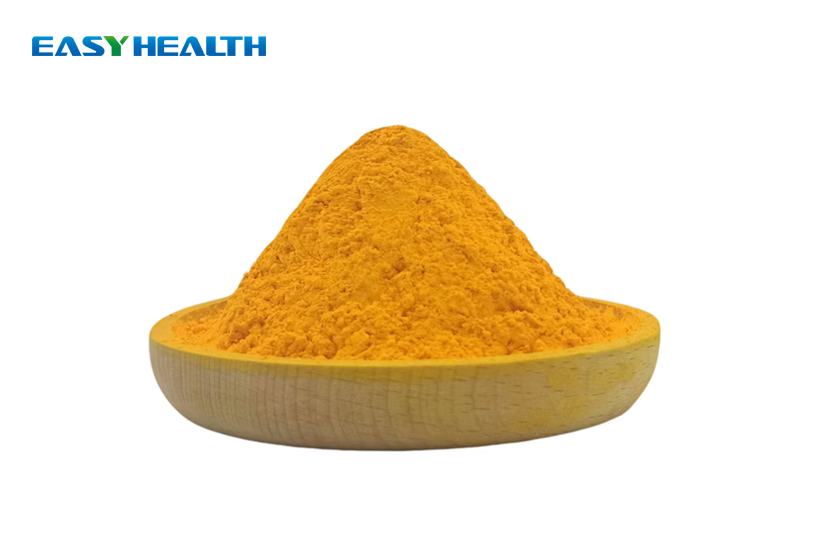
Easy Health Inc. has been in the business of natural ingredients and extracts for more than 11 years. Our microencapsulated beta carotene powder is made from fermentation of Blakeslea trispora and has been tested using HPLC. It comes in 10% and 20% strengths and can be customized with cis-isomer ratios starting at 100 kg MOQ and taking about a week to deliver. There are third-party reports for ISO, FDA, USDA Organic, Halal, Kosher, HACCP, and non-GMO products that come with every order.

Conclusion
The quality of beta carotene powder is not an idea. It can be measured by the isomer profile, the integrity of the encapsulation wall, the color stability curves, the amount of oil on the surface, and how complete your supplier's certification package is. This fermentation-derived, double-wall microencapsulated powder meets the technical and legal needs of making gummies, acidic drinks, baby food, and cosmetics all at the same time. It is better for both your product and your brand's image when the place where you buy it is backed by real stable data and full traceability. These measurable quality parameters make microencapsulated beta carotene powder a dependable ingredient for multi-category applications.
FAQ
What makes fermentation-derived beta carotene different from synthetic versions?
Fermentation from Blakeslea trispora produces beta carotene with a naturally occurring mix of cis and trans isomers—10%–30% cis content—which research associates with better absorption compared to all-trans synthetic forms. It also supports Non-GMO verification and clean-label declarations that synthetic equivalents cannot.
How do I verify that a supplier's product is genuinely fermentation-derived?
Request HPLC isomer profiling data alongside a Non-GMO third-party report from an accredited laboratory. Synthetic all-trans beta carotene shows a distinctly different isomer ratio profile under HPLC analysis.
Why does surface oil content matter for gummy manufacturing?
Surface oil above 1.0% migrates into the gummy mold during production, causing sticking, cross-contamination between batches, and accelerated oxidation of the finished product. Keeping surface oil at ≤1.0% protects both your line efficiency and product shelf life.
What certifications are required for US infant nutrition applications?
At minimum: FDA registration, USDA Organic (if labeled organic), Non-GMO third-party verification, Halal or Kosher as applicable, HACCP, and a complete heavy metal report showing values well below regulatory limits.
What is the minimum order for a custom cis-isomer specification?
At Easy Health, custom cis-isomer ratios within the 10%–30% range are available from 100 kg with approximately one-week production lead time.
Source Your Beta Carotene Powder with Easy Health Inc.
Easy Health Inc. sells microencapsulated beta carotene powder that is made through fermentation. This is a manufacturer-grade product that has met the stability and documentation requirements of US food and supplement brands. Our 10% and 20% specifications come with full sets of certificates, HPLC test reports, and third-party confirmation that they are non-GMO. Email devin@easyhealthbio.com to ask for an example, look over our TDS, or talk about your application.
References
1. Stahl, W., & Sies, H. (2003). Antioxidant activity of carotenoids. Molecular Aspects of Medicine, 24(6), 345–351.
2. Deming, D. M., & Erdman, J. W. (1999). Mammalian carotenoid absorption and metabolism. Pure and Applied Chemistry, 71(12), 2213–2223.
3. Schweiggert, R. M., & Carle, R. (2017). Carotenoid deposition in plant and animal foods and its impact on bioavailability. Critical Reviews in Food Science and Nutrition, 57(9), 1807–1830.
4. Ribeiro, H. S., & Chu, B. S. (2019). Encapsulation of carotenoids in food-grade systems: A review of technologies and strategies. Food Research International, 126, 108645.
5. Krinsky, N. I., & Johnson, E. J. (2005). Carotenoid actions and their relation to health and disease. Molecular Aspects of Medicine, 26(6), 459–516.
6. Nidhi, B., & Baskaran, V. (2011). Bioefficacy of beta-carotene from different carotenoid sources and influence of dietary fat. Journal of Agricultural and Food Chemistry, 59(20), 10969–10974.