What is Liposomal Vitamin C And What Are the Benefits?
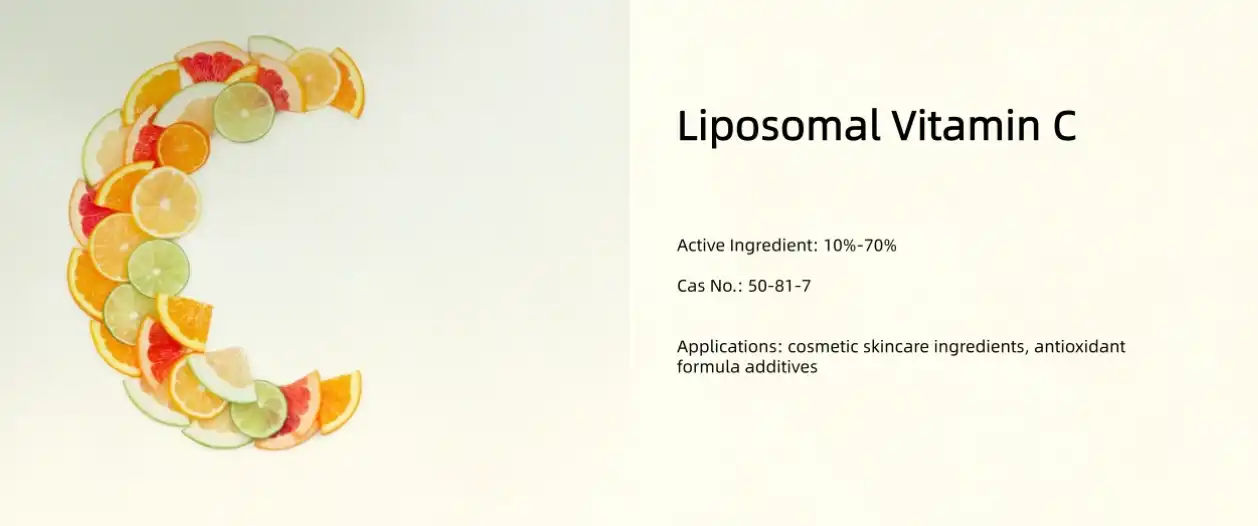
Liposomal vitamin C powder is an advanced form of ascorbic acid where the active nutrient is encapsulated within a phospholipid bilayer — a structure that mirrors the body's own cell membranes. Unlike standard vitamin C tablets or capsules, this delivery format shields the nutrient from gastric acid degradation and bypasses the absorption bottleneck of intestinal transporters. The result is significantly higher bioavailability and cellular uptake. For B2B buyers in immune health, oral beauty, and functional food categories, this technology represents a meaningful product differentiation opportunity backed by measurable science.
Understanding Liposomal Vitamin C Powder
What Is the Liposome Structure?
These are the molecules that make up the membranes of human cells. A liposome is a small circular bubble made of them. When the liposomes are sealed, ascorbic acid gets stuck inside this two-layer shell. When you eat something, the lipid coating keeps the vitamin C safe from stomach acid and enzymes. This way, the vitamin C can make it to the small intestine whole and be taken there. A simple mix of lecithin and vitamin C is not at all the same thing.
How High-Pressure Homogenization Works
You need special tools to make real liposomal encapsulation. With Dynamic Light Scattering (DLS), we can see that the particles in the liposomes we make are less than 150nm in size. High-pressure homogenisation is what we use to make them. The phospholipid-vitamin C mix is pushed through a small tunnel by high pressure in this process. This makes vesicles at the nanoscale level that are all the same size. A solid blend can't make this shape. A proof of analysis shows that every batch is checked to make sure that at least 90% of the packing works.
Safety and Dosage Considerations for Formulators
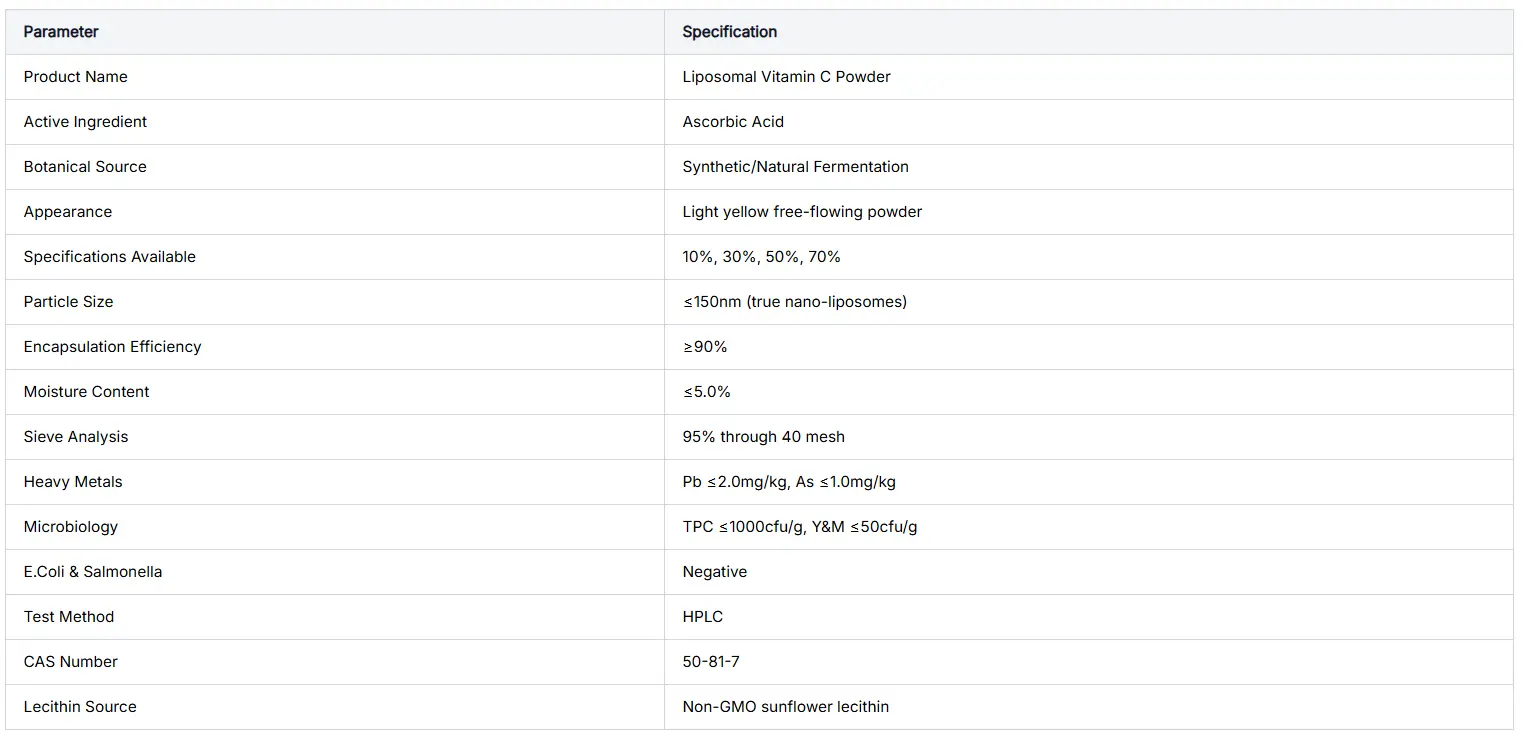
Our liposomal vitamin C powder comes in a range of strengths, with HPLC tests showing that it contains between 10% and 70% active ascorbic acid. The amount of heavy metals is very low: Pb ≤2.0 mg/kg, As ≤1.0 mg/kg, and Hg ≤0.1 mg/kg. Testing for microbes confirms that E. coli and Salmonella are not present. The moisture level stays at about 5%, and the powder flows through a 40-mesh sieve at 95%. This means it can be used in capsules, sachets, and drinks.
Key Benefits of Liposomal Vitamin C Powder for B2B Clients
Standard vitamin C supplements have a well-known problem with absorption: when doses go above 1,000 mg, SVCT1 transporters in the intestines get full, and absorption drops sharply. Through a lipid-mediated uptake pathway, liposome delivery gets around this ceiling.
These are the main reasons why you should base a product on this ingredient:
- Gastric acid protection: The phospholipid bilayer keeps ascorbic acid stable during its passage through the stomach. In simulated gastric fluid testing, vitamin C retention stays ≥85% after two hours — a result ordinary powder cannot achieve.
- High encapsulation efficiency: With ≥90% encapsulation efficiency per batch, the amount of free (unprotected) vitamin C is minimal. Competing products in this category typically reach only 50–70%, leaving a large fraction of the nutrient exposed and vulnerable.
- Improved taste profile: Encapsulation masks the sharp acidity of raw ascorbic acid powder, producing a neutral, slightly mild taste. This directly improves consumer compliance for stick packs, drink mixes, and chewable formats.
- Formulation versatility: The powder disperses rapidly and evenly in water, forming a stable suspension. It integrates cleanly into capsules, effervescent tablets, sachets, and liquid beverages without requiring additional emulsifiers.
Because of these benefits, companies that make functional drinks, products for mouth health, and wellness drinks can make claims about their products that are based on science, not just marketing speak.
Comparing Liposomal Vitamin C Powder With Other Forms
Powder vs. Liquid Liposomal Products
Once it's opened, liquid liposomal vitamin C doesn't last as long and needs to be preserved with things like potassium sorbate. For better chemical stability, easier shipping, and compatibility with dry forms like capsules and sachets, the liposomal vitamin C powder form is better. Our powder stays at least 90% vitamin C for six months when stored at 25°C and 60% RH, which is a key stable standard for foreign shipping.
Powder vs. Gummies and Standard Tablets
Vitamin C gummies and regular pills depend on direct absorption in the intestines, which has a dose limit. They also have more sugar and need binding agents, which can change the nutrition density. Liposomal powder, on the other hand, has a higher active dose per gram, no saturation ceiling, and no added sugar. This is better for high-end supplement brands because it means the labels are cleaner.
What to Look for When Comparing Suppliers
It's not always the case that companies that sell "liposomal vitamin C" actually deliver a liposomal product. A DLS particle size report showing ≤150nm, a per-batch encapsulation efficiency report showing ≥90%, and proof that high-pressure homogenization was used as the preparation method are the most important technical markers to ask for. These three pieces of information set useful nanoencapsulation apart from a simple mix of lecithin and vitamin C.
Procurement Insights: Buying Liposomal Vitamin C Powder in Bulk
Supplier Verification Standards
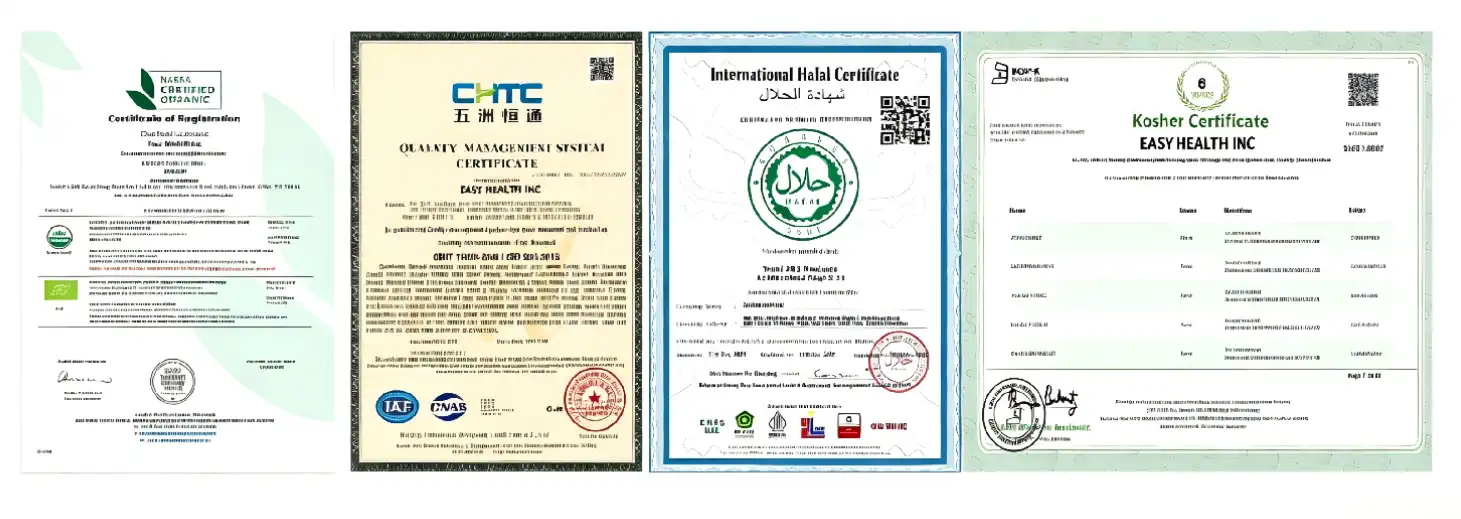
Certifications are important when getting a lot of this item. If the people you want to sell to need clean labels, look for choices that are ISO certified, FDA registered, Halal and Kosher certified, and USDA organic. Asking for full tracking paperwork, from where the raw materials come from to the final QC release, saves your supply chain from mistakes.
Price vs. Quality Trade-offs
There are big price differences on the market for liposomal vitamin C ingredients. Options that are less expensive usually have lower sealing rates or particles that are bigger than 200nm. While imported brand-name ingredients like LivOn are more expensive, domestically made alternatives with the same technical specs and full testing transparency are a cheaper way to buy between 2 and 40 metric tons of ingredients each year.
Logistics and Storage Requirements
The liposomal vitamin C powder should be kept somewhere cool and dry, out of direct sunlight. Shelf stability during transit is helped by a moisture content of less than 5% and a surface oil content of less than 1%. We work with international logistics partners like FedEx, DHL, and UPS to ship large amounts of goods. For larger orders, we also use sea freight, and the lead time for standard orders is three to five days.
How to Incorporate Liposomal Vitamin C Powder Into Your Product Line?
Formulation Compatibility
This powder works well in shakes that are already mixed, tablets that fizz, capsule fills, and packets of instant drinks. The fact that it doesn't stick together and flows easily was confirmed by a 95% through 40 mesh sieve test. What this means is that it can be mixed and enclosed with regular tools. Liquids can be added to powder to make a steady liposomal suspension. The powder doesn't need to be mixed with high shear.
Certifications That Support Market Claims
Having a clean label is becoming more and more important in the U.S. supplement market. When it comes to our liposomal vitamin C powder, you can pick from ISO, Halal, Kosher, and organic tags. Label claims for both retail and direct-to-consumer (DTC) outlets are easier with these credentials, and they also help with following the rules. For OEM clients who make a lot of different SKUs, this freedom makes it easy to change the formula.
Marketing Positioning for End Products
You can use this item's technical knowledge to help you sell it. "True nano-liposomal delivery," "≥90% encapsulation efficiency," and "gastric acid protected" are all claims that brands can make and back up with batch testing records. Supplement claims are being looked at more closely these days, so being this open about the products helps people trust them.
Conclusion
Liposomal vitamin C powder fixes the real problems with regular ascorbic acid, which are that it doesn't absorb well at high doses, breaks down in the stomach, and doesn't taste good. By homogenizing under high pressure to make particles ≤150nm and capsule efficiency ≥90% per batch, this ingredient gives a performance boost that can be proven by science. This is a great base for making high-quality products for brands that work with functional nutrition, oral health, or immune support because it combines absorption science with formulation flexibility and proven quality. The first step in buying strategy is to find the right supplier—one that gives you facts, not just claims.
FAQ
Is liposomal vitamin C actually better absorbed than regular vitamin C?
Yes. Research shows that liposomal delivery increases plasma vitamin C levels more effectively than standard oral supplements at equivalent doses. The lipid bilayer bypasses the saturable SVCT1 intestinal transporters, allowing greater uptake through mucosal and lymphatic pathways.
How do I verify that a product is truly liposomal?
Request a DLS particle size distribution report (target ≤150nm) and a per-batch encapsulation efficiency report (target ≥90%). Also confirm the manufacturing method is high-pressure homogenization — not a simple physical blend of lecithin and ascorbic acid.
What specifications should bulk buyers prioritize?
Prioritize particle size ≤150nm, encapsulation efficiency ≥90%, HPLC-confirmed vitamin C content, simulated gastric retention ≥85% at two hours, and a clean heavy metal profile. Stability data at 25°C/60% RH over six months is also a meaningful quality indicator.
Can this powder be used in beverages and instant sachets?
Yes. The powder disperses evenly in water, forming a stable liposomal suspension with a mild taste profile. It suits effervescent tablets, stick packs, drink mixes, and functional beverage formulations without requiring additional emulsifiers.
What is the difference between buffered vitamin C and liposomal vitamin C?
Buffered vitamin C only adjusts pH to reduce acidity. It does not change the absorption mechanism. Liposomal delivery fundamentally alters how the nutrient enters the bloodstream, achieving higher cellular uptake regardless of dose.
Request a Sample From Easy Health — Trusted Liposomal Vitamin C Powder Supplier
Easy Health has been making ingredients for over 11 years and is fully registered with the FDA, ISO, Halal, and Kosher organizations. They also do clear per-batch testing for every order. The people on our team are ready to help you whether you need a trial sample, a unique standard between 10% and 70% active content, or help with your OEM formulation. To get your sample right away, email devin@easyhealthbio.com or go to easyhealthinc.com.
References
1. Hickey, S., Roberts, H. J., & Miller, N. J. (2008). Pharmacokinetics of oral vitamin C. Journal of Nutritional & Environmental Medicine.
2. Padayatty, S. J., Sun, A. Y., Chen, Q., Espey, M. G., Drisko, J., & Levine, M. (2010). Vitamin C: intravenous use by complementary and alternative medicine practitioners and expected outcomes. PLoS ONE.
3. Łukawski, M., Dałek, P., Borowik, T., Foryś, A., Langner, M., Witkiewicz, W., & Przybyło, M. (2020). New oral liposomal vitamin C formulation: properties and bioavailability. Journal of Liposome Research.
4. Davis, J. L., Paris, H. L., Beals, J. W., Binns, S. E., Giordano, G. R., Scalzo, R. L., & Bell, C. (2016). Liposomal-encapsulated ascorbic acid: influence on vitamin C bioavailability and capacity to protect against ischemia–reperfusion injury. Nutrition and Metabolic Insights.
5. Carr, A. C., & Maggini, S. (2017). Vitamin C and immune function. Nutrients.
6. Telang, P. S. (2013). Vitamin C in dermatology. Indian Dermatology Online Journal.

_1784173402819.webp)