What Is Microencapsulated High Oleic Sunflower Oil Powder?
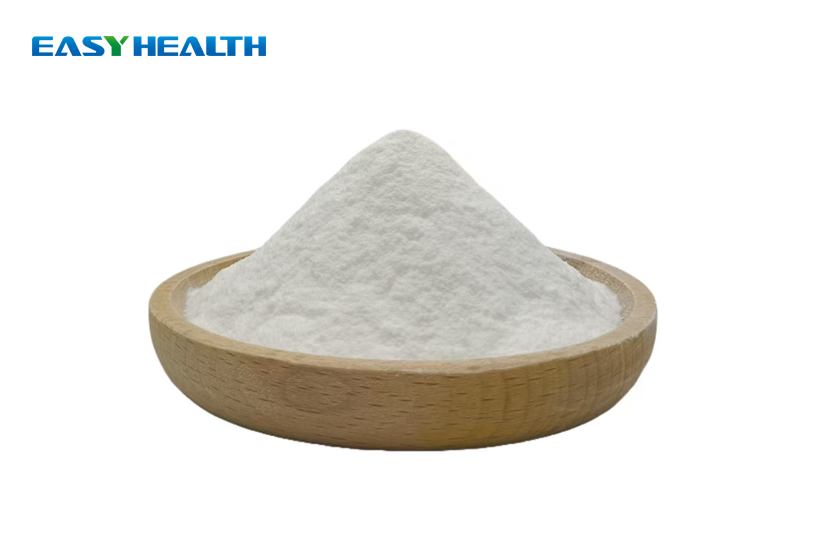
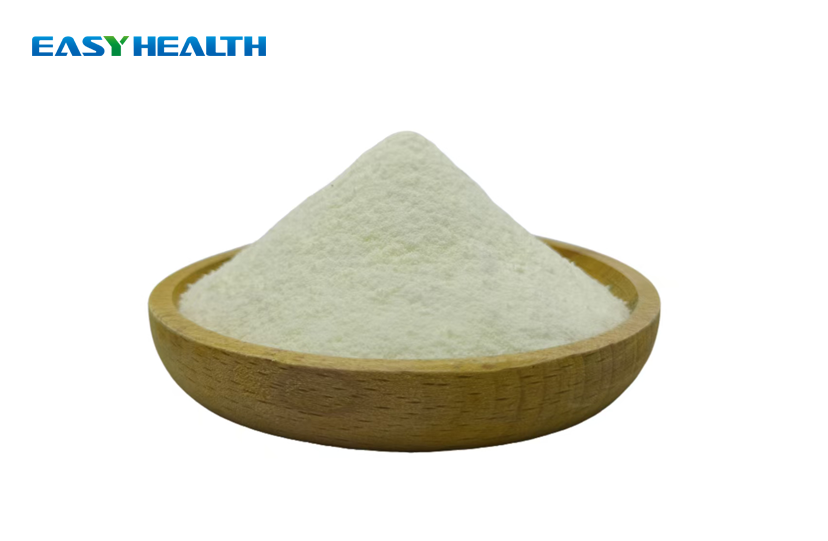
Microencapsulated high oleic sunflower oil powder is a dry, free-flowing lipid ingredient that is made by spray drying high oleic sunflower oil and surrounding it with a protective wall matrix. Made from non-GMO Helianthus annuus L. seeds, it has about 80% oleic acid (C18:1) in the oil and an Oxidation Stability Index (OSI) of more than 25 hours, which is about five times longer than regular sunflower oil. Easy Health Inc. has three oil load standards (50%, 60%, and 70%) on a single spray tower. This makes sure that all grades are the same from batch to batch. Trans fats are below the 0.05% level that can be found.
Understanding Microencapsulated High Oleic Sunflower Oil Powder
What Makes High Oleic Sunflower Oil Different?
Standard sunflower oil has more than 60% linoleic acid (omega-6), which breaks down quickly in heat, light, and air. Most of the polyunsaturated fat in high oleic sunflower oil is replaced by oleic acid, a monounsaturated fatty acid (MUFA) that is resistant to heat and oxygen. This change isn't just for looks; it directly extends the useful shelf life of finished goods and lowers the risk of customer complaints about rancidity.
How Microencapsulation Works
Spray drying covers each oil droplet in a carbohydrate or protein wall matrix. This makes a powder particle with an oil core that is protected from light, oxygen, and wetness. This method changes liquid oil into a stable, smooth powder that mixes evenly with dry ingredients and doesn't leave oily marks on tools. The wall stays together while it's being stored and lets the oil out exactly when the formulator needs it to during hydration or heat processing.
Nutritional Profile vs. Conventional Oils
The high oleic variety has a cleaner fatty acid profile than either palm oil powder or regular sunflower oil powder. According to the FDA's qualified health claim for oleic acid and lower risk of coronary heart disease, it may help protect heart health. Because trans fats aren't found (<0.05%) compared to 0.3% to 0.5% in regular refined oils, it also meets the FDA's rule to list trans fats on Nutrition Facts panels. This gives clean-label brands a clear regulatory edge.
Key Benefits and Applications in the Food Industry
If you switch from liquid oil to powder that is enclosed, it will solve real problems on the production floor. Liquid oils make tablet punch stick, bars leak, and dosing isn't always accurate. Powder gets rid of all three problems while still giving you the same amount of calories and nutrients. What makes this ingredient so useful for performance are these:
- OSI 25+ hours vs. ~5 hours for conventional sunflower oil powder: This five-fold stability margin means products can realistically target 18–24 month shelf lives without synthetic antioxidants such as TBHQ or BHA, cleaning up the ingredient list for health-conscious consumers.
- Surface oil ≤1.0%: Low exposed oil at the particle surface prevents punch sticking in tablet compression and eliminates free-fat migration in bar products, reducing batch rejection rates that can otherwise write off entire production runs.
- Cold-water dispersibility without floating oil: The microencapsulated high oleic sunflower oil powder reconstitutes cleanly in shakes and ready-to-mix sachets, delivering a smooth mouthfeel rather than an oily film on the surface—a quality issue that drives negative reviews on retail platforms.
These benefits cover the three things that most functional food formulators can't do without: a clean list of ingredients, a production line that doesn't get stuck, and a shelf life that lasts through store distribution. There are a lot of different uses across fields. It gives stable MUFA density in the form of a compact powder for use in dietary supplements and keto meal alternatives. Without phase separation, it keeps the creamy smoothness of protein bars and energy drinks. Pb levels of less than 2.0 mg/kg and Salmonella levels of less than 25g are strictly met in infant formula and clinical nutrition. In bakery premixes, the wall matrix keeps the oil from combining with chemical leavening agents until it's baked and heated up. This makes the crumb structure better and keeps the moisture in.
Production Process and Quality Assurance
Raw Material Sourcing and Oil Refining
We get non-GMO high oleic sunflower seeds from Easy Health (CAS No. 112-80-1 for oleic acid) and refine them physically at low temperatures instead of chemically. Using this method keeps the production of trans fats below the 0.05% detection level. Usually, solvent-and-bleach refining makes 0.3 to 0.5 % trans fats as a waste product.
Encapsulation via Spray Drying
The oil is mixed with carriers that help it make walls, and then it is atomised in a spray tower with a controlled temperature. All three grades of oil load—50%, 60%, and 70%—are made on the same tower with the same wall material mixes and process conditions. Because of this single-tower discipline, batch consistency stays the same even when oil loads change. This means that there is no risk of reformulation when suppliers swap production lines between grades.
Quality Control Parameters and Certifications
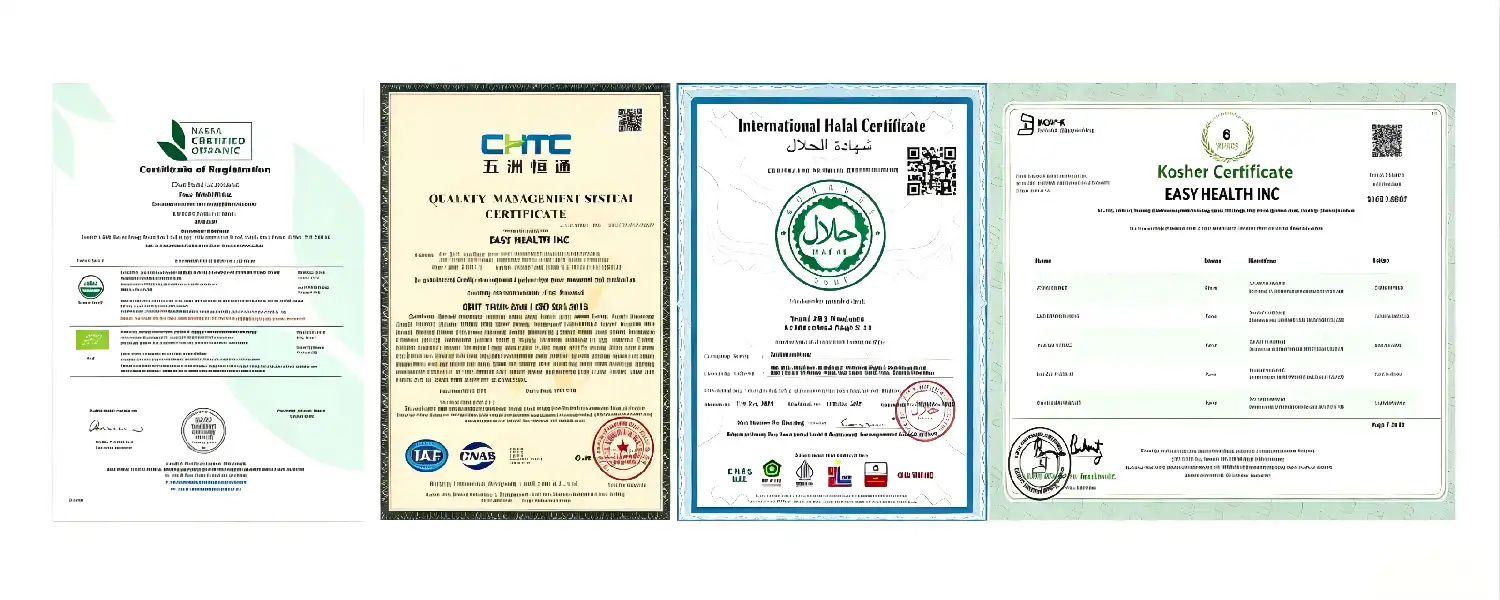
Each batch comes with a full Certificate of Analysis (COA) that has been checked for fatty acid makeup by gas chromatography. Key release requirements include a moisture level of no more than 5%, a peroxide value of no more than 2.5 mmol/kg, an acid value of no more than 1.0 mgKOH/g, and 95% particle passage through a 40-mesh screen. ISO, HACCP, FDA Registration, and USDA NOP Organic are some of the certifications that Easy Health has. For OEM/ODM clients in the clinical nutrition and baby formula industries, batch traceability records are kept from the time the raw materials are received until the finished goods are sent out.
How to Select the Right Microencapsulated High Oleic Sunflower Oil Powder Supplier?
Certifications and Regulatory Compliance
A supplier worth evaluating holds, at minimum, FDA Registration and ISO 22000 certification. For infant formula or clinical nutrition customers, USDA NOP Organic status and the ability to provide lot-specific trans fat reports are non-negotiable for microencapsulated high oleic sunflower oil powder. Suppliers who cannot provide per-batch GC-confirmed oleic acid content should be disqualified immediately—this is the only way to verify that high oleic oil has not been substituted with standard linoleic-dominant oil.
Batch Consistency and Production Architecture
Ask directly: does the supplier produce all oil load grades on a single spray tower, or do they switch equipment? Tower switching changes particle morphology, wall material ratios, and moisture absorption behavior—differences that propagate into tablet hardness variation and shelf life inconsistency. Single-tower production, as practiced by Easy Health, removes this variable entirely.
Sample Testing and MOQ Flexibility
Responsible procurement starts with a 500g–1kg sample for internal small-scale trials before committing to volume. Reputable microencapsulated oil powder suppliers accommodate trial quantities and can ship within 3–5 business days for standard grades. Easy Health maintains ready stock of 50% and 60% oil load grades in 25 kg drums for immediate dispatch, reducing the lead time risk that often stalls new product launches.
Making Informed Purchasing Decisions: Comparison and Use Cases
Formulators always choose encapsulated high oleic sunflower oil powder over other options based on three things: OSI, trans fat status, and processability. Olive oil powder has a lot of MUFAs, but it has a strong flavour that makes it hard to use in products that don't taste like much. Conventional sunflower oil powder is cheaper, but it has a shorter shelf life (about 5 hours) and more linoleic acid, which makes bars and bags go bad faster when left out in the open air.
Formulators who are in charge of various SKUs should pay close attention to Easy Health's 50/60/70% oil load structure. If you change from 60% to 70% oil load, you only need to do a new stability study on the end product formula and not on the ingredient itself. This is because the wall material and process parameters stay the same across all three grades. This cuts the time it takes to reformulate from months to weeks and lowers the cost of re-filing with regulators.
Conclusion
Microencapsulated high oleic sunflower oil powder solves three practical problems at once: it keeps ingredient labels clean by removing synthetic antioxidants, it keeps production lines moving by eliminating surface oil and punch sticking, and it keeps finished products stable with an OSI exceeding 25 hours. For brands in weight management, keto nutrition, clinical formulas, and functional food, it represents a technically verifiable upgrade over conventional lipid ingredients. The data—OSI, surface oil, trans fat, batch COA—either supports the claim or it does not. At Easy Health, it does.
FAQ
What does the OSI value mean for my product's shelf life?
OSI (Oxidation Stability Index) measures how long an oil resists oxidation under standardized conditions. An OSI of 25+ hours indicates the oil is significantly more resistant to rancidity than conventional sunflower oil (~5 hours). In practical terms, this supports finished product shelf lives of 18–24 months without synthetic antioxidants.
Can I switch between 50%, 60%, and 70% oil loads without reformulating my label?
Because all three grades are produced on the same spray tower with identical wall materials, the ingredient declaration on your label does not change. You may still need to update your Nutrition Facts panel for fat content, but the ingredient itself is the same material.
How do I confirm the oil is genuinely high oleic and not standard sunflower oil?
Request a GC-method fatty acid profile on every batch COA. Oleic acid content in the oil phase should read ≥80%. Easy Health provides lot-specific GC reports as standard documentation.
Is the powder suitable for infant formula applications?
Yes. The product meets strict heavy metal limits (Pb ≤2.0 mg/kg, As ≤1.0 mg/kg), microbiological standards (Salmonella negative/25g, E. coli negative), and is produced under HACCP and FDA-registered conditions.
What particle size should I expect?
95% of particles pass through a 40-mesh screen, giving a consistent particle size distribution suitable for dry blending, tablet compression, and sachet filling without segregation.
Partner with Easy Health — Your Trusted High Oleic Sunflower Oil Powder Supplier
Easy Health Inc. has over 11 years of experience supplying precision-engineered lipid ingredients to nutrition brands across North America and beyond. Our microencapsulated high oleic sunflower oil powder ships in 25 kg drums with full COA documentation, flexible oil load options, and trial sample availability. Whether you need a wholesale order or a customized formulation, our technical team is ready to support your next product development cycle. Contact us at devin@easyhealthbio.com or visit easyhealthinc.com to request your sample today.
References
1. Frankel, E. N. Lipid Oxidation. 2nd ed. Woodhead Publishing, 2005.
2. McClements, D. J., & Decker, E. A. "Lipid Oxidation in Oil-in-Water Emulsions." Journal of Food Science, 2000.
3. Tan, C. P., & Nakajima, M. "β-Carotene Nanodispersions: Preparation, Characterization and Stability Evaluation." Food Chemistry, 2005.
4. Drusch, S., & Mannino, S. "Patent-Based Review on Industrial Approaches for the Microencapsulation of Oils Rich in Polyunsaturated Fatty Acids." Trends in Food Science & Technology, 2009.
5. U.S. Food and Drug Administration. "Qualified Health Claims: Oleic Acid and Reduced Risk of Coronary Heart Disease." FDA Guidance Document, 2018.
6. Augustin, M. A., & Hemar, Y. "Nano- and Micro-Structured Assemblies for Encapsulation of Food Ingredients." Chemical Society Reviews, 2009.

_1784173402819.webp)