How to Choose the Right Microencapsulated Flaxseed Oil Powder for Your Product
Choosing the right microencapsulated flaxseed oil powder starts with understanding what separates a high-performance ingredient from a mediocre one. The short answer: prioritize ALA content ≥55% verified by GC testing per batch, an OSI value ≥16 hours through triple-wall encapsulation, and odor reduction of at least 80%. These three benchmarks protect your formulation quality, satisfy vegan and cardiovascular health claims, and reduce oxidation-related risk across dietary supplements, functional foods, and pet nutrition. This guide walks you through every critical decision point so your procurement process is grounded in science, not guesswork.
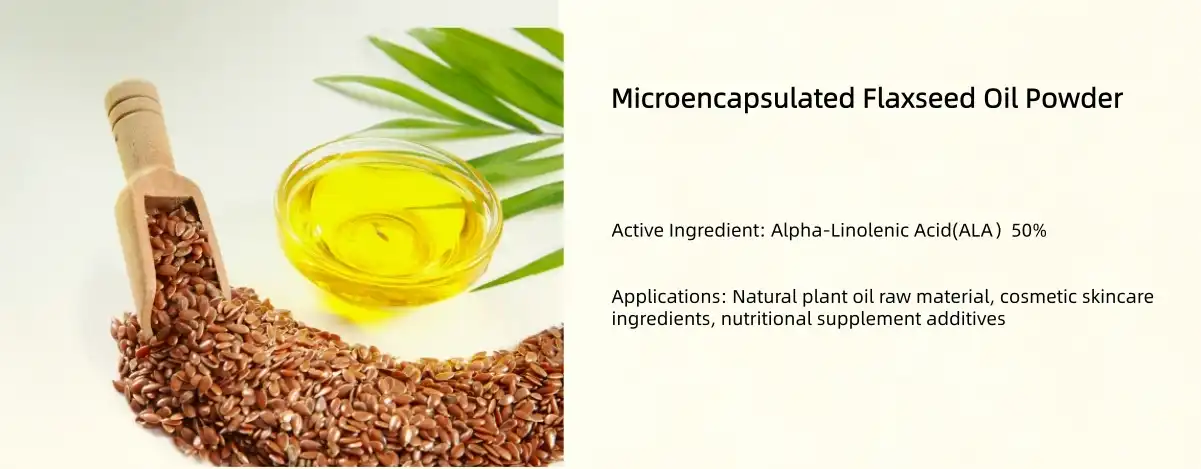
Understanding Microencapsulated Flaxseed Oil Powder: What and Why?
Linum usitatissimum L. flaxseed oil has the most alpha-linolenic acid (ALA, CAS No. 463-40-1), an important omega-3 fatty acid that helps keep your heart healthy, lowers inflammation throughout your body, and supports healthy skin. However, because ALA has three double bonds, raw liquid flaxseed oil oxidizes quickly, which means it can't be used in powder-based products for business reasons.
How Microencapsulation Solves This Problem?
The encapsulation process surrounds oil droplets with a protected wall structure. This turns liquid oil into a stable, off-white to light yellow powder that is easy to give and mixes with water. This format keeps dry blends from clumping, extends the shelf life to 18–24 months, and lets the oil be used in baked goods, capsules, and nutritional bars where liquid oil would cause oil bleeding or taste problems.
Single-wall encapsulation systems that only use modified starch usually have an Oxidative Stability Index (OSI) of 8–12 hours, which is much too short for commercial needs. Triple-wall systems made up of modified starch, gum arabic, and cyclodextrin create a semi-permeable membrane that doubles the resistance to oxidation and achieves OSI values of 16 hours or more. This difference is not just for looks; it directly affects whether your end product keeps its omega-3 strength when it's put on store shelves.
Core Criteria to Consider When Choosing Your Microencapsulated Flaxseed Oil Powder
Not every plant-based omega-3 powder is the same. Products on the market contain between 50% and 55% ALA, and it is known that cheaper carrier oils are used to make cheaper products. Before signing a supply deal, every buying team should make sure that the following technical standards are met for the microencapsulated flaxseed oil powder.
ALA Content and Verification
Gas chromatography (GC) must confirm that every production batch has at least 50% ALA. With batch-level testing, there is no chance of mixing with cheap oils that aren't listed, which would lower the strength without changing the stated specifications on a certificate of analysis.
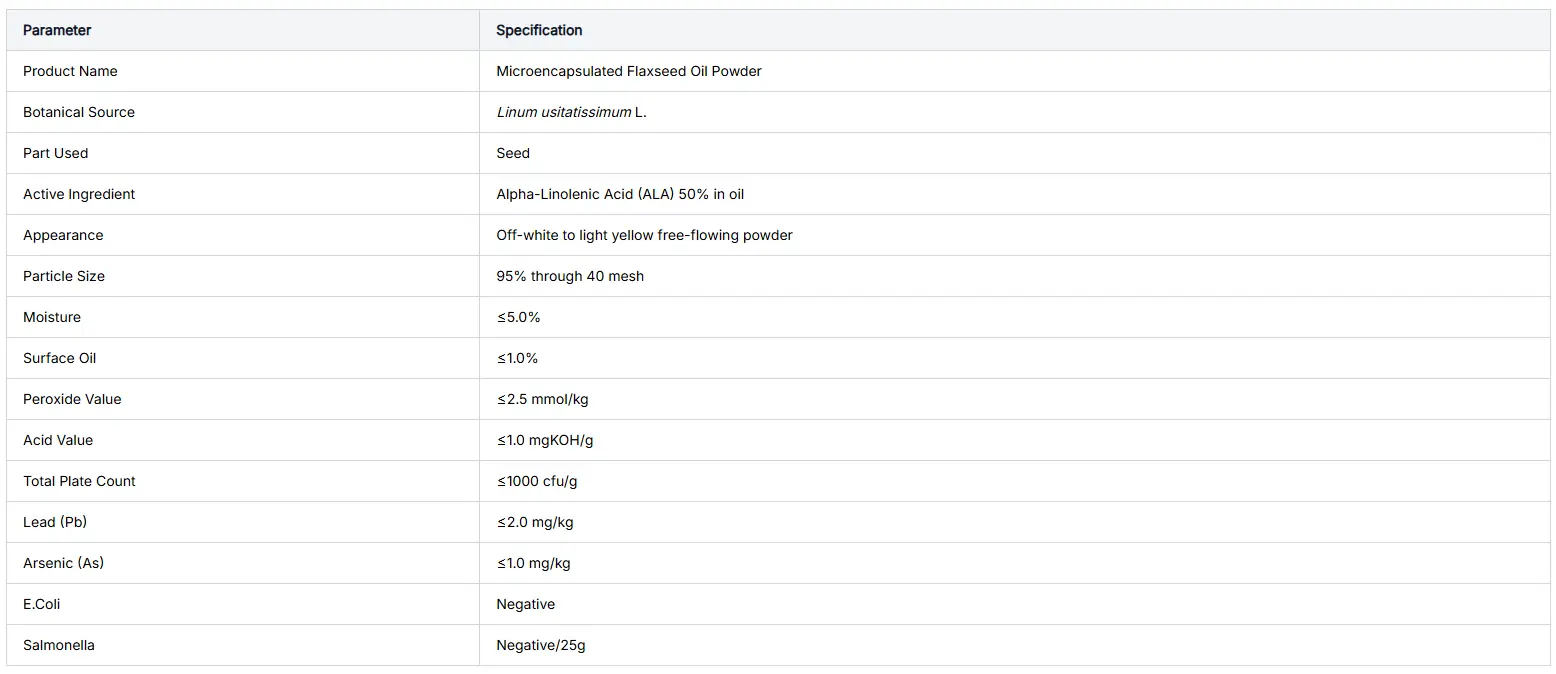
Oxidative Stability
Name the OSI (>16 hours) and the oxygen number (<2.5 mmol/kg). A peroxide level above this level means that the food is starting to go bad, which hurts both the taste and the bioactivity of omega-3s. Surface oil should make up less than 1% of the total oil substance. Surface oil that isn't contained is what causes bad smells and products to go bad faster.
Odor Profile
Notes that are typical of high-ALA oils are fishy and bitter. When physical and enzymatic deodorization are used together, these off-notes can be cut down by 80%. This means that the ingredient can be used in flavoring supplements, protein bars, and drinks where taste acceptance is important for business.
Certifications and Labeling Compliance
For plant-based nutrition brands and foreign markets, it's important to have vegan certification, non-GMO documentation, plant-origin statements, and Halal/Kosher certificates. If you need to say that your finished product is 100% vegan, make sure that the wall materials are made from only plant-based ingredients like modified starch, gum arabic, and cyclodextrin.
These requirements set the minimum level that no supplier should be able to meet. Premium-grade encapsulated flax oil is different from cheap options because it meets all of them at the same time.
Comparing Market Options: Finding the Right Supplier
Unit cost is only one part of choosing a supplier. A trustworthy company that sells microencapsulated flaxseed oil powder should be registered with ISO, HACCP, and the FDA. For clean-label products, they should also be able to offer organic approval from the USDA NOP or the EU.
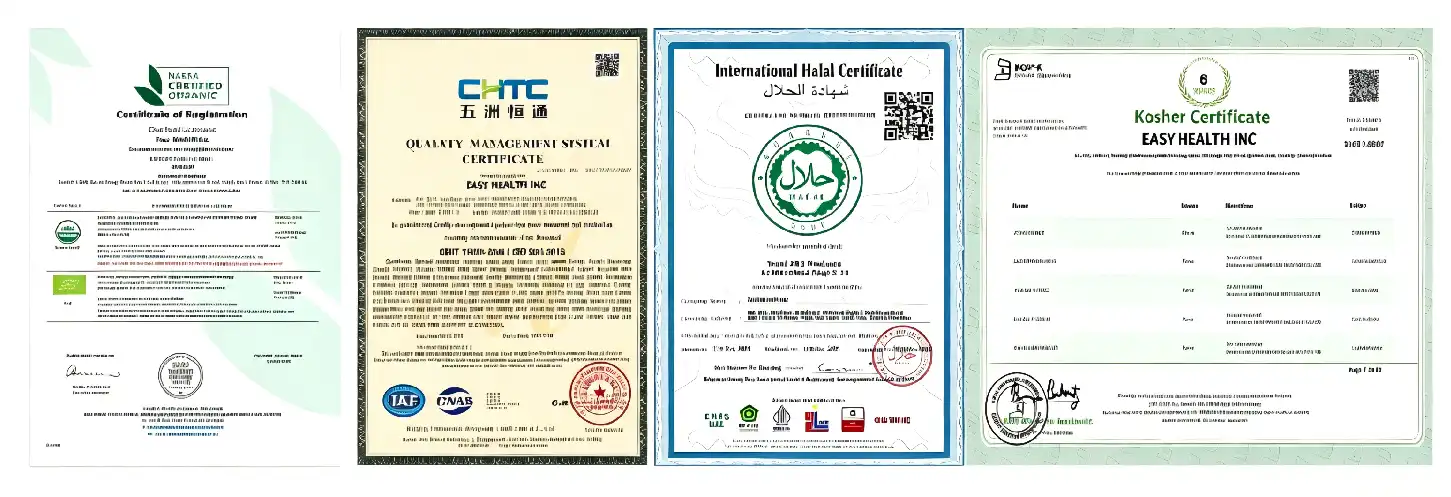
What Separates Top-Tier Suppliers?
When it comes to B2B buying, batch-to-batch consistency is the most overlooked factor. Before you approve a new provider, you should ask for Certificates of Analysis for at least three output lots in a row. The ALA number should be looked at along with the acid value (≤1.0 mgKOH/g), the moisture content (≤5.0%), and the microbe factors (total plate count ≤1,000 cfu/g, negative results for E. coli and Salmonella). Heavy metal testing (Pb ≤2.0 mg/kg, As ≤1.0 mg/kg, Cd ≤1.0 mg/kg, and Hg ≤0.1 mg/kg) is needed for any market that wants to sell food supplements or goods that are close to babies.
How responsive and technical something is is also important. Your time-to-market will be much shorter if your suppliers offer free 500g–1kg samples for formulation trials, help you with application advice for baked goods and capsule filling, and keep their own research and development (R&D) staff on hand.
Matching Your Procurement Needs: Customization and Volume Considerations
In this group, the amount of goods bought each year varies a lot. Functional food makers need 10–30 metric tons, while OEM/ODM contract manufacturers who buy for multiple brands often need more than 40 metric tons. Knowing how your volume will change over time before negotiating supply terms will keep you from paying too much for small orders at first and not getting enough service during times of high production.
Flexibility That Protects Your Supply Chain
A reliable provider should allow for flexible minimum order numbers for initial testing, be able to scale up to full commercial amounts with confirmed lead times, and provide OEM services such as custom specification goals, white-label documentation, and packing formats that are the right size for your downstream logistics. When market starts need to happen quickly, having standard goods in stock and ready to ship right away is a big plus.
Case Studies and Practical Tips for Successful Procurement
When a company that makes healthy bars moved from single-wall to triple-wall microencapsulated flaxseed oil powder, customers stopped complaining about the smell and the bars' shelf life was extended by six months without having to be reformulated. One cardiovascular supplement brand that required GC testing on all arriving raw materials found one tainted lot in 18 months. Catching it before production started saved the company a lot of trouble during the recall.
Practical buying control is as important as technical specifications. The following should be a part of your process for qualifying suppliers:
- Request three consecutive batch COAs covering the ALA content, the peroxide value, the surface oil, and the microbial results before you approve a new source.
- Validate OSI independently using an in-house Rancimat test or a third-party lab to independently validate OSI—do not rely only on data provided by the supplier for oxidative stability claims.
- Conduct a sensory panel assessment on the free sample before committing to commercial volume, especially for uses in flavored drinks or chewable forms.
- Confirm vegan wall-material documentation in writing if your end product has a plant-based or vegan approval on the package.
These steps turn what a provider says into performance that can be checked, and they lower formulation risk before it gets to the production floor.
Conclusion
It's important to be careful when choosing the right encapsulated flax oil powder in three areas: chemistry (ALA ≥55%, OSI ≥16 hours, PV ≤2.5 mmol/kg), sensory performance (≥80% odor reduction), and supplier reliability (per-batch GC testing, certified compliance documentation). Even though the end uses of microencapsulated flaxseed oil powder are different, these standards are the same for brands in cardiovascular health, plant-based nutrition, women's wellness, functional foods, and quality pet nutrition. Use technical specifications as the starting level, and then set your supplier apart based on how open they are, how flexible they are, and how much technical help they can provide.
FAQ
Is microencapsulated flaxseed oil powder suitable for vegan-certified products?
Yes, as long as the wall materials are made entirely from plants. Cyclodextrin, gum arabic, and modified starch are all made from plants. If you need a certified vegan label, make sure that your supplier doesn't use any sodium caseinate or other carriers that come from dairy in the encapsulation matrix.
How does surface oil content affect product quality?
The oil on the surface is not enclosed and is directly exposed to air. No matter what the overall oil content is, even a small amount of oil on the surface above 1.0% speeds up the formation of peroxide, gives off bad smells, and shortens the shelf life. A reasonable safety measure is to specify surface oil ≤1.0%.
Can this ingredient withstand baking temperatures?
During normal baking cycles, triple-wall encapsulation really protects against heat. The protective matrix slows down the breakdown of ALA, which keeps the nutritional value of fortified breads, muffins, and nutrition bars. For high-shear extrusion at high temperatures, you may need certain encapsulation grades. Talk to the technical team at your supplier before finalizing a formulation.
What storage conditions preserve powder integrity?
Put the original, sealed packaging away somewhere below 20°C and below 50% relative humidity. In these conditions, moisture doesn't get in, microcapsules don't break, and rusting doesn't start too soon while the goods are being stored or transported.
Why require per-batch GC testing rather than specification-only COAs?
The style of a product is shown on specification sheets, not how it is actually made. Per-batch GC testing makes sure that each lot meets the ALA ≥55% standard and that there is no hidden oil dilution, which is a known way that omega-3 powders can be tampered with.
Partner with Easy Health for Your Omega-3 Powder Needs
Easy Health has a microencapsulated flaxseed oil powder that has been tested to the highest standards. They use triple-wall encapsulation technology and make their products in a way that is ISO/HACCP/FDA-approved. As a reliable provider of microencapsulated flaxseed oil powder, we offer full vegan and plant-origin certification, free samples (500g–1kg) for formulation trials, and open OEM/ODM solutions that can be scaled to your yearly volume. To get your sample right away, email devin@easyhealthbio.com or go to easyhealthinc.com.
References
1. Burdge, G. C., & Calder, P. C. (2005). Conversion of alpha-linolenic acid to longer-chain polyunsaturated fatty acids in human adults. Reproduction, Nutrition, Development, 45(5), 581–597.
2. Drusch, S., & Mannino, S. (2009). Patent-based review on industrial approaches for the microencapsulation of oils rich in polyunsaturated fatty acids. Trends in Food Science & Technology, 20(6–7), 237–244.
3. Kolanowski, W., Laufenberg, G., & Kunz, B. (2004). Fish oil stabilisation by microencapsulation with modified cellulose. European Food Research and Technology, 218(4), 345–351.
4. Omega-3 Fatty Acids: Fact Sheet for Health Professionals. (2023). National Institutes of Health, Office of Dietary Supplements.
5. Shahidi, F., & Ambigaipalan, P. (2018). Omega-3 polyunsaturated fatty acids and their health benefits. Annual Review of Food Science and Technology, 9, 345–381.
6. Tolve, R., Galgano, F., Caruso, M. C., Tcheukam Sifo, E., Scarpa, T., & Favati, F. (2016). Encapsulation of health-promoting ingredients: Applications in foodstuffs. International Journal of Food Sciences and Nutrition, 67(8), 888–918.

_1784173402819.webp)