Where to buy astaxanthin powder?
If you need astaxanthin powder for a supplement, drink, or beauty product, the short answer is to buy it straight from a reputable company that makes microencapsulated astaxanthin powder from Haematococcus pluvialis algae. This form is more than 70% bioavailable, while synthetic free-form alternatives are less than 10% bioavailable. The encapsulation technology also saves the active potency during processing and storage. One of these companies is Easy Health Inc. (easyhealthinc.com), which sells natural esterified astaxanthin powder in 1%, 2%, 3%, and 5% strengths and has full approval for the US, EU, and Asian markets.
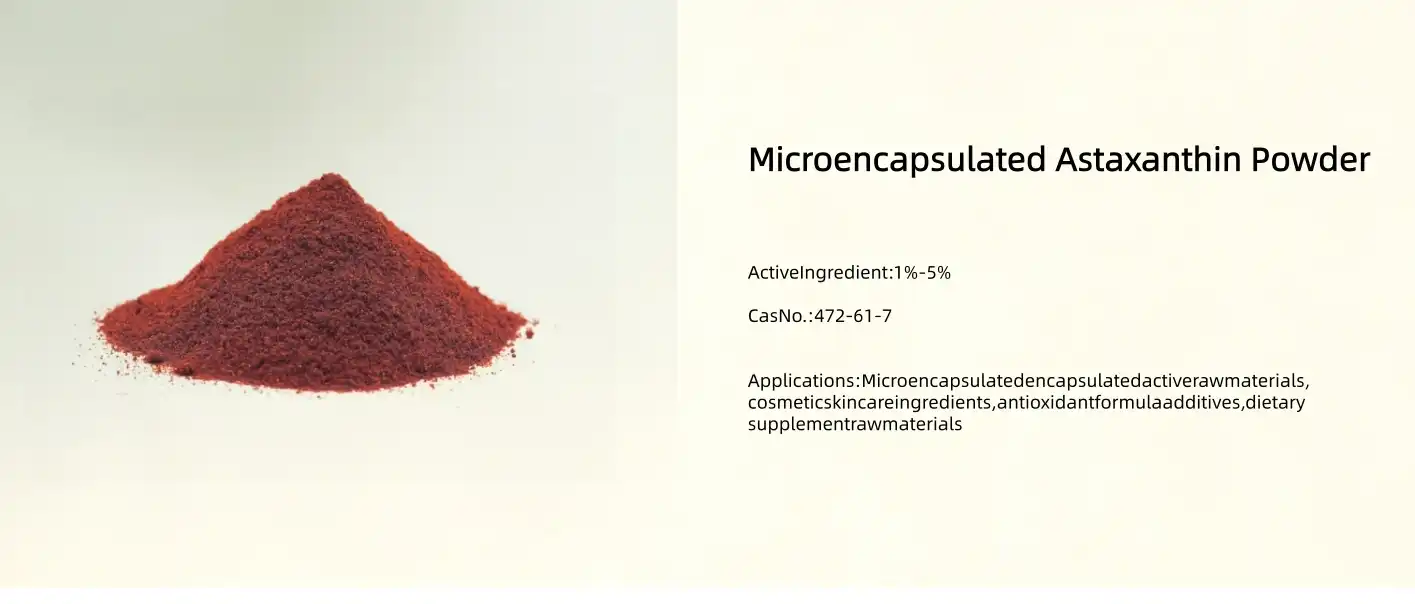
Understanding Microencapsulated Astaxanthin Powder
Before you choose a provider, it's helpful to know exactly what this ingredient is and how the capsule form differs from astaxanthin oil or raw powder.
What Microencapsulation Actually Does?
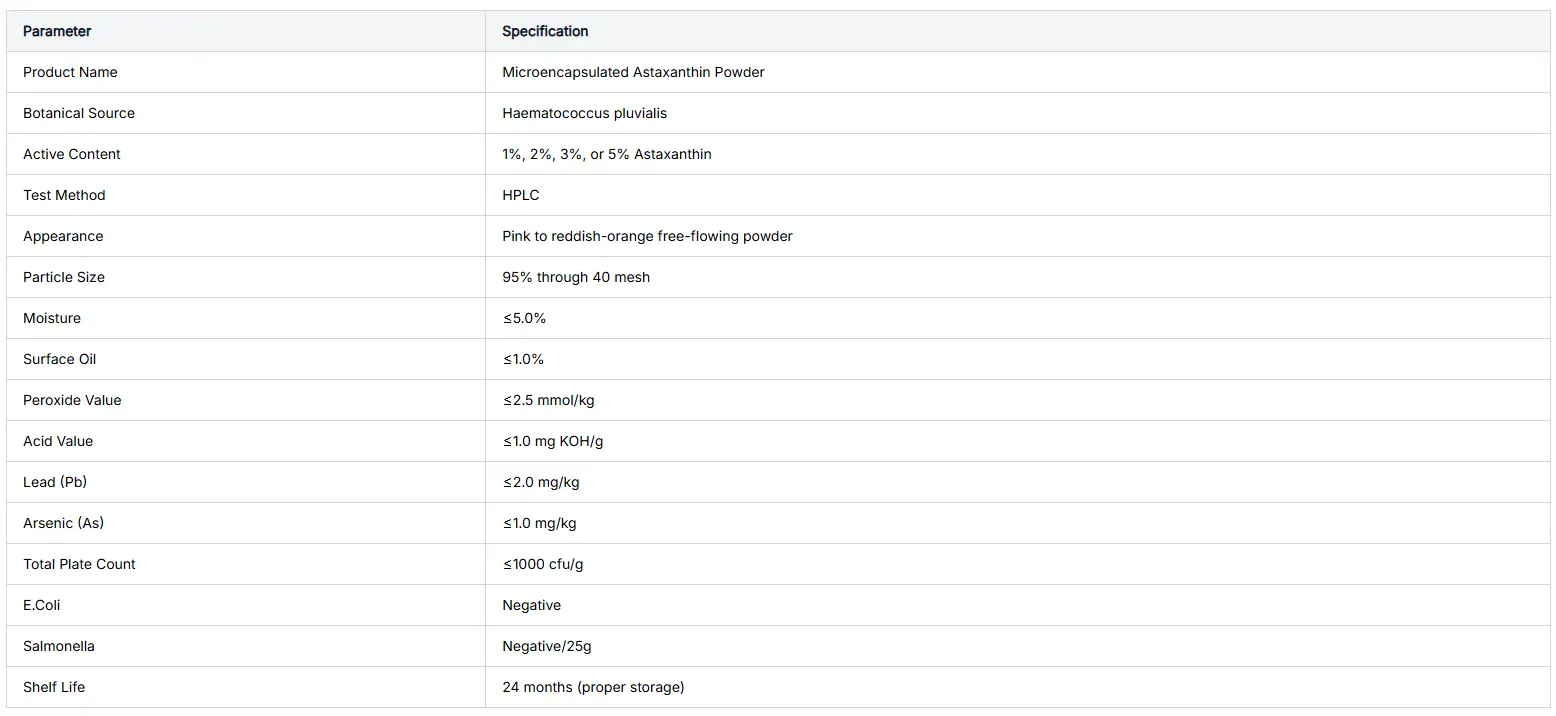
It is a lipophilic colour, which means it breaks down quickly in air, light, or heat. Each particle is protected by a three-wall microencapsulation made of modified starch or gum-based materials. In this way, air can't break down the active colour. It turns into a dry, smooth powder that has a peroxide value of 2.5 mmol/kg or less and less than 1% oil on the surface. With a 24-month shelf life, these levels show that the food will not go bad.
Bioavailability: Natural Esterified vs. Synthetic Free-Form
The source is just as important as how the message gets to the person. In nature, astaxanthin from Haematococcus pluvialis comes in a ratio of about 7:3 between mono- and diesters. The esterified structure is better at being absorbed in the digestive system than the astaxanthin made in a lab that is free-form. Astaxanthin comes from chemicals found in oil. According to study that has been reviewed by experts, astaxanthin from algae is most effective as an antioxidant for more than twelve hours after it is taken in. Synthetic alternatives can't do this in the same amount.
Cold-Water Dispersibility: A Real Formulation Advantage
This is something that most buyers don't think about until a production test fails. Traditional microencapsulated astaxanthin powder granules need hot water or an oil carrier to break down. If the hydrophilic-lipophilic balance (HLB) is just right, the powder inside the capsule can dissolve in cold water in seconds without leaving behind any sediment, floating particles, or wall adhesion. This quality is important for functional drink brands and instant sachet types because it affects how people see the product.
How to Choose the Right Astaxanthin Powder Supplier?
The process of choosing a provider has big effects on the quality of the product, its compliance with regulations, and the stability of its long-term supply. Here are the most common things that B2B buyers look at when choosing candidates:
- Source verification: Confirm the algae strain is authenticated Haematococcus pluvialis, not yeast-derived or synthetic. Request documentation of the algal cultivation and extraction process, including batch traceability records.
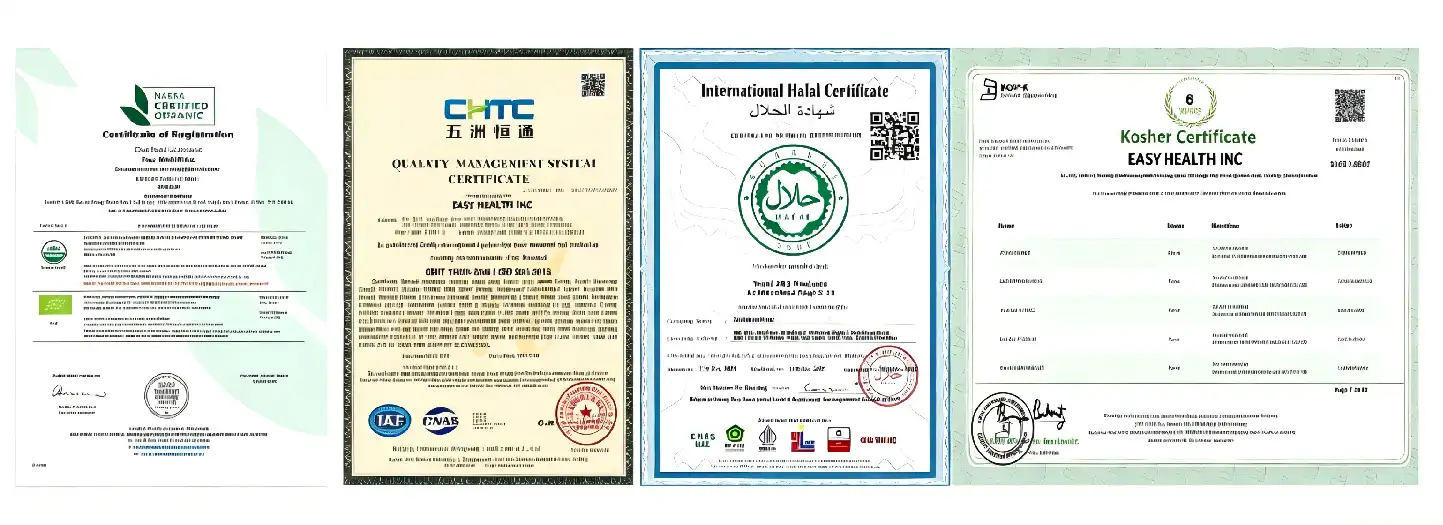
- Certifications on file: ISO, HACCP, and FDA registration cover manufacturing standards. For market access, USDA NOP and EU Organic cover clean-label claims; Halal and Kosher cover religious dietary markets. Vegan and shellfish-free declarations matter for DTC supplement brands.
- Per-batch COA: HPLC-confirmed astaxanthin content, heavy metal results (Pb ≤2.0 mg/kg, As ≤1.0 mg/kg), microbial counts (Total Plate Count ≤1000 cfu/g, Salmonella negative/25g), and oxidative stability data should accompany every shipment—not just on request.
- MOQ and sampling flexibility: Established brands with stable formulas can commit to larger volumes, but early-stage DTC brands need a supplier willing to provide a sample before committing to a production run.
In addition to certificates, you should ask providers what the encapsulation wall is made of and how well it works. When the sealing efficiency is above 95%, there is less oil on the surface, rust happens more slowly, and the color stays more stable on the shelf.
Top Sources: Where to Buy Astaxanthin Powder Wholesale?
A lot of microencapsulated astaxanthin powder can be bought in a number of different ways. Prices that are clear, wait times that are reasonable, and good documentation are all different in their pros and cons.
Direct Manufacturer Purchasing
When purchasing teams buy straight from a company like Easy Health Inc., they can get production documentation, a selection of concentrations, and technical help for putting the formulation together. In multi-level supply chains, fake goods are more likely to happen, but having direct ties with suppliers makes that less likely.
B2B Ingredient Marketplaces
A lot of companies that sell astaxanthin powder are listed on sites like Alibaba, Made-in-China, and Global Sources. People who want to buy a lot of something should always get lab results from a third party and visit or audit the plant (or use a third-party audit service). If this is your first time comparing goods, these sites can help.
Trade Shows and Industry Events
A few of the events that bring together qualified buyers and manufacturers are SupplySide West, Vitafoods Asia, and in-cosmetics Global. The technical team of a supplier can be met in person, where you can talk about recipe needs, approval status, and output capacity. A lot of the time, this cuts down on the time it takes from sample to contract.
Procurement Considerations for B2B Buyers
When buying ingredients from other countries, you have to follow the rules. China has made it clear that astaxanthin made in a lab can't be used in food. This means that any brand that wants to sell in Asia, like China, must get its astaxanthin from algae that grow in nature. Since 2021, this one rule has made people much more likely to buy Haematococcus pluvialis from natural sources.
People in North America and Europe can trust the claims on "natural" and "organic" labels because they are backed up by USDA NOP and EU Organic approval. If you are making high-end goods for eye health or oral beauty, check that the supplier's certifications are up-to-date and can be renewed. It shouldn't be credentials that were only valid for one audit, which ended years ago.
You should ask for accelerated stability data that shows how the amount and colour of astaxanthin stay the same over 6 months at 40°C/75% relative humidity to check the quality. Most people who don't like goods with astaxanthin say that the colour fades from deep red-orange to pale pink. This won't happen if the encapsulation system is well-thought-out and quality-controlled.
Conclusion
Finding the right microencapsulated astaxanthin powder depends on three things: the reliability of the source, the effectiveness of the packaging, and the thoroughness of the certification. The compliance and quality risks that come with this ingredient category are taken away by using natural material from Haematococcus pluvialis that has been tested for esterified astaxanthin content, can be dispersed in cold water, and comes with a full certificate package. When suppliers offer per-batch COA data, traceability records, and formulation support, they give procurement teams the details they need to quickly move from samples to production. These requirements are met by Easy Health Inc. for all four percentage grades, and the company has the right licenses to enter the US, EU, and key Asian markets.
FAQ
What concentration grade should I choose for my application?
The 1% grade suits functional beverages and instant drink sachets. The 2% grade works well for softgels and gummies. The 3% grade is the standard choice for tablet formulations where compression properties matter. The 5% grade delivers maximum actives per serving for premium softgels and topical-adjacent oral beauty products.
Is natural astaxanthin powder vegan and allergen-free?
Yes—algae-derived astaxanthin from Haematococcus pluvialis is entirely plant-based. Easy Health Inc.'s product carries vegan and shellfish-free declarations, making it suitable for clean-label supplement formulations.
How does encapsulation affect color stability on shelf?
Triple-wall encapsulation physically isolates the pigment from oxygen and light. Combined with a peroxide value kept at or below 2.5 mmol/kg, this structure maintains the characteristic red-orange color throughout the 24-month shelf life when stored below 15°C in sealed, light-proof packaging.
What documentation comes with each order?
Each shipment includes a Certificate of Analysis (HPLC-confirmed content, heavy metal data, microbial results), allergen declaration, and stability data. Certification copies for ISO, HACCP, USDA NOP, EU Organic, Halal, and Kosher are available on request.
What is the minimum order quantity?
MOQ varies by specification and packaging format. Contact Easy Health directly at devin@easyhealthbio.com to discuss sample quantities, first-order volumes, and 25 kg drum or bulk container options.
Request a Sample from Easy Health — Your Microencapsulated Astaxanthin Powder Supplier
For more than 11 years, Easy Health Inc. has been providing natural ingredient solutions. Their manufacturing is certified to meet ISO, HACCP, USDA NOP, EU Organic, Halal, and Kosher standards. Our microencapsulated astaxanthin powder comes from a single quality-controlled production line and comes in four different concentration grades. To begin, email Devin at devin@easyhealthbio.com with your recipe brief or ask for a taste of the product. You can also visit easyhealthinc.com.
References
1. Guerin, M., Huntley, M. E., & Olaizola, M. (2003). Haematococcus astaxanthin: Applications for human health and nutrition. Trends in Biotechnology, 21(5), 210–216.
2. Ambati, R. R., Phang, S. M., Ravi, S., & Aswathanarayana, R. G. (2014). Astaxanthin: Sources, extraction, stability, biological activities and its commercial applications. Marine Drugs, 12(1), 128–152.
3. Yuan, J. P., Peng, J., Yin, K., & Wang, J. H. (2011). Potential health-promoting effects of astaxanthin: A high-value carotenoid mostly from microalgae. Molecular Nutrition & Food Research, 55(1), 150–165.
4. Nishida, Y., Yamashita, E., & Miki, W. (2007). Quenching activities of common hydrophilic and lipophilic antioxidants against singlet oxygen using chemiluminescence detection system. Carotenoid Science, 11, 16–20.
5. Fassett, R. G., & Coombes, J. S. (2011). Astaxanthin: A potential therapeutic agent in cardiovascular disease. Marine Drugs, 9(3), 447–465.
6. Régnier, P., Bastias, J., Rodriguez-Ruiz, V., Caballero-Casero, N., Caballo, C., Sicilia, D., & Fuentes-Almagro, A. (2015). Astaxanthin from Haematococcus pluvialis prevents oxidative stress on human endothelial cells without toxicity. Marine Drugs, 13(5), 2857–2874.

_1784173402819.webp)