What Should You Look for When Buying Microencapsulated Sunflower Seed Oil Powder?
When sourcing microencapsulated sunflower seed oil powder for industrial food production, the stakes are higher than most buyers initially assume. The right product protects your formulations from oxidative degradation, eliminates oil migration in dry blends, and supports clean-label positioning—all without adding handling complexity to your production line. In this guide, I'll walk you through the technical benchmarks, supplier vetting criteria, and application considerations that separate a reliable ingredient from one that quietly undermines your finished product quality.
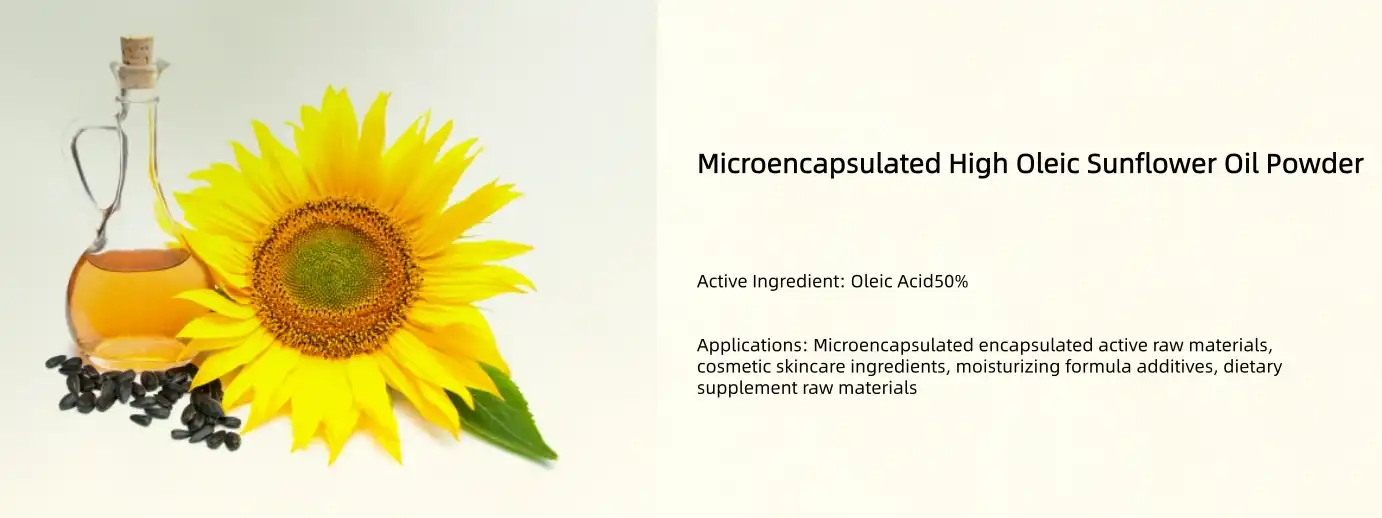
Understanding Microencapsulated Sunflower Seed Oil Powder
How Encapsulation Technology Works?
Microencapsulation turns liquid sunflower oil into a stable, smooth powder by enclosing the oil in a protected micro-matrix. This is usually done by spray drying at a low temperature. The fatty acid core is protected from oxygen, light, and heat by this wall structure. This greatly slows down the oxidation process that leads to rancidity. This makes a dry lipid ingredient that can be mixed with cold water, has no taste, and lasts much longer than raw liquid oil. This difference is important for the operations of baking premixes, beverage powders, and baby nutrition lines.
Why High-Oleic Composition Matters?
The fatty makeup of each microencapsulated sunflower seed oil powder is different. Standard sunflower oil that is high in linoleic acid has well-known stable issues. When the oleic acid level is above 80%, the high-oleic forms are three to five times more resistant to oxidation than regular ones. This increase in stability directly leads to longer shelf life for finished goods and fewer complaints from customers about off-notes. Products that keep natural vitamin E at ≥600 ppm naturally protect against free radicals, so they don't need to contain synthetic additives like TBHQ or BHA. This is good for the environment and will be appreciated by your compliance team.
Key Criteria to Evaluate Before Purchasing
At the business level, buying choices need more than just a good unit price. The following factors determine how well a powder will work in your production setting.
Here are the core technical benchmarks worth demanding from any supplier:
- Oleic acid content ≥80% — Important for oxidation resistance; use the GC test method to make sure. The active ingredient is confirmed by CAS No. 60-33-3.
- Surface oil ≤1.0% — Low surface oil means good encapsulation, which directly affects the chance of caking and the consistency of the shelf life.
- Peroxide value ≤2.5 mmol/kg — A good sign that the fats have been oxidized at the time of shipment; make sure you get batch certificates.
- Particle size: 95% through 40 mesh — Makes sure that automated dosing systems can flow the material consistently and that dry-blends are evenly mixed.
- Moisture content ≤5.0% — This is very important to keep from caking during storage, especially in wet places.
- Melting point >60°C — Ensures powder stability during storage and transport in warm climates.
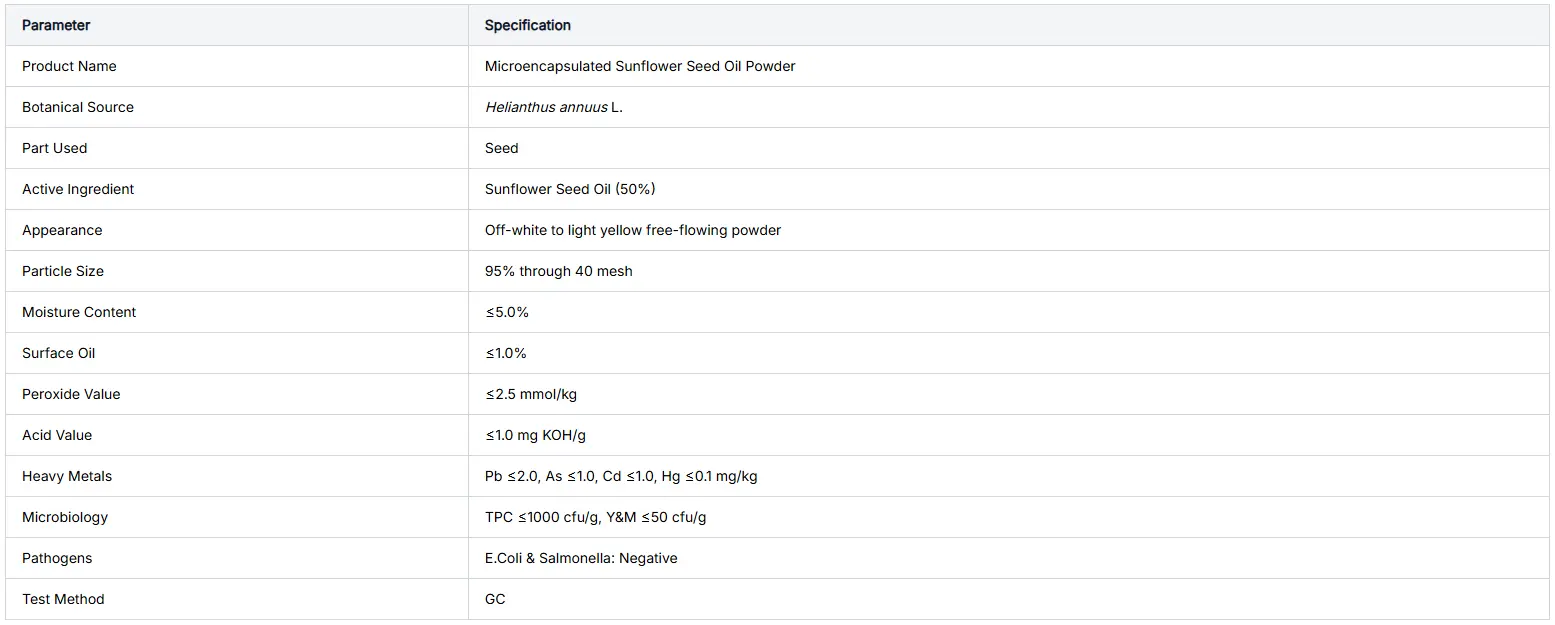
These standards are not made up on the spot. The Easy Health microencapsulated sunflower seed oil powder (50% oil load, off-white to light yellow free-flowing powder) meets all of the above criteria. It has also been tested for pathogens and found to be free of E. coli and Salmonella in every production batch.
In addition to the specs, you should always ask for a Certificate of Analysis and a comparison of batches from the supplier's quality control records. When there are differences between batches, it means that there are problems with the process control that will show up in your production line at the worst time.
How It Compares to Other Oil Powder Options?
Teams in charge of buying things often compare microencapsulated sunflower seed oil powder to palm-based fat powders, partly hydrogenated options, or their own liquid oil systems. Before choosing a sourcing system, it's important to know the pros and cons of each one.
Palm oil powder is stable at high temperatures, but in North American markets, it is closely watched for sustainability and label clarity issues. Fish oil powder adds omega-3s to food, but it also needs to be labeled for allergens and has big taste problems. It's cheaper to use liquid sunflower oil instead of encapsulation, but oil movement happens again in dry mixes, the shelf life is shorter, and it's harder to move large amounts of oil.
High-oleic sunflower oil powder in encapsulated form is in a unique position because it provides functional fat loading at 50% without making powder handling difficult, does not contain any allergens in standard formulations, has almost no smell thanks to flavor passivation technology, and supports clean-label claims by not containing any synthetic antioxidants. It's hard for bakers, nutrition bar makers, and beverage powder makers to get that mix again if they want to sell their products in places where knowing what's in their products is important.
Selecting the Right Supplier for Bulk Procurement
Certifications and Compliance Documentation
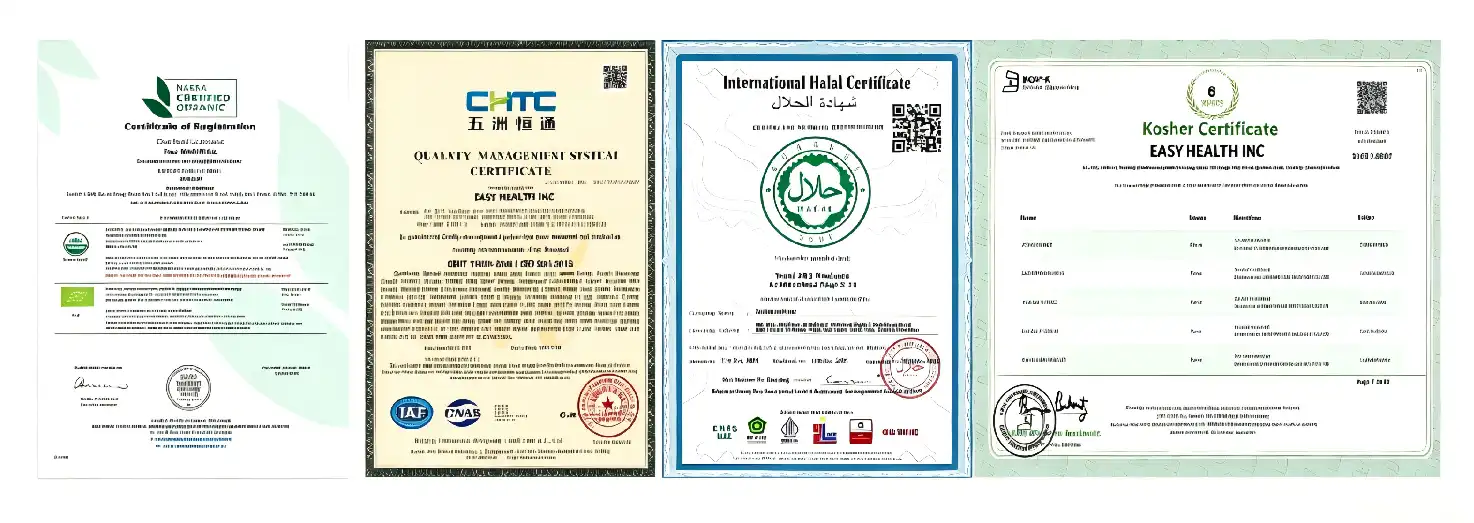
The list of certifications a supplier has is not just a formality; it shows your procurement and regulatory teams the way to follow for compliance. Make sure the microencapsulated sunflower seed oil powder is at least ISO, HACCP, Halal, Kosher, FDA-registered, and USDA NOP organic certified. Full traceability documentation is a must for brands that sell sensitive products like infant nutrition or clinical meal replacements, from where the raw materials come from to when they are delivered.
Supply Reliability and Lead Time
When buying in bulk, like when you sign an annual contract or order a whole container, supply continuity is just as important as price. Check to see if the supplier keeps standard specifications in stock and can meet custom formulation needs within a set production window. Easy Health keeps standard items in stock so they can be sent out right away. Custom orders usually take 3 to 5 business days to complete.
Technical Support Capacity
At the business level, a supplier's value goes beyond just delivering raw materials. A provider with real research and development (R&D) skills can help your development team solve application-specific problems, like making sure that fat doesn't migrate in a multi-component baking premix or making sure that dispersion is optimized in a beverage powder system. That technical relationship cuts down on the time it takes to make a new product in a way that simple commodity buying can't.
Ensuring Long-Term Supply Chain Success
The investment you made in a good item will be safe if you store it correctly. Microencapsulated sunflower seed oil powder that has been sealed in a capsule should be kept in a cool, dry place away from direct light. Under the right conditions, a well-encapsulated product can keep its nutritional and sensory properties for 18 to 24 months. This is a big plus compared to raw oil, which only stays stable for 6 months on average.
Set up a regular time to talk with your source so that you can keep an eye on any changes in the raw materials that could affect the batch features. If your application needs longer shelf-life estimates, ask for data from enhanced stability testing. Lastly, make sure that your annual volume commitments with your supplier are clear from the start. Framework contracts that lock in pricing tiers and delivery schedules make costs predictable and ensure that you have supply during times of high demand.
Conclusion
When looking for the best microencapsulated sunflower seed oil powder, you need to think about the lipid makeup, how well the powder is encapsulated, how it flows physically, and how reliable the provider is. Procurement managers can build stable, clean-label finished products with high-oleic formulations that have natural vitamin E, low surface oil, and batch consistency that has been checked. If you find a supplier that meets these technical requirements, has the right certifications, keeps stock on hand, and offers real R&D support, you'll have everything you need for a long-lasting, high-value ingredient partnership.
FAQ
How long does encapsulated sunflower oil powder last compared to liquid oil?
When stored normally, raw sunflower oil usually goes bad in six months. When kept in a sealed, cool, dry place, a properly microencapsulated sunflower seed oil powder will keep its nutritional and sensory integrity for 18 to 24 months. This makes it much easier to handle large inventory.
Can this powder substitute liquid oil directly in existing formulations?
Of course, with a simple change. At a 50% oil loading, the powder provides the same amount of fat as liquid oil but weighs twice as much. During a normal test run on your current production line, your R&D team can make sure the swap works.
What certifications should I prioritize?
The most types of compliance are covered by ISO, HACCP, Halal, and FDA registration. If your goods go into the baby nutrition or organic channels, your supplier needs to see a USDA NOP organic label and a full record of where the products came from.
Is a vegan-friendly version available?
Yes. Plant-based wall materials, like modified starch, can be used instead of dairy-based ones, like sodium caseinate. This supports vegan and clean-label claims without affecting the performance of the capsule.
Partner with Easy Health for Reliable Microencapsulated Sunflower Seed Oil Powder Supply
We at Easy Health have been extracting plant parts for more than 11 years and have ISO, HACCP, Halal, Kosher, and FDA certifications to back up our microencapsulated sunflower seed oil powder. We have our high-oleic formulation with 50% oil load in stock and ready for you to try. Visit easyhealthinc.com or email devin@easyhealthbio.com to get in touch with our technical team and ask for specs, batch records, or a personalized bulk price from a reputable microencapsulated sunflower seed oil powder manufacturer.
References
1. Gharsallaoui, A., Roudaut, G., Chambin, O., Voilley, A., & Saurel, R. (2007). Applications of spray-drying in microencapsulation of food ingredients. Food Research International.
2. Rubilar, M., Morales, E., Contreras, K., Ceballos, C., Acevedo, F., Villarroel, M., & Shene, C. (2012). Development of a soup powder enriched with microencapsulated linseed oil as a source of omega-3 fatty acids. European Journal of Lipid Science and Technology.
3. Comunian, T. A., & Favaro-Trindade, C. S. (2016). Microencapsulation using biopolymers as an alternative to produce food enhanced with phytosterols and omega-3 fatty acids. Food Hydrocolloids.
4. Martínez, M. L., Penci, M. C., Ixtaina, V., Ribotta, P. D., & Maestri, D. (2013). Effect of natural and synthetic antioxidants on the oxidative stability of walnut oil under different storage conditions. LWT – Food Science and Technology.
5. Shahidi, F., & Han, X. Q. (1993). Encapsulation of food ingredients. Critical Reviews in Food Science and Nutrition.
6. Frankel, E. N. (2005). Lipid Oxidation (2nd ed.). The Oily Press, Bridgwater, England.

_1784173402819.webp)