Why Use Water-Dispersible Microencapsulated Astaxanthin Powder?
Water-dispersible microencapsulated astaxanthin powder solves three problems that have frustrated formulators for years: rapid oxidation, poor water solubility, and low absorption. By enclosing natural astaxanthin from Haematococcus pluvialis within a triple-wall matrix, the active compound stays protected from light, heat, and oxygen while dispersing fully in cold water within seconds. For B2B buyers developing functional beverages, oral beauty supplements, or eye-health capsules, this format delivers consistent potency, clean aesthetics, and a 24-month shelf life that standard oily astaxanthin simply cannot match.
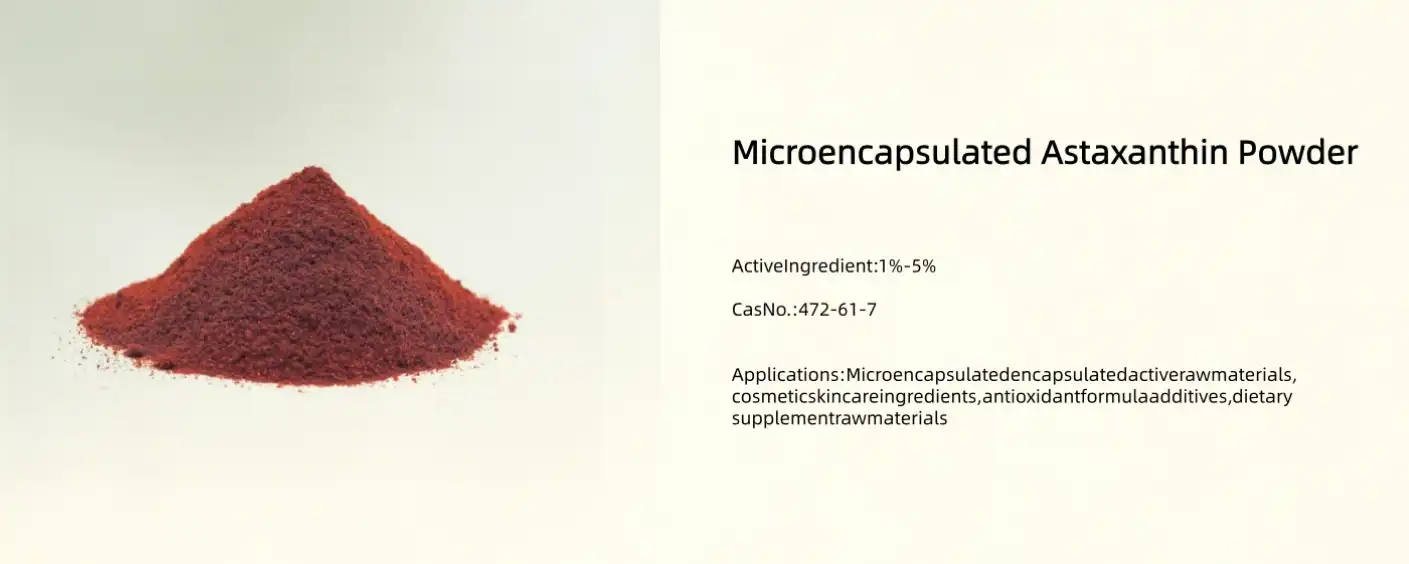
What Makes Microencapsulated Astaxanthin Different from Regular Powder
Conventional astaxanthin is a lipophilic carotenoid. It degrades quickly when exposed to air, repels water-based systems, and is absorbed inconsistently in the gut. Microencapsulation changes all three of those outcomes.
Triple-Wall Protection Against Oxidation
The astaxanthin powder from Easy Health has a triple-wall encapsulation structure that keeps oxygen and wetness away from the active molecule. Each batch keeps track of a peroxide value of ≤2.5 mmol/kg and a surface oil value of ≤1.0%. These are two numbers that show exactly how well the wall material is standing up. Low surface oil means that there isn't much of an exposed, unprotected part. This is what keeps the deep orange-red colour stable for the whole 24 months.
Natural Esterified Form from Haematococcus pluvialis
The astaxanthin inside comes only from Haematococcus pluvialis algae (CAS No. 472-61-7), where it is naturally esterified with monoester and diester in a 7:3 ratio. This is important because esterified astaxanthin is more than 70% bioavailable, while synthetic free-form astaxanthin is less than 10%. That difference is about 10 times bigger, and it's the most logical technical claim a company can make on its package. It's also a matter of following the rules. China's food laws say that synthetic astaxanthin can't be in food, so brands that want to sell in Asia can only get it from natural algae.
Cold-Water Dispersibility in Seconds
The microencapsulated astaxanthin powder has an optimised hydrophilic-lipophilic balance (HLB) formulation that lets it mix completely with cold water without any sediment, floating particles, or residue stuck to the walls of the containers. The particles are controlled so that 95% of them can pass through a 40-mesh screen. This makes sure that beverage makers always get a clean, even red dispersion. This gets rid of the biggest problem right away for ready-to-mix and quick drink sachets.
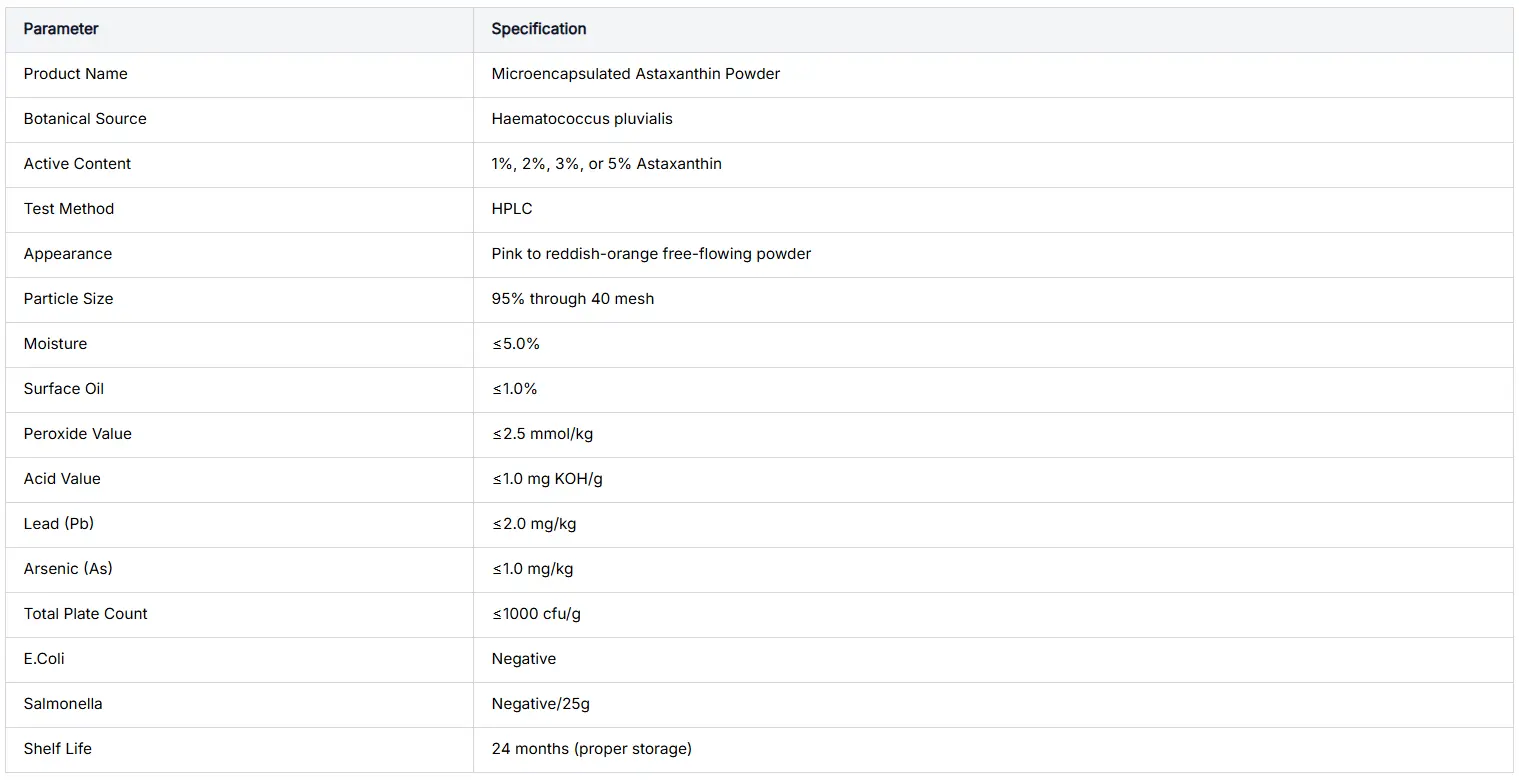
Comparing This Format to Conventional Astaxanthin Options
Picking a chemical style is a buying choice that will have long-lasting effects on the product. This is how the encased powder stacks up against other options in the ways that mean most to business buyers.
Oxidative Stability Over Time
Standard preparations of oily astaxanthin are fragile. They quickly turn rancid when heated up or when they come into contact with air while being mixed or tableted. The controlled moisture content (≤5.0%) and sealed wall structure of the encapsulated powder keep its antioxidant activity even when it's being made and stored. The 24-month shelf life claim is backed up by accelerated stability tests that were done on sealed, light-protected packaging kept below 15°C.
Bioavailability vs. Synthetic Alternatives
A study released in 2018 in the journal Marine Drugs revealed that esterified astaxanthin from Haematococcus pluvialis had much higher plasma concentrations in humans than synthetic free-form astaxanthin at the same doses. The natural esterified form needs intestine esterase activity to release the free carotenoid. This causes a two-phase absorption profile: antioxidant activity lasts for over 12 hours, and plasma levels peak in about 2 hours.
Cost-Efficiency in Formulation
Because microencapsulated astaxanthin powder is more bioavailable, a smaller dose is needed to get the same clinical benefit. The 1% or 2% specification can be used for everyday functional drinks without losing any of their effectiveness. The 5% specification, on the other hand, should only be used for high-end softgels or skin products. All four concentrations—1%, 2%, 3%, and 5%—are made on the same quality-controlled line. This makes stability between batches more reliable and makes it easier to check suppliers.
Where Brands Are Using This Ingredient
This type of ingredient style works well with a number of product groups that are seeing fast growth. For the most part, it works best in the following areas:
- Functional beverages and instant drink sachets (1% spec): Cold-water dispersibility and color uniformity mean no consumer complaints about cloudy drinks or sediment at the bottom of the glass. The 1% concentration delivers a typical 4–8 mg dose per serving at practical inclusion rates.
- Softgel capsules and gummies (2% spec): Moderate concentration with good flowability on encapsulation equipment. The encapsulated structure prevents oil migration into gelatin shells, which extends capsule appearance stability.
- Tablets and pressed formats (3% spec): Dry powder with controlled particle size flows smoothly on high-speed tablet presses without clogging or uneven distribution.
- High-potency softgels and oral beauty serums (5% spec): Maximum actives per gram of ingredient for premium positioned products where cost-per-dose economics favor concentration.
With these application types, it's easy to make a full line of products for eye health, skin antioxidants, and general wellness from a single ingredient source. This makes it easier for lean brand teams to find suppliers.
What B2B Buyers Should Verify Before Purchasing
Sourcing any branded ingredient requires a structured review. The following checklist covers the non-negotiable checkpoints that experienced procurement teams apply to natural astaxanthin suppliers.
Certifications and Regulatory Coverage
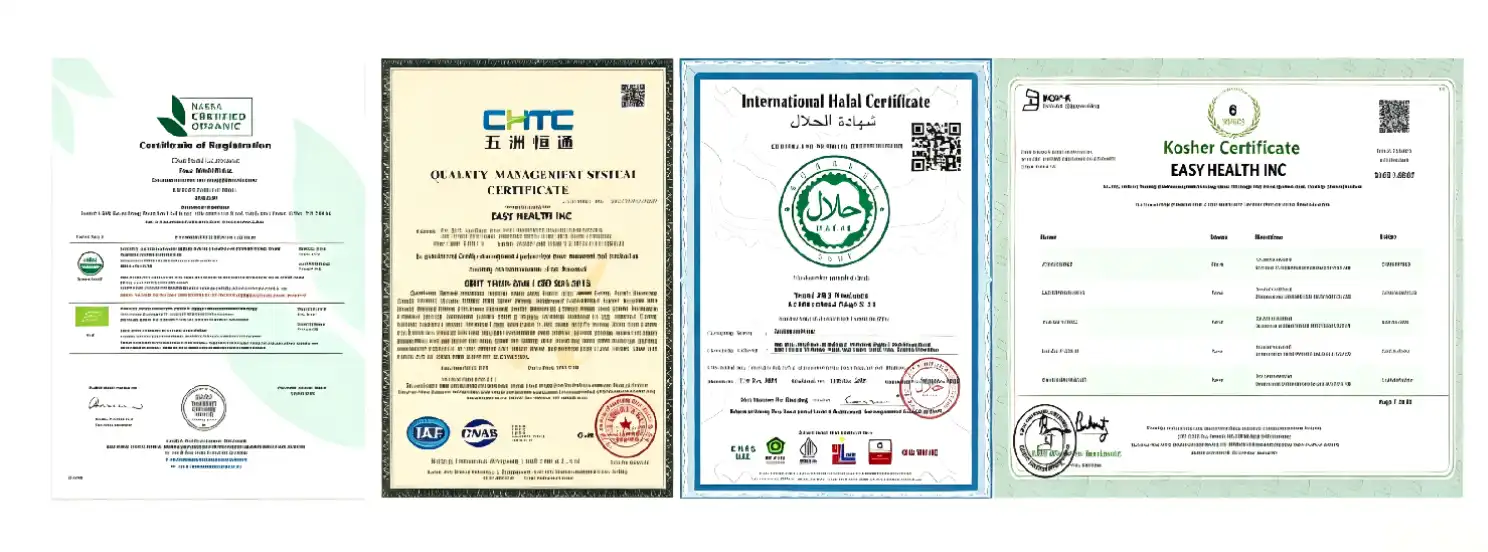
Easy Health is registered with the FDA, ISO, Halal, Kosher, the USDA NOP, the EU Organic, and HACCP. This stack means that brands that sell in North America, Europe, and Asia all at the same time can get all of their ingredients from a single source, which is compliant in all three big markets. For brands whose customers are sensitive to allergens, vegan and shellfish-free statements are sent with every shipment.
Documentation Per Batch
Each batch that is made comes with a Certificate of Analysis (COA) that shows that it was checked by HPLC for astaxanthin content, heavy metals (Pb ≤2.0 mg/kg, As ≤1.0 mg/kg), microbes (E. coli negative, Salmonella negative/25g, Total Plate Count ≤1,000 cfu/g), and oxidative stability markers. Full tracking is available from growing the algae to packaging it.
Minimum Order and Lead Time
Standard standards are kept in stock so that they can be sent out right away. Most customised runs are finished in three to five business days. This is important for small direct-to-consumer brands with tight cash flow because first sales can be filled quickly without having to commit to a lot of inventory.
Conclusion
Water-dispersible encapsulated astaxanthin from Haematococcus pluvialis solves all of the main problems that regular astaxanthin causes when it comes to preparation. This microencapsulated astaxanthin powder is about 10 times more bioavailable than manufactured options in its natural esterified form. The triple-wall structure protects potency for 24 months, and the optimized HLB system makes a clean cold-water dispersion in seconds. With four concentration options from a single production line, brands can make antioxidant products for eye health, skin beauty, and general health without having to switch suppliers. This format for the ingredients is the best choice for global names that need both performance and safety.
FAQ
How long does the shelf life last compared to regular astaxanthin?
Encapsulated astaxanthin powder carries a verified 24-month shelf life when stored below 15°C in sealed, light-protected containers. Unencapsulated oily astaxanthin typically degrades within 12 months under comparable conditions due to direct oxygen exposure.
Is the product suitable for vegan and allergen-sensitive consumers?
Yes. The powder is certified vegan and shellfish-free. Every batch ships with written allergen declarations confirming these statuses.
How do I verify that the astaxanthin is genuinely from Haematococcus pluvialis and not synthetic?
Request the COA showing HPLC analysis and the ester profile. Natural algal astaxanthin shows a characteristic monoester/diester ratio that synthetic free-form astaxanthin cannot replicate. Easy Health provides full traceability documentation from algae source to finished powder.
Can this ingredient be combined with lutein and zeaxanthin in eye health formulas?
Yes. The dry encapsulated matrix is compatible with lutein and zeaxanthin in tablet and softgel formats. The 3% specification provides suitable flowability for tablet compression without interfering with co-ingredient assays.
What is the typical inclusion rate for a functional beverage?
Using the 1% specification, a 4 mg astaxanthin dose per 250 mL serving requires 0.4 g of powder—a practical addition rate for sachet and ready-to-mix formats.
Get a Sample from Easy Health's Microencapsulated Astaxanthin Powder Supplier
For more than 11 years, Easy Health has provided pure plant ingredients to well-known names around the world. Our microencapsulated astaxanthin powder comes in four different concentrations and comes with full certification paperwork and batch-level COAs that are ready to be shared. You can email our team at devin@easyhealthbio.com or go to easyhealthinc.com to ask for a sample, look at technical data sheets, or talk about your recipe needs. Your first talk with someone is free, and it could be the key to launching your next product.
References
1. Fassett, R. G., & Coombes, J. S. (2011). Astaxanthin: A Potential Therapeutic Agent in Cardiovascular Disease. Marine Drugs, 9(3), 447–465.
2. Nishida, Y., Yamashita, E., & Miki, W. (2007). Quenching activities of common hydrophilic and lipophilic antioxidants against singlet oxygen using chemiluminescence detection system. Carotenoid Science, 11, 16–20.
3. Coral-Hinostroza, G. N., Ytrestøyl, T., Ruyter, B., & Bjerkeng, B. (2004). Plasma appearance of unesterified astaxanthin geometrical E/Z and optical R/S isomers in men given single doses of a mixture of optical 3 and 3′R/S isomers of astaxanthin fatty acid diesters. Comparative Biochemistry and Physiology Part C, 139(1–3), 99–110.
4. Ambati, R. R., Phang, S. M., Ravi, S., & Aswathanarayana, R. G. (2014). Astaxanthin: Sources, Extraction, Stability, Biological Activities and Its Commercial Applications—A Review. Marine Drugs, 12(1), 128–152.
5. Capelli, B., Bagchi, D., & Cysewski, G. R. (2013). Synthetic astaxanthin is significantly inferior to algal-based astaxanthin as an antioxidant and may not be suitable as a human nutraceutical supplement. NutraFoods, 12(4), 145–152.
6. Yuan, J. P., Peng, J., Yin, K., & Wang, J. H. (2011). Potential health-promoting effects of astaxanthin: A high-value carotenoid mostly from microalgae. Molecular Nutrition & Food Research, 55(1), 150–165.

_1784173402819.webp)