What Is Milk Thistle Seed Oil Powder Used For?
Milk thistle seed oil powder has become one of the most sought-after botanical ingredients in the liver health and functional nutrition space. Derived from Silybum marianum seeds, this ingredient delivers naturally occurring linoleic acid (Omega-6), tocopherols, and trace silymarin — a bioactive compound traditionally associated with hepatoprotective activity. When formulated as microencapsulated milk thistle seed oil powder, these bioactives are protected within a starch-based wall matrix, enabling stable performance across tablets, RTD beverages, and cosmetic serums. This guide explains what this ingredient does, who it serves, and why the encapsulated form outperforms conventional alternatives.
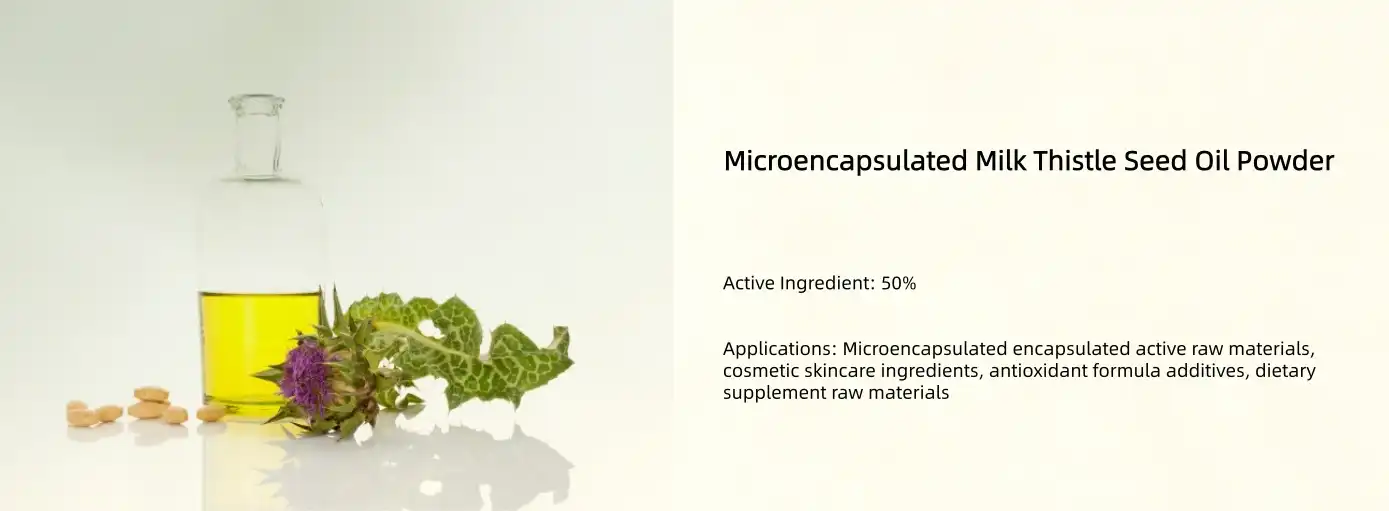
Understanding Microencapsulated Milk Thistle Seed Oil Powder
Microencapsulation is a process in which protected wall material is sprayed-dried and cold-pressed Silybum marianum seed oil is put inside it. The end result is an off-white to light yellow powder that flows freely and acts like a solid ingredient while consistently releasing active lipids during digestion.
How the Encapsulation Process Works?
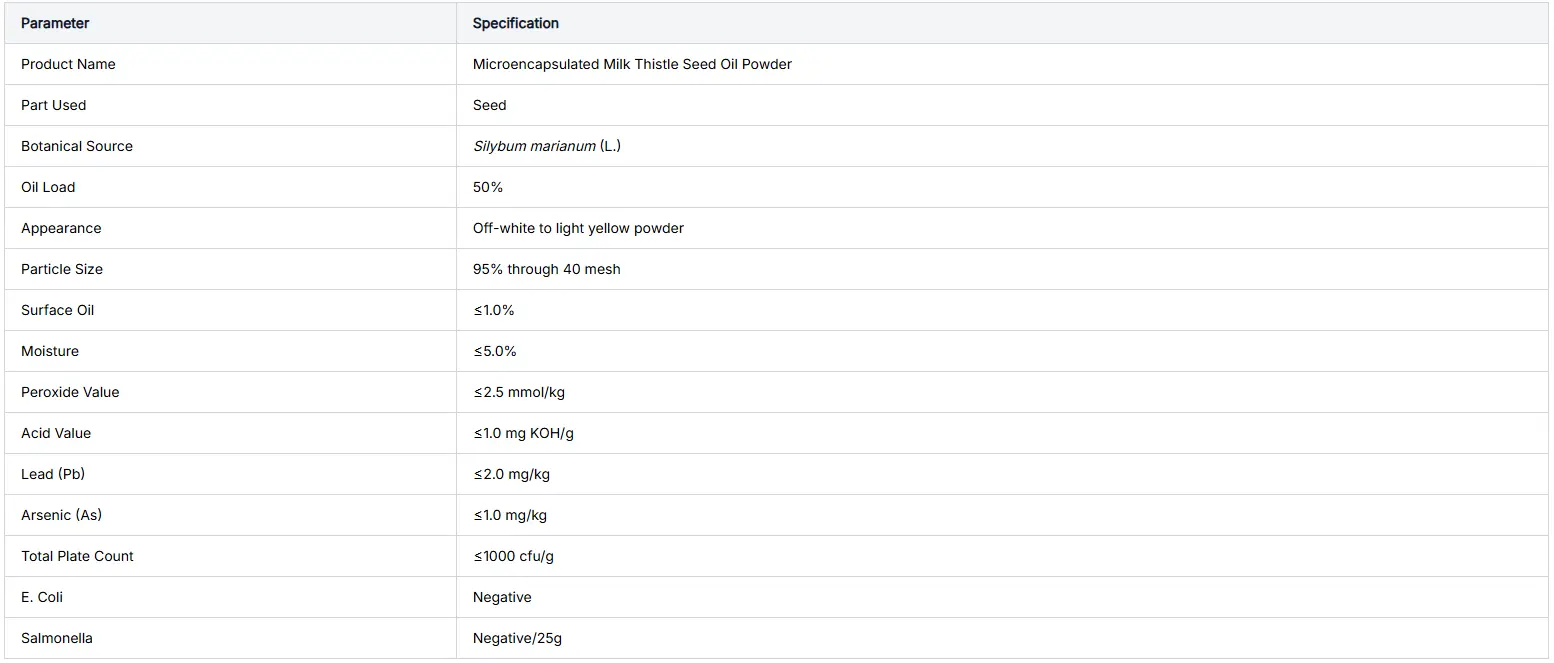
A starch-based carrier system is mixed with the oil, and then it is sprayed-dried under controlled conditions to make a micro-matrix that is sealed. This structure with two walls blocks oxygen, which makes the Induction Period much longer in Rancimat oxidative stability tests. A well-designed product has a surface oil content of only 1.0%, which is much lower than the average of 2–3% in the industry. This means that the product will last longer and there will be less chance of going rancid while it is being stored.
Why This Matters for B2B Formulation?
When used as a bulk liquid, traditional milk thistle oil quickly oxidizes, separates into oily layers in drinks, and has a strong bitter taste that people don't like. All three problems are solved at the same time by encapsulation. Since 95% of the powder's particles can pass through 40 mesh, it can be used in high-speed pill filling lines and cold-process beverage production without clogging equipment or making drinks taste bad.
Key Uses and Applications of Milk Thistle Seed Oil Powder
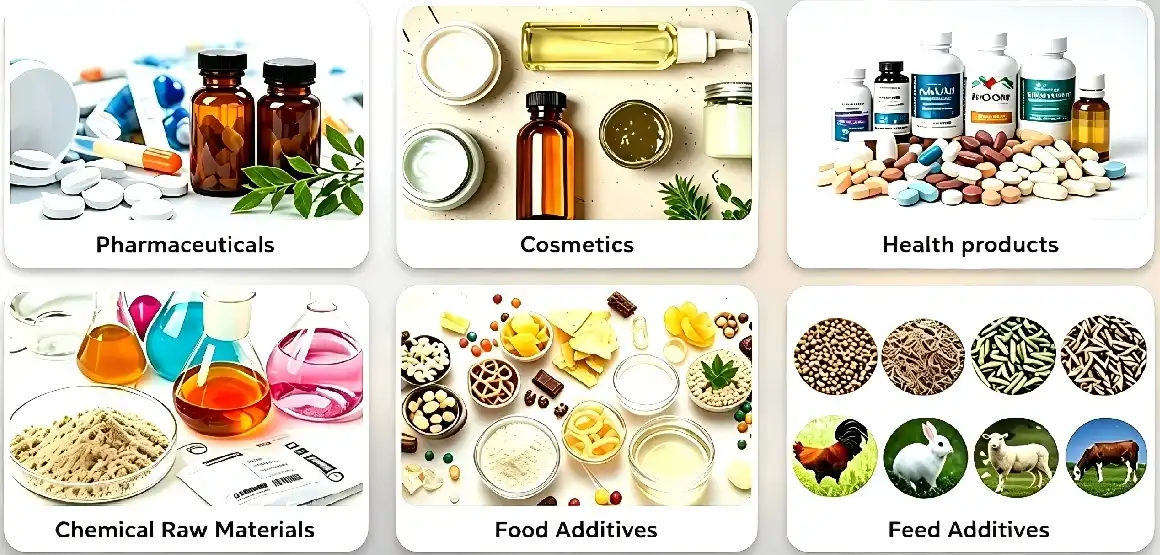
This ingredient's commercial value comes from how useful it is in many different ways. Nutraceuticals, functional foods, and personal care product makers are adding it to new formulas because it has clean-label credentials and measured functional performance.
Here are the primary application categories where this ingredient adds meaningful value:
- Nutraceutical Capsules and Tablets: The free-flowing particle structure allows for high-speed automatic encapsulation without oil movement when tablets are pressed down. Formulators working on liver support and detox categories can benefit from consistent dosage across production runs. The 50% oil-load specification also makes sure that each capsule delivers an effective amount of active ingredient at a low cost.
- Functional Beverages and Meal Replacements: The sticky ring that forms when liquid oil is used is not present in cold water because it dissolves instantly. This powder can be added to ready-to-drink liver health drinks, detox condition packs, and keto meal replacements without changing the way they taste, which is a key factor in getting customers to buy again.
- Cosmetics and Skin Repair Formulas: This ingredient is great for anti-aging serums and barrier-repair products because it contains a lot of antioxidant-rich fatty acids, like linoleic acid and natural tocopherols. Powder dosing is more accurate than bulk oil dosing, and it stays stable on the shelf much longer.
- Clinical Nutrition: This powder is good for enteral feeding recipes that strictly follow lipid stability and germ safety standards because it has a low surface oil content and is easy to digest.
These application pathways are based on real needs in the market. According to Grand View Research (2023), the global microencapsulated milk thistle seed oil powder liver health supplement market was worth about USD 1.06 billion in 2022 and is still growing. This is because more people are becoming aware of how much alcohol they drink and more people want to buy clean-label hepatic support products.
Comparing Microencapsulated vs. Non-Microencapsulated Forms
A lot of buying teams wonder if the packaged form is really worth the extra work that went into making it compared to a regular silymarin extract. It's important to look at the difference carefully.
Stability and Shelf-Life Difference
Cold-pressed milk thistle oil in bulk usually stays good for about six months when stored at room temperature. By keeping light, air, and water away from unsaturated fatty acid bonds, encapsulation makes this last for 24 months. The amount of peroxide in Easy Health's formula is kept at ≤2.5 mmol/kg. This is a conservative level of quality control that lets downstream makers rely on it during yearly inventory cycles.
Clean-Label Positioning vs. Standardized Extracts
This is where the strategic difference starts to make sense. The market is mostly made up of standardized silymarin extracts that compete mainly on price and purity percentage. There is something different about the capsule oil form: it contains naturally occurring trace silymarin (0.5–1%) that is kept from cold-pressed virgin oil, along with the full lipid matrix of tocopherols and phytosterols. This lets you tell a story about where your "whole seed" or "cold-pressed" products come from that appeals to clean-label shoppers and makes them stand out on the shelf, which is something that standard extracts can't do.
How to Choose the Right Milk Thistle Seed Oil Powder Supplier?
The choice of supplier has a direct effect on the results of formulation, compliance with regulations, and the image of the business. The ingredient must work the same way in all batches, and the supplier must show proof that meets the requirements for FDA, EU, and Asian market registration.
Certifications and Documentation Standards
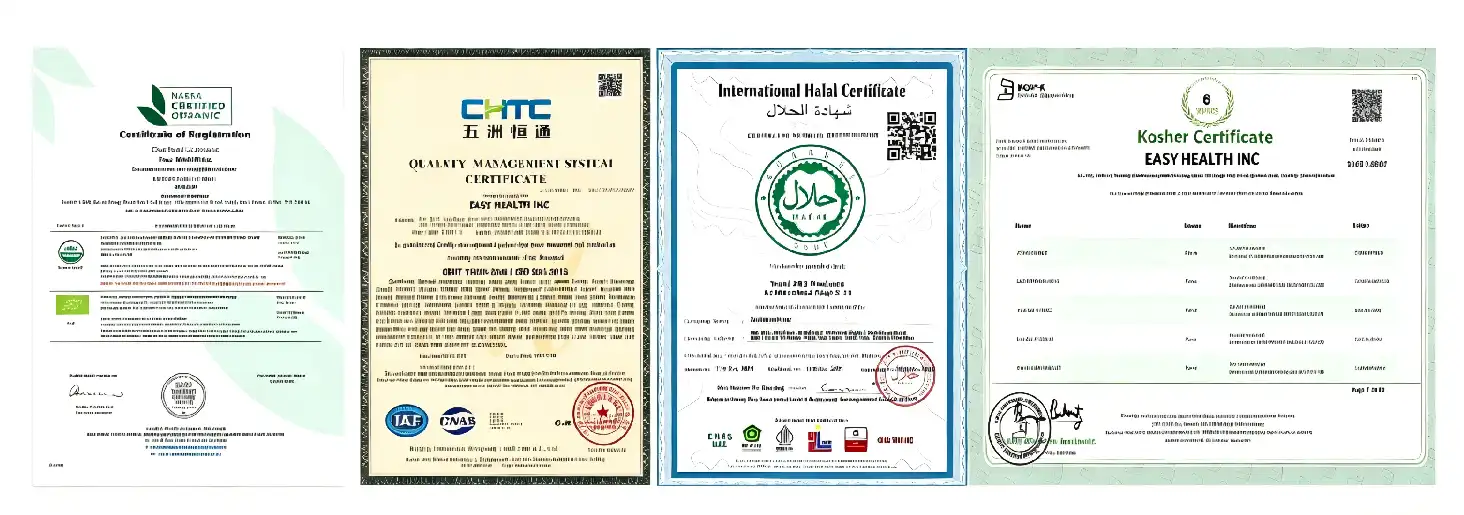
As a minimum, a trustworthy microencapsulated milk thistle seed oil powder company should have ISO quality management approval, as well as Halal, Kosher, and FDA registration. Brands that want to sell natural products in the US or organic products in the EU will benefit from getting USDA NOP and EU Organic certifications. Full batch traceability, from choosing the seeds to the final packing, helps with recall management and makes sure that paperwork is ready for an inspector.
Technical Support Capability
In addition to providing raw materials, capable suppliers can work with R&D to improve formulations, test them in real-world situations, and confirm their quality through sensory evaluation. This is especially important for beverage companies that want to hide taste or for clinical nutrition makers who have to follow rules for medical foods. Procurement teams can test performance before committing to full production numbers thanks to quick sample return and small-batch pilot capability (50–300 kg).
Future Trends and Market Insights
The market for useful lipids in microencapsulation is growing faster around the world. More and more people in North America and Europe want supplements and foods that say they use natural ingredients and treat them in a clean way. Because of this trend, cold-pressed oil powders that have been minimally processed are in a great position to grow.
The rules and regulations are also changing. The US DSHEA structure/function claim route lets liver health placement happen as long as claims are supported and come with the right disclaimers. Brands that use well-documented products that can be traced back to their source are better prepared to deal with FTC and FDA scrutiny than brands that use generic extracts that don't have much proof of where they came from.
Sustainability is another issue that is becoming more important. Retail partners are putting more and more pressure on buyers of botanical products to show that their supply chains are responsible. This means that full tracking from seed to powder is not only a quality feature, it's also a business requirement.
Conclusion
Microencapsulated milk thistle seed oil powder is one of a kind when it comes to useful ingredients, especially when it is in the form of capsules. It gives hepatoprotective fats, natural antioxidants, and trace bioactives in a form that works reliably in drinks, tablets, and creams. The enclosed oil matrix is a technically sound and commercially unique option for brands that want to set themselves apart from generic silymarin extracts with a clean label. The most important thing is to buy from a supplier whose cold-pressing credentials, encapsulation quality, and compliance paperwork can all be checked.
FAQ
What makes cold-pressed milk thistle oil different from refined oil in this powder?
When you cold-press, you keep the natural tocopherols, phytosterols, and small amounts of silymarin that are lost or killed when you use solvents to extract and refine the oil. These parts back up claims of "clean labels" and help keep things stable against oxidation without using artificial antioxidants.
Does encapsulation affect how the active fatty acids are absorbed?
In food-grade microencapsulation, the wall materials break down easily in the digestive system, letting the core fats be absorbed normally. Encapsulation doesn't make the actives less bioavailable; it just keeps them safe until they get to where they're supposed to be.
Can this powder withstand pasteurization in RTD beverage production?
The double-wall micro-matrix acts as a thermal buffer and keeps its shape at pasteurization temperatures of up to 180°C. This means it can be used for both UHT processing and making hot drinks.
What certifications should I require from a supplier?
At the very least, ISO, Halal, Kosher, and FDA registration. For sales in North America and Europe, it is strongly suggested that products have USDA NOP and EU Organic certifications. Full COA paperwork for each batch is required by law and cannot be skipped.
Is a 50% oil-load specification the right choice for tablet formulations?
Yes. Cost-per-active-dose and packaging efficiency are both balanced by a 50% oil load. Higher oil loads can weaken the walls and make more oil layer on top, which speeds up rusting and causes caking in places with a lot of humidity.
Partner with Easy Health for Premium Microencapsulated Milk Thistle Seed Oil Powder
Every order from Easy Health comes from a company that has been making plant extracts for more than 11 years and is ISO/Halal/Kosher-certified. As a microencapsulated milk thistle seed oil powder provider, we can help OEMs with their formulations and provide full traceability paperwork that meets the needs of the US, EU, and Asian markets. Get a taste today and see what the difference is between hot and cold pressing. To start the formulation consultation process, email devin@easyhealthbio.com or visit easyhealthinc.com to begin your formulation consultation.
References
1. Grand View Research. Liver Health Supplements Market Size, Share & Trends Analysis Report. 2023.
2. Gazak, R., Walterova, D., & Kren, V. Silybin and Silymarin — New and Emerging Applications in Medicine. Current Medicinal Chemistry. 2007.
3. Madene, A., Jacquot, M., Scher, J., & Desobry, S. Flavour Encapsulation and Controlled Release — A Review. International Journal of Food Science & Technology. 2006.
4. Jiang, Y., & Ramachandran, K. B. Microencapsulation of Edible Oils: A Review. Food Reviews International. 2019.
5. Abenavoli, L., Capasso, R., Milic, N., & Capasso, F. Milk Thistle in Liver Diseases: Past, Present, Future. Phytotherapy Research. 2010.
6. McClements, D. J. Encapsulation, Protection, and Release of Hydrophilic Active Components: Potential and Limitations of Colloidal Delivery Systems. Advances in Colloid and Interface Science. 2015.

_1784173402819.webp)