What Is Microencapsulated MCT Oil Powder Used For?
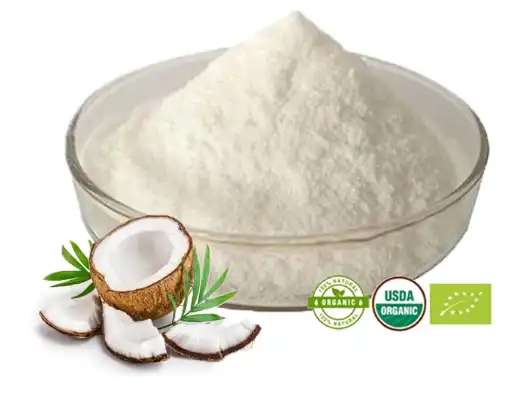
Microencapsulated MCT oil powder serves as a versatile functional lipid ingredient across sports nutrition, ketogenic formulations, functional beverages, clinical diets, and premium pet food. By converting liquid medium-chain triglycerides into a stable, free-flowing powder through spray-drying technology, it eliminates the oiliness, phase separation, and oxidation risks of conventional liquid oils. MCT microencapsulated palm oil powder — derived from Elaeis guineensis palm kernel oil — delivers a precise C8:C10 ratio for rapid ketone conversion, while its core-shell structure ensures consistent performance in both cold and hot applications. For B2B formulators, this ingredient unlocks cleaner labels, broader market certifications, and a lower cost-per-batch versus coconut-derived alternatives.
Understanding Microencapsulated MCT Oil Powder
What the Science Actually Means for Your Formula?
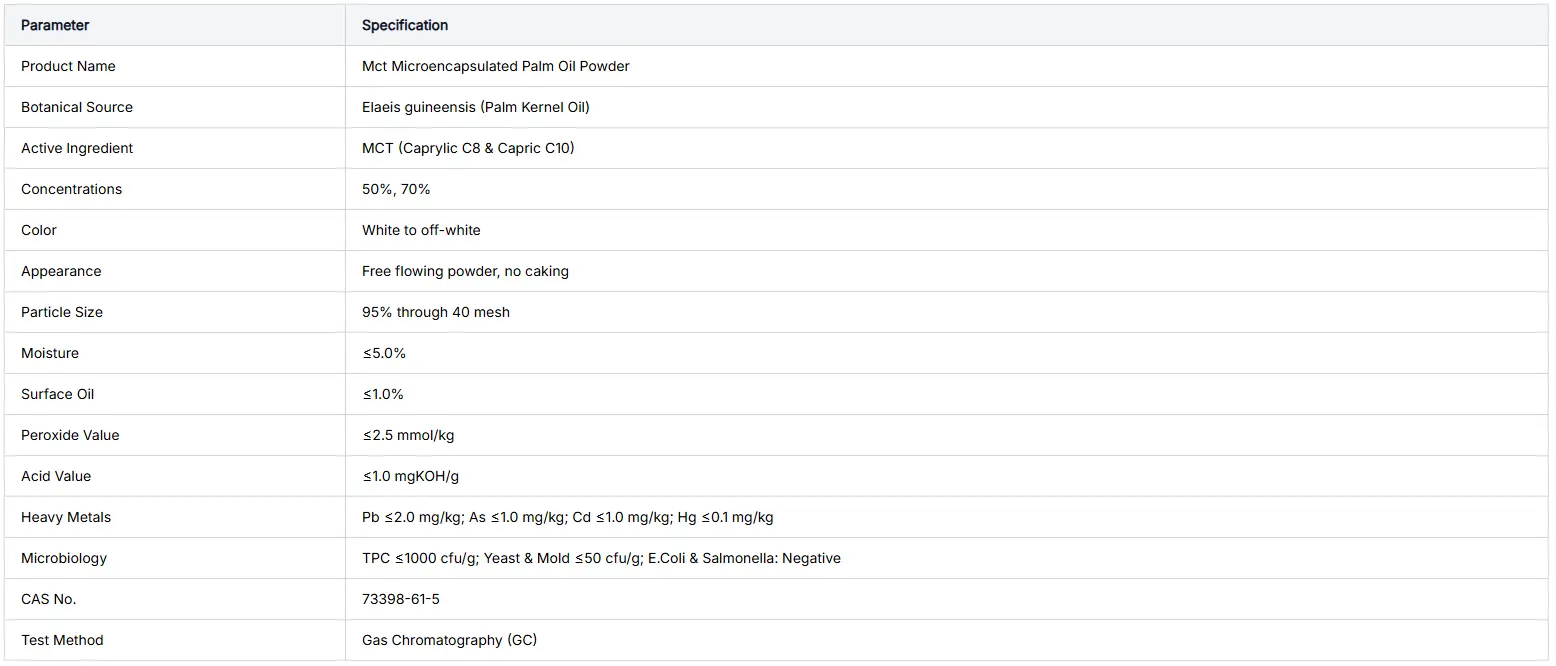
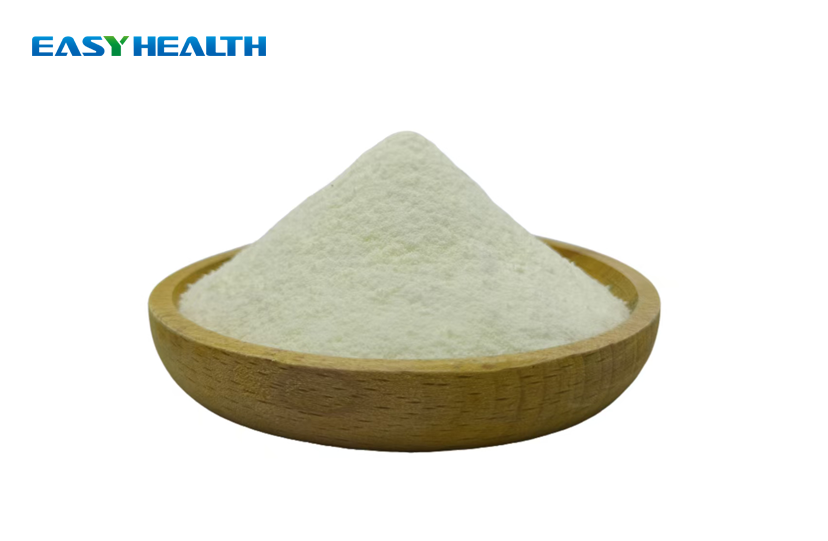
Microencapsulation is much more than just a trick for getting things done. It's also a way to fix the way things are built. When pure MCTs are sprayed dry, they are broken up into very small pieces and mixed with a support material (like gum arabic or modified starch) to make a tight core-shell structure. By blocking oxygen and heat, this wall material keeps the lipid core steady up to 80°C while it is being made further down the line. A free-flowing, off-white powder with a peroxide value of ≤2.5 mmol/kg and a surface oil content of ≤1.0% is what you get in the end. These are both good ways to tell how well the powder caps the substance and keeps it from oxidising.
High-grade MCT microencapsulated palm oil powder is different from lower types because it is more pure. Many providers give you 80–85% MCT content. GC tests show that Easy Health's palm-based powder is at least 95% pure at both 50% and 70% concentrations. The number of 55:45 C8:C10 has also been proven to be correct. Caprylic acid (C8) is broken down into ketone bodies the fastest, while capric acid (C10) helps fuel your body. Not only does that balance look good, it also changes how fast end users can make ATP.
Practical Uses of MCT Microencapsulated Palm Oil Powder in Industry
From Keto Shakes to Clinical Nutrition
One thing that makes MCT microencapsulated palm oil powder appealing to businesses is that it can be used in a lot of different ways. In these main areas, this ingredient makes products better in real ways:
- Sports Nutrition & Ketogenic Supplements: This ingredient is the main fat source in meal replacement shakes, keto bars, and pre-workout mixes. It gives your body instant fuel for metabolism without the stomach issues that can happen with raw liquid MCT oil. The powder mixes easily into mixtures of different ingredients, leaving no clumps or off-notes.
- Functional Beverages & Coffee Creamers: The encapsulated structure keeps the oil from evaporating in RTD coffee, protein shakes, and energy drinks, even when the drinks are acidic or very hot. Customers like that it has a smooth, creamy mouthfeel instead of a greasy film, which makes them more likely to buy it again.
- Clinical & Geriatric Nutrition: Controlled-release capsule helps with gentle processing and steady nutrient delivery, which makes this ingredient good for enteral feeding formulas and therapeutic diets that target malabsorption disorders. GC-verified fatty acid profiling gives medical-grade uses the stability they need from batch to batch.
- Infant Formula & Fortified Dairy: The powder mixes evenly into cereals and fortified milk powders, making it easier for people whose digestive systems are still growing or aren't working well to absorb fat. It also meets strict food safety standards.
- Premium Pet Food & Animal Nutrition: High calorie density and a lack of rancidity during storage or transport make this a good way for premium pet nutrition makers to improve their products.
All of these uses have one thing in common: they all need an ingredient that works reliably during handling, storage, and the customer experience. All three of these needs are met perfectly by encapsulated palm-derived MCT powder.
Comparing MCT Microencapsulated Palm Oil Powder with Alternatives
Why Palm-Sourced Powder Often Wins at Scale?
When procurement teams look at this category, they usually look at three options: liquid MCT oil, regular palm oil powder, and MCT microencapsulated palm oil powder made from coconut.
It is hard to store liquid MCT oil because it needs special packing, doesn't do well in cold chains, and can oil out in water-based formulas. It also causes more stomach problems in people who are sensitive to it when used at useful amounts. Most of these problems go away when you switch to a powder format, and the costs of shipping and storage go down by a lot.
The intense C8/C10 makeup that causes ketones to be released is missing in regular palm oil powder. This is because it is a caloric ingredient and not a metabolic one. When putting a product in the keto or sports nutrition channel, the difference in function is important.
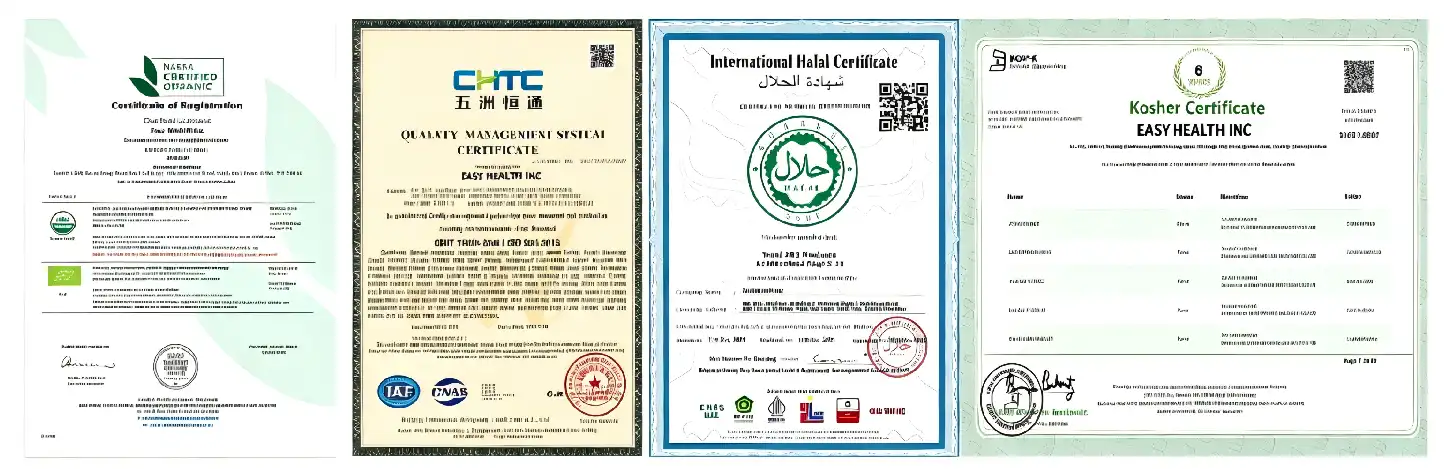
People think that MCT powder made from coconut is clean, but palm kernel oil has the same fatty acid makeup and is 20–30% cheaper. It also has a more stable global supply chain. As long as the palm source has sustainability credentials that are in line with RSPO, this trade-off makes business sense. Easy Health gets its raw materials from Elaeis guineensis, which is certified as Halal, Kosher, HACCP, and ISO. This lets them reach Muslim-majority areas that coconut-only buying might not be able to reach as well.
Procurement Considerations for B2B Buyers
Certifications and Lead Times That Protect Your Launch Timeline
It takes more than just comparing specs to find MCT microencapsulated palm oil powder on a large scale. Quality management systems (ISO, HACCP, GMP), third-party certifications (Halal, Kosher, USDA Organic, and FDA registration), and proven traceability from receiving raw materials to releasing finished goods should all be part of a supplier's qualification.
When the sample is being made, minimum order numbers are important. Easy Health can take 25 kg trial orders with a wait time of 3–5 days for standard specs. This lets customers try new formulas quickly before committing to full production numbers. Each shipment comes with a Certificate of Analysis that lists GC fatty acid profile, peroxide value, acid value, microbiological screening, and heavy metals data. This paperwork meets the needs of both internal quality assurance teams and trade regulations in the US, EU, and Southeast Asian markets.
With OEM and ODM options like customizing the carrier (vegan gum arabic vs. sodium caseinate), choosing the concentration (50% or 70%), and label-ready packaging, brands can stand out without having to invest in their own manufacturing infrastructure.
Storage, Stability, and Shelf Life
Protecting Your Investment After Delivery
If you store MCT microencapsulated palm oil powder the right way, it will last for 18 to 24 months. The core-shell structure stops oxygen from getting in, which is what causes lipids to oxidize. However, the environment still has an effect on the long-term stability. The temperature and humidity should stay below 25°C and 60%, respectively, while the goods are being stored. High-temperature warehouses speed up the movement of surface oil, which increases the risk of caking and off-flavors. This is a big problem for brands that do business in warm areas or ship to Southeast Asian markets.
Putting food in multi-layer plastic bags with oxygen scavengers makes it last longer on the shelf. These needs are met by Easy Health's standard packing, and the company's technical support teams can help with making secondary package changes for different distribution environments.
Conclusion
MCT microencapsulated palm oil powder is one of a kind when it comes to functional nutrition ingredient sourcing. It solves real formulation problems like oiling out, oxidation, digestive tolerance, and cold-water dispersibility while also making the market more accessible by being certified vegan and Halal. Palm-derived versions are a cheap way to get ≥95% MCT purity with a proven C8:C10 ratio. This makes them very appealing to companies that make keto supplements, functional drinks, and clinical nutrition products on a large scale. This ingredient can be a stable, margin-protecting core of a competitive product line if it comes from a verified seller with full tracking and audit-ready paperwork.
FAQ
What certifications should I verify before sourcing encapsulated MCT powder?
Set ISO, HACCP, Halal, and Kosher as the minimum requirements for approval. To get into the US market, you need to be registered with the FDA. If your brand is aimed at people who like clean labels, having USDA Organic or EU Organic approval is important.
How does encapsulated MCT powder differ from standard MCT oil in digestion?
During digestion, the microencapsulation matrix makes a finer emulsion, which increases lipase surface contact and generally improves tolerance. This is especially important for people who are sensitive to functional doses of raw liquid MCT.
Can the carrier material be adjusted for vegan formulations?
Yes. While sodium caseinate is commonly used, plant-based carriers like gum arabic or modified pea starch are also available and ork just as well in most MCT microencapsulated palm oil powder and beverage uses.
What causes caking, and how is it prevented?
It usually happens when there is a lot of oil on the surface (poor encapsulation efficiency) or when the product is stored in a humid place for a long time. Having a surface oil specification of ≤1.0% and storing it below 25°C with humidity below 60% can help lower this risk.
What is the minimum order for initial testing?
Easy Health takes 25 kg sample orders, which are big enough to test full-scale formulations in shakes, creamers, or bars before committing to large orders.
Request a Sample from Easy Health — Your Trusted MCT Microencapsulated Palm Oil Powder Supplier
Every batch from Easy Health comes from more than 11 years of experience extracting plants. You can get our MCT microencapsulated palm oil powder in 50% and 70% concentrations. It is registered with Halal, Kosher, ISO, HACCP, and the FDA. We can handle 25 kg test orders and get them to you in 3–5 days with full CoA paperwork and formulation help. You can email our team at devin@easyhealthbio.com or go to easyhealthinc.com to ask for examples and specs.
References
1. Babayan, V. K. (1987). Medium chain triglycerides and structured lipids. Lipids, 22(6), 417–420.
2. Augustin, M. A., & Hemar, Y. (2009). Nano- and micro-structured assemblies for encapsulation of food ingredients. Chemical Society Reviews, 38(4), 902–912.
3. Harvey, C. J. B., et al. (2019). The ketogenic diet and the gut microbiome: A narrative review. Nutrients, 11(10), 2507.
4. Papamandjaris, A. A., MacDougall, D. E., & Jones, P. J. H. (1998). Medium chain fatty acid metabolism and energy expenditure: Obesity treatment implications. Life Sciences, 62(14), 1203–1215.
5. Kolanowski, W., & Laufenberg, G. (2006). Enrichment of food products with polyunsaturated fatty acids by fish oil addition and encapsulation. European Food Research and Technology, 222(3–4), 472–477.
6. McClements, D. J., & Rao, J. (2011). Food-grade nanoemulsions: Formulation, fabrication, properties, performance, biological fate, and potential toxicity. Critical Reviews in Food Science and Nutrition, 51(4), 285–330.

_1784173402819.webp)