MCT Microencapsulated Palm Oil Powder: A Complete Guide for Food Manufacturers
If you're developing keto supplements, functional coffee creamers, or clinical nutrition products, you've likely wrestled with one persistent challenge: liquid MCT oil. It separates, oxidizes, and causes digestive discomfort for end users. MCT microencapsulated palm oil powder solves all three problems at once. This guide walks through what this ingredient actually is, how it compares to alternatives, how to source it responsibly, where it performs best, and what manufacturers need to know before scaling production.
Understanding MCT Microencapsulated Palm Oil Powder
Long-chain fats are broken down in a different way than medium-chain triglycerides, which are mostly made up of caprylic acid (C8) and capric acid (C10). They don't go through the circulatory system; instead, they go straight to the liver and quickly change into ketones. Because they speed up the metabolism, they are useful in clinical diets, sports nutrition, and ketogenic formulations.
What Microencapsulation Actually Does?
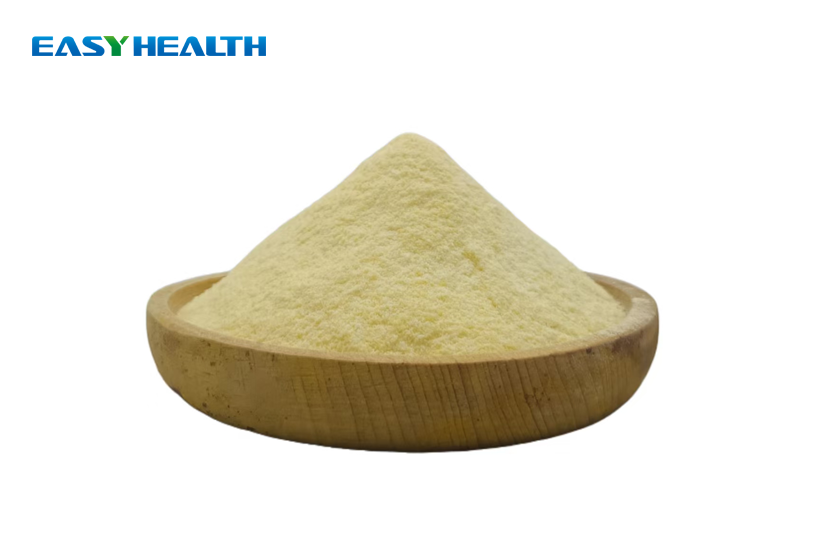
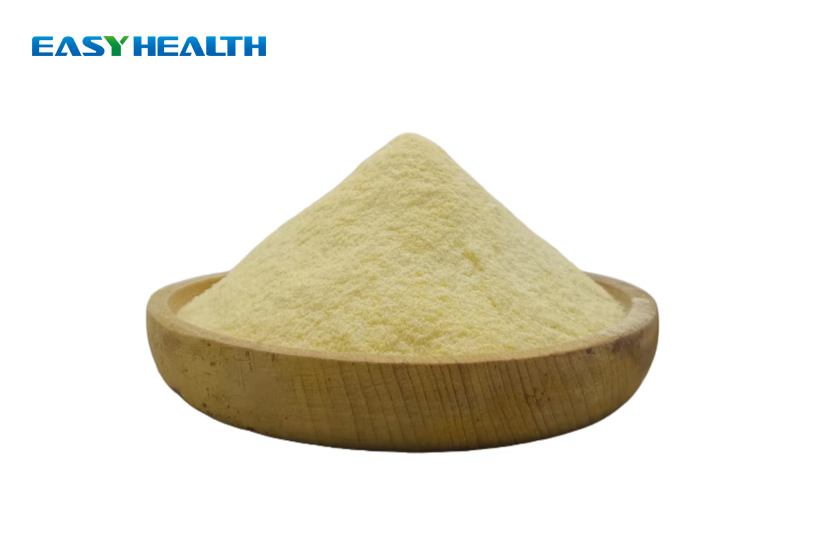
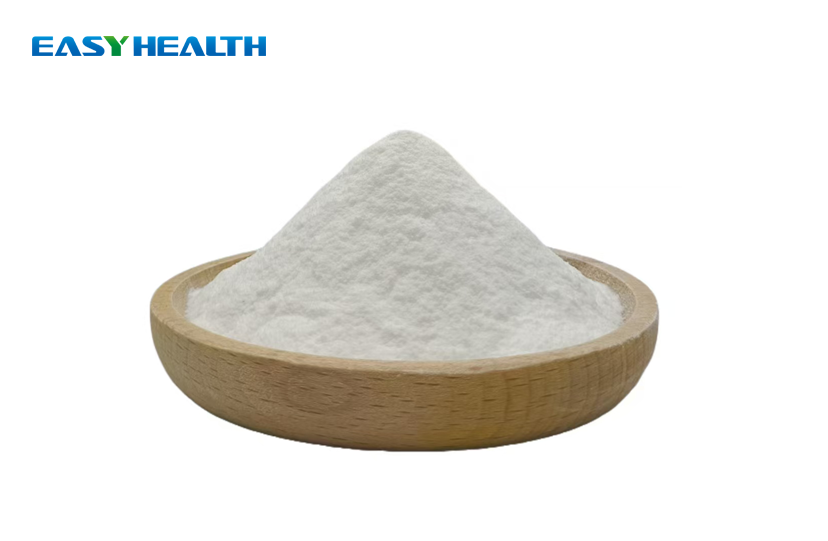
Through a spray-drying process, microencapsulation puts liquid MCT oil inside a wall made of proteins, modified starches, or plant-based fibers. This makes a dry powder that flows easily and has a core-shell structure. The fatty acid core is protected from air and heat during processing by this structure, which is stable up to 80°C. This greatly lowers the risk of oxidation and increases the shelf life to 18–24 months. The amount of oil on the surface drops to less than 1%, which is directly related to how well the capsules seal and how stable they are over time.
Why the C8:C10 Ratio Matters?
Not every MCT microencapsulated palm oil powder is made the same way. Caprylic acid (C8) turns into ATP more quickly than capric acid (C10), so a C8:C10 ratio of 55:45 makes the most ketones. Products with less purity (usually 80–85% MCT substance) make that change less effective. At Easy Health Inc., our MCT microencapsulated palm oil powder is ≥95% pure, which means that R&D teams can count on stability from batch to batch.
Comparing MCT Microencapsulated Palm Oil Powder with Alternatives
There are three common types of MCT ingredients that sourcing teams look at: liquid MCT oil, normal palm oil powder, and MCT microencapsulated palm oil powder. Each one has a different performance profile.
The most well-known form of MCT oil is still liquid, but it causes real formulation headaches. It separates phases in water-based systems, speeds up oxidation once containers are opened, and at higher doses, it often causes stomach pain. Regular palm oil powder doesn't go through the MCT concentration step at all, so it has a lot of calories but doesn't speed up the metabolism like keto and sports nutrition buyers want.
One thing that makes MCT microencapsulated palm oil powder different from the other two is:
- Zero oiling out in beverages: The capsule matrix keeps the lipid core solid in hot and cold liquids, like acidic RTD coffee and protein shakes. This gets rid of the greasy film that liquid oil makes.
- Cold-water dispersibility without high-shear mixing: The powder wets and spreads out in water at room temperature in seconds, which speeds up production and lowers energy costs on the shop floor.
- 20–30% cost advantage over coconut-derived MCT: Palm kernel oil (Elaeis guineensis) has the same C8/C10 fatty acid makeup as coconut but costs a lot less and has more stable global supply lines.
These differences in performance lead to cleaner product labels, fewer returns, and better reviews from customers, all of which are important when your business rests on people buying from you again.
Procurement Guide: How to Source MCT Microencapsulated Palm Oil Powder?
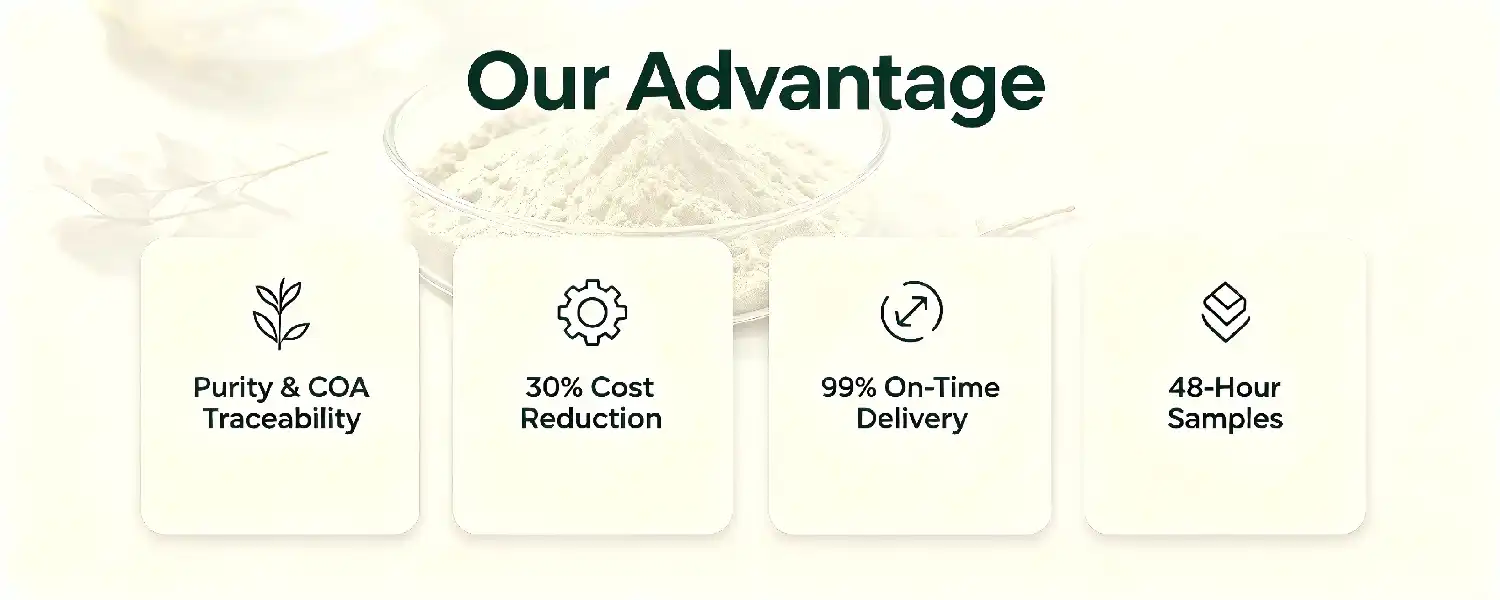
In this group, choices about where to get things depend on more than just price per kilogram. Quality checks, a stack of certifications, and the ability to be flexible with wait times are what set reputable suppliers apart from those who cause production delays.
Certifications to Verify Before Ordering
At the very least, ISO 9001 and HACCP certifications should be held by any trustworthy MCT microencapsulated palm oil powder supplier. Halal certification is a must for companies that want to sell to Muslim-majority markets in Southeast Asia and the Middle East. Being vegan opens up lines of plant-based products. FDA licensing and USDA Organic standards make it easier for more products to reach the US market. All of these things are carried by Easy Health Inc., which means that our partners can pass regulatory checks in multiple areas without having to buy from different sources.
Sampling and Scale-Up Strategy
In a practical procurement sequence, you would ask for a 25 kg sample, then run dissolution and formulation tests in your target application (shake, creamer, or bar), then look at the peroxide value, dispersibility, and mouthfeel, then move on to a 25–100 kg pilot batch, and finally set up a monthly reorder schedule. This method shortens the time it takes to make a choice to 4–6 weeks and lowers the amount of money that is at risk during confirmation.
Gas chromatography (GC) is the standard way to check the fatty acid makeup. Every batch that Easy Health Inc. sends out comes with an analysis report that shows the C8:C10 ratio, the peroxide value (≤2.5 mmol/kg), the acid value (≤1.0 mgKOH/g), and a full bacterial screening. It is standard practice to ask for this documentation before committing to a volume.
Technical Insights and Industry Applications
The MCT microencapsulated palm oil powder lets it be used in situations where liquid MCT oil just can't do a good job.
High-Demand Sectors and Formulation Fit
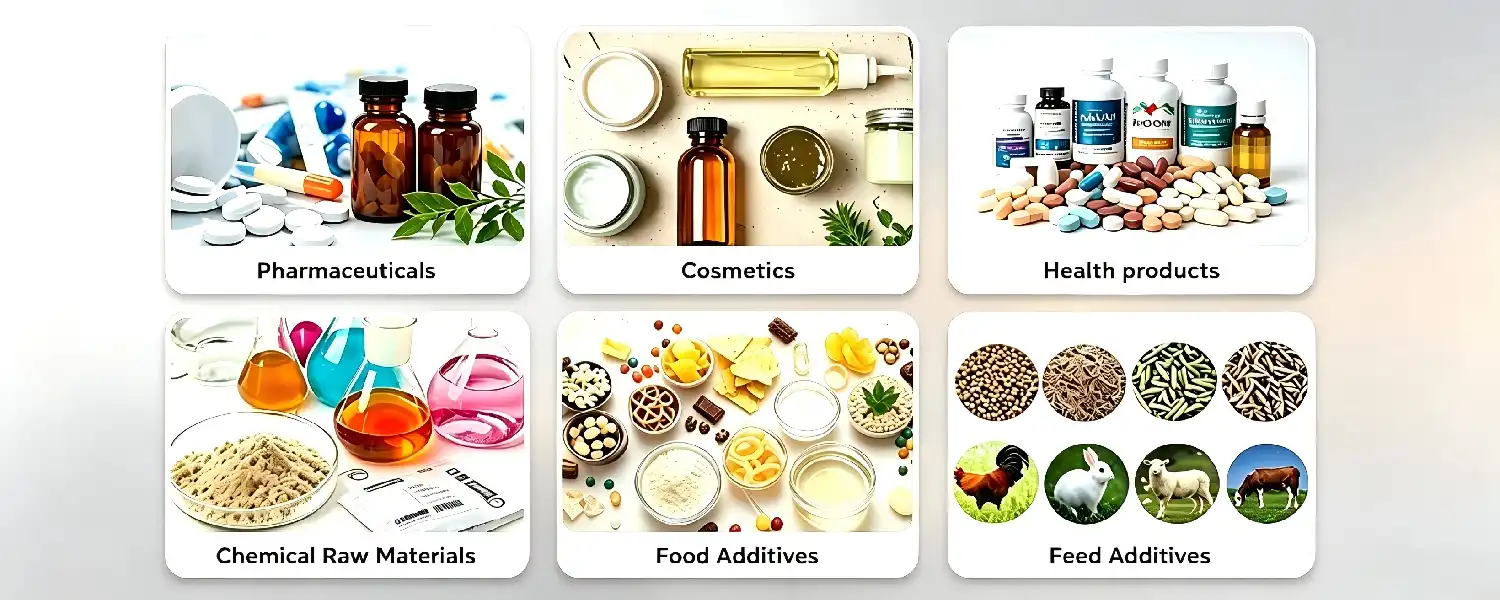
The main types of supplements sold are sports nutrition and ketogenic vitamins. An optimized C8:C10 ratio gives meal replacement shakes, pre-workout powders, and keto bars instant ATP release, without the oily residue or digestive lag that comes with raw oil. It is useful for clinical and senior nutrition formulas that the encapsulation matrix has a controlled-release behavior that helps patients with malabsorption conditions digest food gently. For infant formula, the microbiological purity and fat dispersion consistency must be very high. Our powder meets TPC ≤1000 cfu/g and does not contain any E. coli or Salmonella. Pet food makers gain from the high calorie density and resistance to going bad while being stored and shipped.
This ingredient can be used in hot-fill beverage processes, spray-drying of finished blends, and extrusion for bar uses because the wall material is thermally stable up to 80°C. These are all production situations where liquid oil would break down or separate.
Best Practices and Recommendations for Food Manufacturers
Making sure the ingredient is correct is only half the job. The finished product will either work the way the sign says it will or not depend on how you use it in your process.
Add the MCT microencapsulated palm oil powder during the dry-blending step, before you add the wet parts. This keeps the integrity of the encapsulation and stops the wall material from drying out too quickly. Depending on the MCT claim, the recommended inclusion rates are usually between 5% and 20% of the total formula weight. However, it is helpful to get application-specific advice from a technical team. Keep the bulk powder below 25°C in sealed, moisture-barrier packaging to keep it from caking, which happens a lot with encapsulated fats that aren't kept properly and speeds up when humidity rises. For all 25 kg sales, Easy Health Inc. suggests triple-layer kraft bags with PE layers inside.
At intake, quality control should include measuring the amount of surface fat using petroleum ether extraction and making sure the substance can be dispersed in the liquid matrix you want to use. Together, these two tests show that the encapsulation worked well during shipping and storage. Every production batch should come with full traceability paperwork, from where the raw materials came from to when they were released by QC.
Conclusion
Changing from liquid MCT oil to a MCT microencapsulated palm oil powder fixes problems with oxidation, separation, and digestive tolerance all at the same time. It also cuts the cost of ingredients by 20–30% compared to alternatives made from coconut. This ingredient is ≥95% pure, has a 55:45 C8:C10 ratio, and is certified as Halal, Vegan, ISO, HACCP, and FDA registered. It meets the strict formulation and regulatory needs of many different product categories. For brands that need quick changes, open order amounts, and reliable supply, it's easy to see why they should switch.
FAQ
What is the minimum order quantity for sampling?
Easy Health Inc. takes sample orders starting at 25 kg, which is enough for trying the initial mixture and dissolution in shakes, creamers, or bars.
How does palm-derived MCT powder differ from coconut-derived MCT powder?
The C8 and C10 fatty acids that come from both sources are the same. MCT microencapsulated palm oil powder has a more stable supply around the world and costs 20–30% less than other oils. Easy Health's palm source is certified as both Halal and Vegan, which means it can be sold in more markets than many goods made from coconut.
Does the powder dissolve in cold water?
Yes. The spray-dried capsule structure allows for quick dispersion in cold water without high-shear mixing. This creates a stable mixture that doesn't separate or look greasy.
What is the shelf life under proper storage conditions?
The powder stays good for 18 to 24 months if it is kept below 25°C in sealed, moisture-barrier packaging.
How is encapsulation efficiency verified?
Petroleum ether extraction is used to measure the amount of fat on the surface. A number of ≤1.0% means that the packaging worked well and that the product will be stable over time.
Request a Sample from Easy Health — Your Trusted MCT Microencapsulated Palm Oil Powder Supplier
Easy Health Inc. sells MCT microencapsulated palm oil powder in 50% and 70% concentrations. They offer free 25 kg samples and standard lead times of 3–5 days. Our plant is recognized with ISO, HACCP, Halal, Kosher, and the FDA. We ship all over the world and can fully track each batch. To get a certificate of analysis and start your formulation trial right away, email devin@easyhealthbio.com or go to easyhealthinc.com and ask for one.
References
1. Khaire, R. A., & Arya, S. S. (2020). Microencapsulation of lipids: A review of techniques and applications. Journal of Food Science and Technology.
2. St-Onge, M. P., & Jones, P. J. H. (2002). Physiological effects of medium-chain triglycerides: Potential agents in the prevention of obesity. Journal of Nutrition.
3. Augustin, M. A., & Hemar, Y. (2009). Nano- and micro-structured assemblies for encapsulation of food ingredients. Chemical Society Reviews.
4. Pelser, W. M., Linssen, J. P. H., Legger, A., & Houben, J. M. H. (2007). Lipid oxidation in n-3 fatty acid enriched Dutch style fermented sausages. Meat Science.
5. Ré, M. I. (1998). Microencapsulation by spray drying. Drying Technology: An International Journal.
6. GRAS Notice Inventory — Medium-chain triglycerides (MCT). (2004). U.S. Food and Drug Administration, Center for Food Safety and Applied Nutrition.

_1784173402819.webp)