How To Extract Lutein From Marigold?
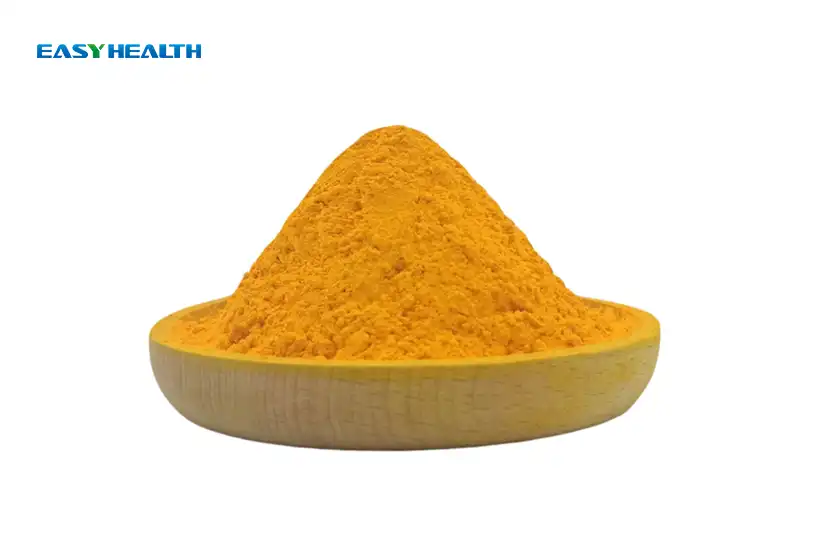
Lutein extraction from marigold flowers follows a structured industrial process: fresh Tagetes erecta L. petals are dried, then subjected to solvent extraction (typically hexane or ethanol), saponification to cleave ester bonds, crystallization, and finally micro-encapsulation. The result is marigold extract lutein — an orange-yellow powder standardized to 2%–6% lutein with ≥82% trans-lutein purity, confirmed by HPLC. This xanthophyll carotenoid (CAS 127-40-2, C₄₀H₅₆O₂) carries co-occurring zeaxanthin and β-carotene, making it the benchmark ingredient for eye health supplements, poultry feed pigmentation, and functional beverage formulation.

Understanding Lutein from Marigold
What Is Marigold-Derived Lutein?
The African marigold (Tagetes erecta L.) petals naturally contain the most lutein of any plant source used in medicine. The amount in dried florets is between 0.3% and 0.9%. The chemical weight of the powder that is left over after separation and processing is 568.87 g/mol, and its formula is C₄₀H₅₆O₂. It mostly has trans-lutein, zeaxanthin, and β-carotene as xanthophylls. This picture of carotenoids looks a lot like the pigments in our eyes' retina.
Key Health and Functional Benefits
A study from 2006 in Investigative Ophthalmology & Visual Science says that lutein and zeaxanthin from food can build up to form macular pigment. This blocks out blue light with a lot of energy and lowers oxidative stress in the eye cells. Lutein not only helps with vision, but it also has protective properties that are important for the immune system and cell health in both food for humans and food for animals. The deep golden color that people associate with good egg yolks comes from the same pigment that keeps our eyes healthy, according to egg farmers.
Why Marigold Outperforms Other Natural Sources?
Lutein is found in spinach, kale, and other leafy greens, but not in large enough amounts to be used in industry. Marigolds are still the only crop that is grown on a large scale just for the lutein they produce. Because it is more widely accepted by officials in the US, EU, and Asian markets, marigold lutein is better than pigments that come from algae. It has less heavy metal and a more stable supply chain as well. Because it is a natural ester, it stays more stable before it is saponified, which is helpful for people who work with big ingredients.

Step-by-Step Guide to Extracting Lutein from Marigold
Harvesting and Raw Material Preparation
If you move the plants 60 to 75 days after they bloom, you can pick the flowers when they are fully open. To make the petals bigger, they are gathered, dried until they have less than 10% water left, and then ground up. It is safe for the carotenoid structure to dry at a controlled temperature (below 50°C). India grows the most marigolds of any country in the world, and there is a yearly supply peak from October to February. Big sellers have to change how they plan their goods because of this.
Extraction and Saponification Technologies
There are three main ways to get rid of oil in business:
You can use food-grade hexane or ethanol to break down the carotenoids in dried petals that are soluble in fats. When extracting marigold extract lutein with ethanol, you should have less than 50 parts per million of liquid left over. This method has been tried the most times and works the best.
- Solvent extraction uses food-grade hexane or ethanol to dissolve lipid-soluble carotenoids from dried petals. Ethanol is preferred for finished products targeting ≤50 ppm residual solvent specifications. This method delivers high throughput and is the most widely validated approach.
- Supercritical CO₂ extraction operates at elevated pressure (200–400 bar) without solvent residue, yielding a clean-label profile. Yield per kilogram of raw material is lower, but the absence of solvent traces suits pharmaceutical-grade applications.
- Ultrasound-assisted extraction (UAE) applies acoustic cavitation to disrupt cell walls, reducing extraction time by 40–60% compared to conventional methods while maintaining carotenoid integrity.
After being extracted, lutein fatty acid esters are broken down by potassium hydroxide saponification. This lets free trans-lutein escape. To make sure the end product is ≥82% pure trans-lutein, this step must be taken.
Purification, Micro-encapsulation, and Packaging
As the oleoresin is turned into soap, it crystallizes into a concentrated xanthophyll part. An antioxidant matrix is used to spray-dry the orange to orange-yellow powder so that it is free to flow. The microencapsulated grade from Easy Health can be pelletized and extruded in feed at 85–90°C without the carotenoids breaking down too much. This is a very important property for companies that make premix for poultry. The finished goods are put into 25 kg nitrogen-flushed bags that keep out moisture. They will last for a year if you keep them in a cool, dry, dark place that is below 25°C.
Comparing Marigold Extract Lutein with Other Lutein Sources
Natural vs. Synthetic Lutein
The chemical formula for manufactured lutein is the same, but it may contain cis-isomers that are less biologically active. The US Food and Drug Administration (FDA) and the European Food Safety Authority (EFSA) have both said that lutein from marigolds can be used in food and feed. Synthetic forms, on the other hand, have less support. Marigold material is better for business-to-business buyers who want to sell to foreign markets because it has more regulatory clearance and less trouble with compliance.
Organic vs. Conventional Marigold Extracts
Organic marigold extract costs more, but it meets the standards for stores to label it as organic by the USDA NOP or the EU. Standard grades made in supply lines that have been checked by FAMI-QS have the same analytical data but are easier to get. Most of the time, chicken premix brands that want to pass a FAMI-QS check with big feed group buyers should use standard FAMI-QS material. Buyers who want to get into the nutraceutical market and care about clean labels should look into organic certification as soon as the product is being made.
Product Form Selection: Powder vs. Oil Suspension
It's best to use powder that doesn't stick to anything when you want to make feed pellets, crush pills, or mix premixes. Putting oil suspension forms into softgels is simple. The lutein problem in clear drinks can be fixed with Easy Health's Cold Water Soluble (CWS) nano-emulsion grade. Nano-emulsion technology gets rid of the oil-ring effect at the liquid surface, which means that the color and particles stay stable over time. You can avoid having to pay a lot of money to redo the formula later if you get the ingredients in the right form.
Procurement Insights: Buying Marigold Extract Lutein in Bulk
Identifying Trustworthy Suppliers
The first step is getting certified. Marigold extract lutein suppliers should have ISO 9001, ISO 22000, HACCP, and ideally FAMI-QS certifications for feed applications. It's important to have both Halal and Kosher certification for export markets in the Middle East and for niche store platforms in the US. Ask for batch-level COA data that includes an HPLC-confirmed trans-lutein test, a full heavy metal panel (Pb ≤3, As ≤3, Cd ≤1, Hg ≤1 mg/kg), leftover solvent ≤50 ppm, and microbial negatives for E. coli, Salmonella, and Staphylococcus aureus.
Ordering Process and Quality Verification
You need at least 25 kg to place an order with Easy Health. For grades that are in stock, the wait time is 3–5 days. It takes 4 to 6 weeks for custom formulas or changes to meet your needs. Before you agree to a volume, ask for a sample of 0.5 to 1 kg and have a third party use HPLC to check it. People who buy chicken premix can be sure that it works because of a live feeding test that compares egg yolk Roche Yolk Color Fan (RYCF) scores over 10 to 15 days. With this trial-first approach, there is a lot less sourcing risk before the first big purchase.
Logistics and Supply Continuity
It depends on the size of the order and where it needs to go whether FedEx, DHL, UPS, or ocean freight is used to send it. When nitrogen is added to the packaging, carotenoids stay stable while they are being shipped. Folks who want to buy marigold flowers should know that the Indian crop cycle changes when the flowers are available and how much they cost. So that there aren't any gaps in supply, buyers should keep two to three months' worth of goods in temperature-controlled storage.

Ensuring Quality and Safety in Marigold Extract Lutein Usage
Dosage Guidelines and Regulatory Compliance
To add the right amount of color to chicken feed, you should add between 0.25 kg and 1.25 kg per metric ton for broilers and between 0.5 kg and 2.5 kg per metric ton for shrimp and ocean fish. You'll see the difference in 10 to 15 days. A lot of AREDS2-aligned products that help people get enough lutein give 10 mg of lutein and 2 mg of zeaxanthin every day. The EU calls lutein from marigolds a Novel Food, while the FDA says it is GRAS for use in food.
Clinical Evidence and Quality Certifications
ARES2 (JAMA Ophthalmology, 2013) was a study that looked at age-related eye diseases. It found that people with a higher risk of getting advanced AMD were less likely to take products with lutein and zeaxanthin. The USP and the FCC both say that the product that Easy Health makes is safe. There is a full record for every production batch that shows where the raw petals came from and when they were sent for final quality control. This meets the reporting needs of both the government and big stores that buy things.
Conclusion
To get lutein from marigold petals, you need to pick flowers that bloom a lot, use tried-and-true extraction methods, break down ester bonds, and microencapsulate the active trans-lutein to keep it stable. The finished marigold extract lutein product is standardized at 2%–6% assay and has a purity level of ≥82% trans-lutein. It can be used in functional drinks, eye health vitamins, and to add color to chicken feed. Purchasing managers can be sure of a steady supply when they check sellers' credentials, ask for proof of agreement (CoA), and try small amounts before committing to larger orders.
FAQ
What lutein content should a commercial marigold extract contain?
HPLC is often used to check commercial-grade marigold extract to make sure it has between 2% and 6% lutein. More pure types of oleoresin can have 20% to 40% trans-lutein, and crystalline types can have more than 80%. A uniform powder that is 4% to 6% is best for use in feed and premix.
Is natural lutein from marigold more effective than synthetic lutein?
The natural trans-lutein from Tagetes erecta L. has the stereoisomer structure (3R,3′R,6′R) that matches the macular pigment makeup in human retinal tissue. Synthetic methods can be used to make cis-isomers that have less of an effect on living things. Also, officials in the US, EU, and Asian markets are more likely to let natural lutein be sold.
Which certifications are non-negotiable when sourcing lutein?
Most of the big feed group audit systems need FAMI-QS for feed work. These are the certifications you need to sell food to people: ISO 22000, HACCP, and either Kosher or Halal. A batch-level COA with full heavy metal and microbiome data and proof of the HPLC test for every market.
What is the minimum order quantity for bulk procurement?
Easy Health requires a minimum order of 25 kg, and normal grades can be sent out in 3–5 days. It takes 4 to 6 weeks to ship formulations that are customized.
How should bulk lutein powder be stored?
This original box has been cleaned with nitrogen. Keep it below 25°C and away from direct light and water. If you store it right, the product's specs will stay the same for ≥12 months.
Source Your Marigold Extract Lutein with Easy Health
Since more than 11 years ago, Easy Health has been making plant extracts. They are certified by ISO 9001, ISO 22000, HACCP, FAMI-QS, Halal, and Kosher. You can trust this company to make marigold extract lutein. Standard sales of 25 kg are sent out in 3–5 days, and we can make any changes you want. A batch COA is also sent with every order. You can get help from our skilled team whether you need microencapsulated feed grades or CWS beverage forms. Email devin@easyhealthbio.com or visit easyhealthinc.com right away to get a sample.
References
1. Age-Related Eye Disease Study 2 (AREDS2) Research Group. JAMA Ophthalmology, 2013.
2. Bone, R. A., et al. "Lutein and zeaxanthin in the eyes, serum and diet of human subjects." Experimental Eye Research, 1988.
3. Humphries, J. M., & Khachik, F. "Distribution of lutein, zeaxanthin, and related geometrical isomers in fruit, vegetables, wheat and pasta products." Journal of Agricultural and Food Chemistry, 2003.
4. Nwachukwu, I. D., et al. "Lutein and zeaxanthin: structural properties, biosynthesis, and bioavailability." Critical Reviews in Food Science and Nutrition, 2016.
5. Ranganathan, A., et al. "Extraction and purification of lutein from marigold flower (Tagetes erecta L.)." Industrial Crops and Products, 2012.
6. Garg, M., et al. "Lutein bioavailability from lutein esters versus free lutein in healthy human subjects: effects of food matrix." British Journal of Nutrition, 2017.