Microencapsulated Lycopene Powder for Functional Beverages
Microencapsulated lycopene powder has become one of the most sought-after antioxidant ingredients in functional beverage development. As brands compete for shelf space in antioxidant waters, wellness shots, and sports drinks, the ability to deliver a stable, visually consistent, clean-label carotenoid matters more than ever. This guide walks through what makes encapsulated lycopene different, how the technology works, how it compares with other lycopene forms, and what procurement teams should look for when sourcing it.
Understanding Microencapsulated Lycopene Powder
What It Actually Is
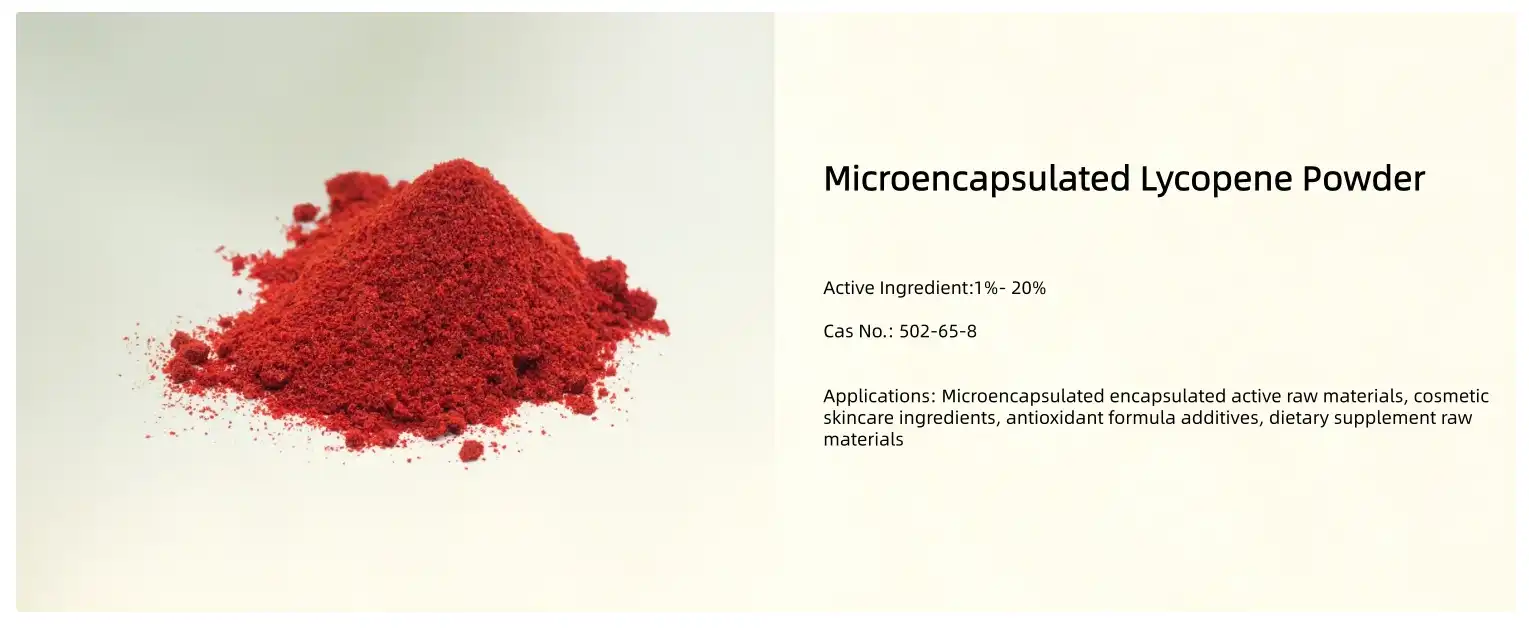
You can find lycopene in some mushrooms and tomatoes. It is a carotenoid that breaks down in fat. When it's raw, it quickly turns brown, clumps together in water, and leaves an orange-red stain on bottle walls. These problems can be solved by microencapsulated lycopene powder, which surrounds lycopene in a wall matrix made of modified starch or maltodextrin. This turns the molecule made of oil into a powder that can mix with water and move around easily.
How the Encapsulation Changes Performance
What's on the wall keeps air, light, and heat from getting to the active substance. When the powder is mixed with a drink, the microcapsules slowly break down. This lets the lycopene out at the point of absorption instead of when the powder is being processed. Because they are released slowly, the carotenoids can better interact with bile micelles in the digestive system. This is the main way they are absorbed.
Why Cis-Isomers Matter for Bioavailability
All-trans isomers make up most lycopene. These are big, stiff molecules that the gut doesn't get into very well. In 2000, a study in the Journal of Nutrition showed that cis-isomers are better for the body than all-trans forms. More than 85% of the cis-isomers are kept by Easy Health's low-temperature microencapsulation process. This makes the lycopene about three times more accessible than regular all-trans lycopene. It is possible to measure this difference, and it is clinically important.
Technology Behind Lycopene Powder Microencapsulation
Fermentation as the Source
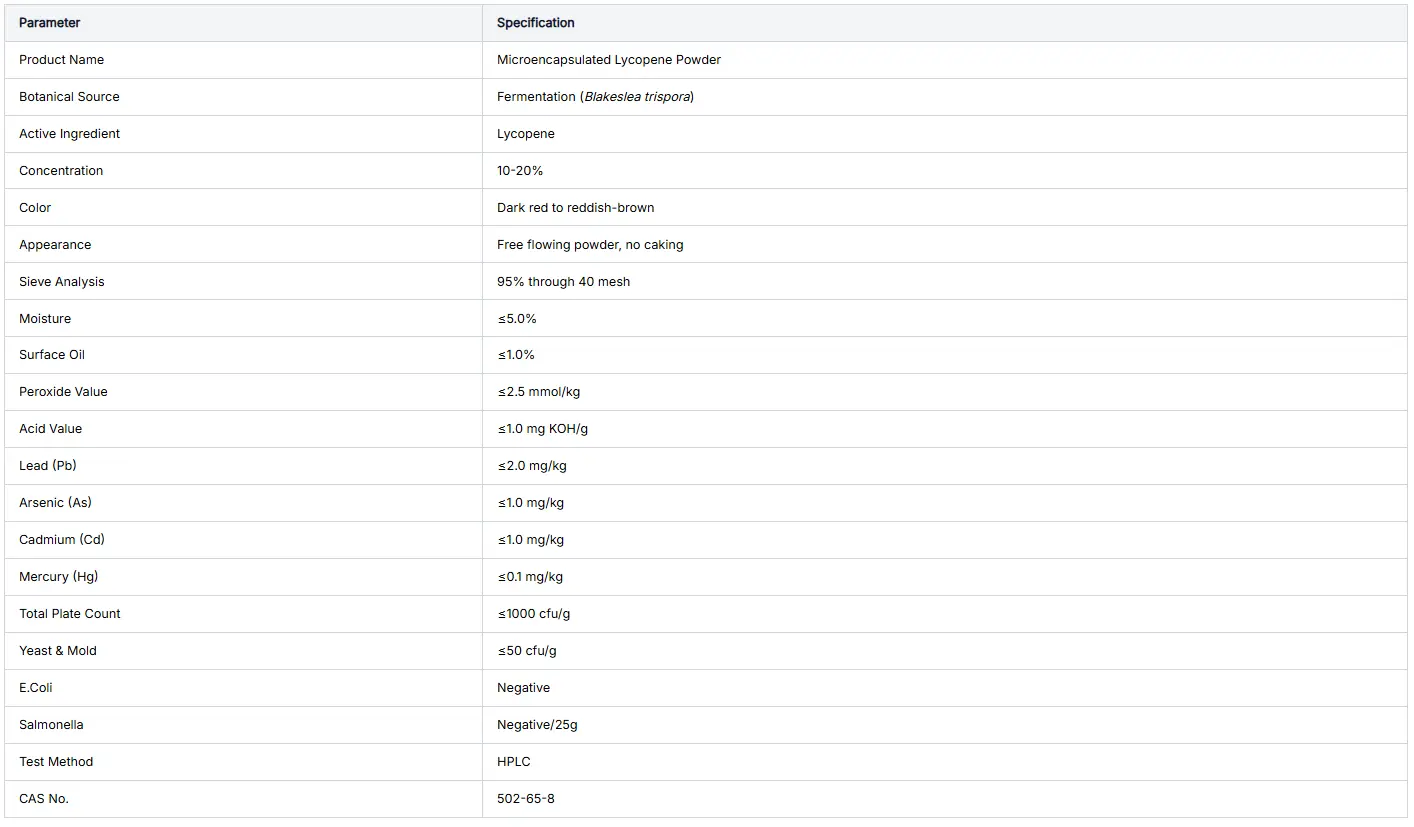
Blakeslea trispora, a filamentous fungus that naturally makes lycopene, is used in controlled fermentation by Easy Health to make its lycopene. This fermentation-based method gets rid of the hexane leftovers that are left over from solvent extraction of tomato oleoresin, so it can be used for "clean label" claims. The CAS number is 502-65-8, and HPLC tests show that it is pure.
Low-Temperature Encapsulation Process
High outlet temperatures used in standard spray drying break down heat-sensitive cis-isomers. During encapsulation, Easy Health's microencapsulated lycopene powder method uses low temperatures to protect the integrity of the isomers while getting a moisture content of ≤5.0% and a surface oil content of ≤1.0%. The end result is a dark red to reddish-brown powder that flows freely and has 95% of its particles pass through a 40-mesh screen.
Oxidative and Thermal Stability
The triple-wall encapsulation architecture gives lycopene an oxidative stability index (OSI) of at least 15 hours, which is a lot longer than lycopene that is not encapsulated. The powder mixes evenly in cold water at -25°C, not settling or forming oil rings. It also dissolves right away in hot liquids at >60°C. These qualities directly address the most common complaint that beverage companies get from stores.
Comparing Microencapsulated Lycopene Powder with Other Forms
Picking the best lycopene format relies on what you want to name, how it will be processed, and what you want to use it for. In four useful ways, here's how the main choices stack up.
- Standard lycopene powder (tomato extract): Produced via hexane extraction, this form typically contains predominantly all-trans isomers with lower bioavailability. It disperses poorly in cold water and presents clean-label challenges due to solvent residues. Shelf stability is limited without additional antioxidants.
- Tomato oleoresin (liquid): Offers high lycopene concentration but is difficult to handle in dry beverage manufacturing. It causes oil separation in aqueous systems and requires emulsifiers. Dosing precision is harder to achieve, and it cannot be used in solid dosage forms.
- Fermentation-derived microencapsulated powder (Easy Health): Hexane-free, high cis-isomer retention, cold-water dispersible, and thermally stable. It integrates into tablets, beverages, and baked goods without additional emulsification steps. Full traceability documentation is available per batch.
When it comes to beverage applications where look, shelf life, and clean labeling all matter, the encapsulated form always does better than alternatives. The proven bioavailability benefit is also a useful marketing tool for companies that put antioxidant claims on their packaging.
Procurement Guide for Microencapsulated Lycopene Powder
Certifications to Verify Before Ordering
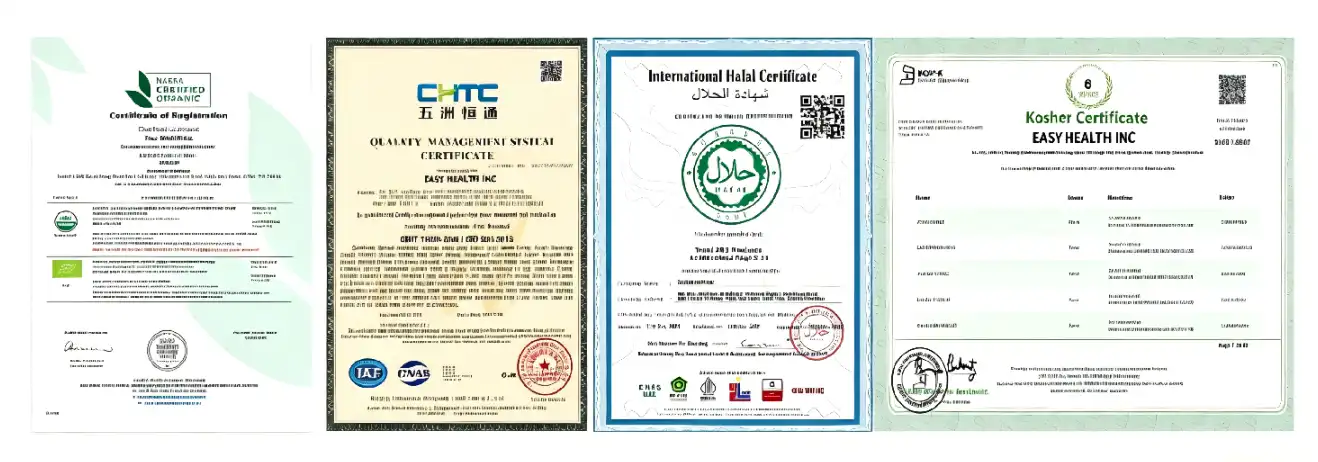
Purchasing departments should make sure that any lycopene provider has the right food-grade certifications for the people they want to buy from them. Easy Health has been registered with the FDA, is ISO, Halal, Kosher, and has USDA Organic (NOP & EU Organic) standards. For supplement brands, each package must come with proof that the product is non-GMO and a list of allergens.
Quality Parameters That Indicate Reliable Supply
A reliable microencapsulated lycopene powder supplier will give full batch COAs that include heavy metals (Pb ≤2.0, As ≤1.0, Cd ≤1.0, Hg ≤0.1 mg/kg), microbiological counts (total plate count ≤1,000 cfu/g, yeast and mold ≤50 cfu/g), peroxide value ≤2.5 mmol/kg, and a confirmed HPLC assay for lycopene concentration. These numbers should show up the same way in all runs, not just the first few tests.
OEM and Custom Specification Services
Easy Health has lycopene concentrations ranging from 5% to 30% for OEM and ODM customers. Standard concentrations of 10% and 20% are in stock. Most custom requests are finished in three to five business days. In this range, there is something for everyone, from low-dose antioxidant water fortification to high-concentration capsule versions. The buyer doesn't have to change the recipe to fit a specific requirement.
Case Studies and Market Applications
Functional Beverage Brand: Solving Sedimentation at Scale
A medium-sized North American health shot brand moved from using a regular tomato lycopene extract to using fermentation-derived encapsulated lycopene because customers kept complaining about orange oil rings inside the bottles. The rings went away after a test mix with Easy Health's product at -25°C cold fill settings. The brand passed an internal shelf-life test after 12 months with no change in color that could be seen, and the end label had a clear statement about "fermentation-derived lycopene."
Supplement Manufacturer: Clean Label Compliance
A contract supplement maker that makes private-label capsules for stores in Europe and North America needed a source of lycopene that didn't contain hexane and had heavy metal testing proof. Easy Health gave full allergen and GMO declarations along with batch-specific COAs that had metal levels well below EU and USP limits. The regulatory review was finished without any additional requests, which cut the time before launch by about two weeks.
Market Trend Context
Grand View Research (2023) says that the global market for functional drinks will reach $279.65 billion by 2030, growing at a CAGR of 8.66%. In this market, natural colorants and antioxidants are becoming more popular than manufactured ones. This is because customers in the U.S. and Europe prefer to buy products with clean labels. Lycopene is at the center of this change because it is both a natural color and an inhibitor.
Conclusion
Using fermentation-derived, encapsulated lycopene powder gets around the three main formulation problems—poor water dispersibility, fast oxidation, and low absorption—that have kept lycopene from being used in drinks in the past. Easy Health's microencapsulated lycopene powder gives sourcing teams and product makers a technically sound, regulatory-ready ingredient that keeps over 85% of the cis-isomer for more than 15 hours, dissolves in cold water, and doesn't contain hexane. This encapsulated format gives you stable color, strength, and the paperwork your compliance team needs whether you are making a health shot, an antioxidant water, or a daily softgel.
FAQ
Does encapsulated lycopene powder work in carbonated beverages?
Yes. Under moderate CO₂ pressure, the encapsulation matrix keeps the particles whole. We suggest doing a test recipe at the amount of carbonation you want to reach to make sure the color stays stable before making the whole batch.
How does this powder affect beverage flavor?
At normal amounts of use, the tomato taste profile is very weak and most people don't even notice it. Panels of taste testers from client trials have not found taste to be an issue.
What is the recommended shelf life and storage condition?
Keep the items in their original, sealed containers below 25°C, out of direct sunlight, and dry. When these things happen, strength lasts for 24 months. Each COA has the date it was made and when it expires.
Can the lycopene concentration be customized?
This is possible. Easy Health can help with OEM and ODM projects with lycopene content levels ranging from 5% to 30%. Lead times for custom concentrations are usually between 3 and 5 business days after the specifications are confirmed.
Is this ingredient suitable for hot-fill beverage processes?
Since the powder dissolves right away in liquids at or above 60°C, it can be used with hot-fill lines. Internal tests have shown that it will stay stable at high temperatures during pasteurization.
Request a Sample of Our Microencapsulated Lycopene Powder Supplier
Easy Health is a certified microencapsulated lycopene powder producer with more than 11 years of experience in the field and FDA, Halal, Kosher, and ISO registration. Get in touch with us if you need examples, detailed datasheets, or help with making your own formulas. Our team can be reached at devin@easyhealthbio.com or easyhealthinc.com to begin your trial right away.
References
1. Rao, A. V., & Agarwal, S. (2000). Role of antioxidant lycopene in cancer and heart disease. Journal of the American College of Nutrition, 19(5), 563–569.
2. Giovannucci, E. (1999). Tomatoes, tomato-based products, lycopene, and cancer. Journal of the National Cancer Institute, 91(4), 317–331.
3. Boileau, T. W. M., et al. (2003). Cis-lycopene is more bioavailable than trans-lycopene in vitro and in vivo in lymph-cannulated ferrets. Journal of Nutrition, 133(11), 4032S–4036S.
4. Shi, J., & Le Maguer, M. (2000). Lycopene in tomatoes: Chemical and physical properties affected by food processing. Critical Reviews in Biotechnology, 20(4), 293–334.
5. Grand View Research. (2023). Functional Beverage Market Size, Share & Trends Analysis Report. Grand View Research.
6. Pérez-Gálvez, A., & Mínguez-Mosquera, M. I. (2002). Carotenoid pigment stability during the storage of lycopene oleoresins. Journal of Agricultural and Food Chemistry, 50(21), 6108–6113.

_1784173402819.webp)