What Are the Benefits of Microencapsulated Borage Oil Powder?
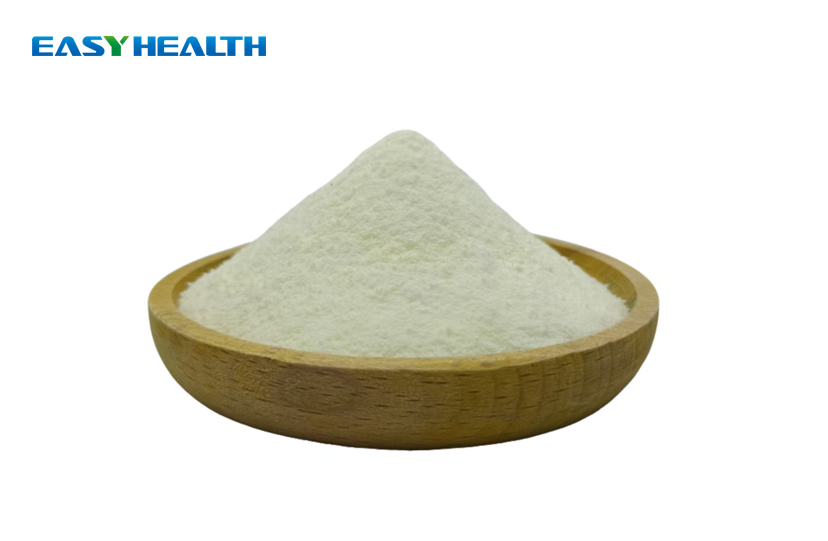
Microencapsulated borage oil powder delivers a concentrated, shelf-stable source of gamma-linolenic acid (GLA) that outperforms conventional liquid borage oil across every critical formulation metric. By embedding refined borage seed oil within a protective micro-barrier matrix, this powder format preserves GLA potency, eliminates oxidative degradation, and integrates seamlessly into tablets, capsules, clinical nutrition blends, and functional beverages. For R&D teams developing high-efficacy supplements targeting atopic dermatitis, PMS, or menopausal health, the combination of ≥22% GLA concentration, near-zero off-taste, and cold-water dispersibility makes it a technically superior and commercially compelling ingredient choice.
Understanding What Makes This Powder Technically Distinct
Raw borage oil has a lot of omega-6 fatty acids, especially GLA, which is the same anti-inflammatory precursor found in evening primrose oil but about twice as much of it. Keeping things stable has always been hard. When oxygen, light, or heat come in contact with liquid borage oil, it quickly oxidizes, giving off rancid smells that hurt both product quality and customer compliance.
How the Spray-Drying Process Protects GLA Integrity?
Easy Health's borage oil powder is made by spray-drying at very low temperatures (≤140°C), which keeps the breakdown of the active ingredient to less than 3%. The capsule matrix builds a tiny wall around each oil droplet. This keeps GLA safe from outside stresses while it is being mixed, pressed into tablets, and stored on a shelf. The peroxide value is kept at ≤2.5 mmol/kg and the surface oil is kept below 1.0 %. These are two important tests that show real encapsulation and not just a thin coating.
Origin Matters: Cold-Climate Sourcing and GLA Yield
Easy Health only gets its plants from cool-climate types grown at high latitudes in Tasmania, Australia, and Alberta, Canada. Research in the field of agronomy consistently shows that Borago officinalis grown in cooler climates accumulates higher GLA fractions than plants grown in warmer climates. The ≥22% GLA standard in source oil is based on this sourcing discipline, which gives about 11% GLA per gram of finished powder at a 50% oil loading.
Core Benefits for B2B Formulators and Procurement Teams
The microencapsulated borage oil powder shape has many useful benefits besides being stable against oxidation. These are the main technical and business advantages that industrial buyers care about the most:
- Extended shelf life at ambient temperature: liquid borage oil needs to be kept cool and has a 6-month shelf life, but the encapsulated powder can last 24 months at room temperature. This makes warehousing, cross-border transportation, and planning inventory for foreign supply lines a lot easier.
- Dosage precision and uniform particle size: A 40-mesh screen lets 95% of the particles pass through, so the free-flowing powder mixes evenly into dry premixes. This consistency gets rid of the separation problems that come up with coarser oil powders and supports manufacturing tolerances that are GMP-compliant.
- Tablet and capsule compatibility: The micro-matrix acts as a cushion to stop oil movement during high-pressure compression. This is a technical barrier that means liquid oils can't be directly tableted. Less leaking and more accurate fill weight are good for both hard pills and softgels.
- Neutral sensory profile: Evening primrose oil has a taste that is similar to grassy bitterness, which makes it hard to use in clean-label and open-format products. Easy Health's borage oil powder doesn't have much of a taste, so it can be used directly in meal replacement powders, functional drinks, and fortified snack bars without the need for masking agents.
Because of these benefits, there is less chance of having to change the recipe, fewer waste products during production, and a clearer list of ingredients. All of these things are important for brands fighting in the elite nutrition and clinical channels.
How It Compares to Other Omega-6 Oil Sources?
People often compare borage oil to evening primrose oil (EPO) and flaxseed oil powder when they are shopping for omega-6 ingredients. It's important what makes them unique. About 8% to 10% of evening primrose oil is GLA. This means that you need twice as much of it to get the same amount of active ingredient. Flaxseed oil is mostly alpha-linolenic acid (ALA), an omega-3 precursor that does not have the same anti-inflammatory effects on the skin barrier as other omega-3s. It works differently in the body.
The EPA and DHA in fish oil powders are different from the microencapsulated borage oil powder GLA in other foods because they don't have any. Borage oil powder is the best way to restore the skin barrier, ease the symptoms of PMS, or reduce inflammation during menopause. There is clinical evidence that directly links GLA metabolism to these conditions. It has a standard of ≥22% GLA and is the most potent vegetable-based GLA source that is easy to find. This makes it possible for small doses, capsules, and different label claims.
Clinical Evidence and Safe Usage Parameters
It is well known that dihomo-gamma-linolenic acid (DGLA) plays a part in GLA's ability to change the inflammatory cascade. Atopic dermatitis supplementation has been studied in published clinical studies and has been shown to improve transepidermal water loss and skin moisture markers. Research on PMS and menopause symptoms has repeatedly linked GLA intake with fewer painful breasts and vasomotor discomfort.
Different conditions call for different daily doses of GLA for adults, which are usually between 240 mg and 720 mg. At 11% GLA per gram of powder, these goals can be met with standard single-serving sizes. Formulators should know that GLA supplements are generally well tolerated. However, people who are taking blood thinners should be watched out for. Borage products meant for clinical nutrition should have full compositional documentation for regulatory review by the FDA or EFSA.
Procurement Guidance: What to Verify Before Sourcing?
To get high-GLA borage oil powder for a high-end or medical line of products, suppliers must go through a lot of screening. Important parts of the paperwork include GC-MS results that prove the potency of the GLA, oxidative stability data from Rancimat, heavy metal panels that meet the requirements of Proposition 65 and EU 1881/2006, and full microbial profiling (Salmonella negative/25g; E. coli negative). Coverage for certifications should include ISO, HACCP, FDA registration, and, for a clean name, USDA NOP or EU Organic. Certification as Halal and Kosher opens up more markets without changing the way the product is made.
Easy Health keeps full batch records from the time the raw materials are received until they are sealed in capsules. Their technical team also offers direct support for faster stability methods, compatibility testing with vitamin/mineral premixes, and dosage advice based on application.
Conclusion
Borage-derived GLA powder, when enclosed, gets around the main technical problems that have kept liquid borage oil from being used in anything but softgels in the past. This microencapsulated borage oil powder is a great choice for high-end supplements, clinical nutrition, and functional skin health products because it is very stable against oxidation, delivers precise doses, disperses easily in cold water, and has a clean sensory profile. When it comes from a maker with strong quality approval, per-batch GC validation, and cold-climate provenance that can be checked, it helps with both following the rules and setting your brand apart at the high end of the market.
FAQ
Does encapsulation reduce GLA bioavailability?
No, digestive enzymes in the gut break down the wall matrix quickly and easily, letting the oil pass through normally. Clinical data show that the bioavailability of GLA is not significantly different between powdered encapsulation and liquid oil.
How does shelf life compare to liquid borage oil?
Usually, liquid borage oil needs to be kept cool and can only be used within 6 months. Because of the secure structure and low surface oil (≤1.0%), the powder that is enclosed can last for 24 months at room temperature.
Is it compatible with vitamin and mineral premixes?
Yes. The barrier inside the capsule keeps GLA from coming into direct contact with minerals that help oxidation. This means that the powder can be used in clinical nutrition blends and complex multivitamin formats.
Can it be used in vegan formulations?
The choice of wall material decides whether it is vegan-friendly. Vegan versions can be made by companies that make modified starch or pea protein matrices. Check with your provider during technical qualification to make sure you know what the wall material is made of.
What certifications should I require from a supplier?
Put ISO, HACCP, FDA registration, USDA NOP, EU Organic, Halal, and Kosher at the top of your list. As normal paperwork, you should need per-batch GC reports, Rancimat OSI data, heavy metal panels, and full microbial profiles.
Partner with Easy Health for Premium Microencapsulated Borage Oil Powder Supply
Easy Health adds more than 11 years of experience making plant extracts and a strict quality system to every relationship. As a reliable provider of microencapsulated borage oil powder, we let you ask for samples, make changes based on OEM/ODM, and provide full scientific documentation to help your approval process. To ask a technical question, you can email our team at devin@easyhealthbio.com or go to easyhealthinc.com.
References
1. Kapoor, R., & Huang, Y. S. (2006). Gamma linolenic acid: An antiinflammatory omega-6 fatty acid. Current Pharmaceutical Biotechnology, 7(6), 531–534.
2. Muggli, R. (2005). Systemic evening primrose oil improves the biophysical skin parameters of healthy adults. International Journal of Cosmetic Science, 27(4), 243–249.
3. Horrobin, D. F. (2000). Essential fatty acid metabolism and its modification in atopic eczema. The American Journal of Clinical Nutrition, 71(1), 367S–372S.
4. Fan, Y. Y., & Chapkin, R. S. (1998). Importance of dietary gamma-linolenic acid in human health and nutrition. The Journal of Nutrition, 128(9), 1411–1414.
5. Belch, J. J. F., & Hill, A. (2000). Evening primrose oil and borage oil in rheumatologic conditions. The American Journal of Clinical Nutrition, 71(1), 352S–356S.
6. Druml, W., Balteskard, L., & Guarnieri, G. (2011). Microencapsulation technologies for lipid-based nutritional ingredients: Stability and bioavailability considerations. European Journal of Clinical Nutrition, 65(S2), S42–S48.

_1784173402819.webp)