Microencapsulated Flaxseed Oil Powder: A Complete Guide for Manufacturers
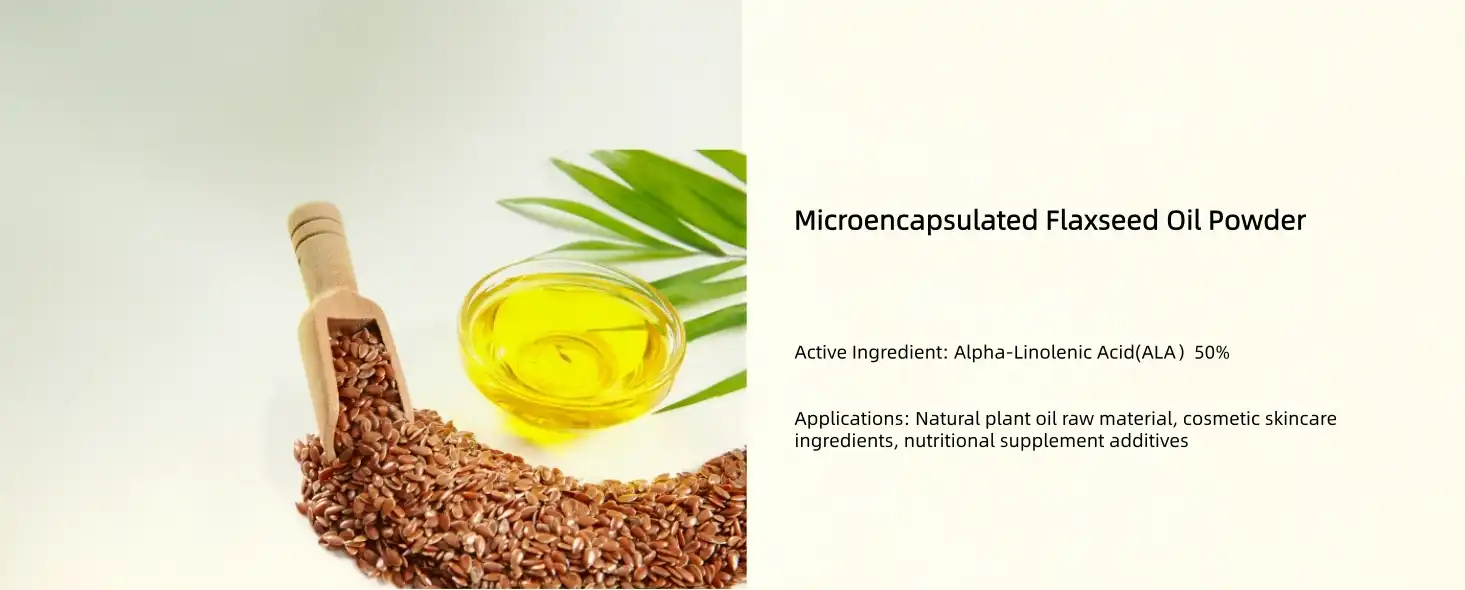
If you're sourcing a stable, plant-based omega-3 ingredient for supplements, functional foods, or pet nutrition, microencapsulated flaxseed oil powder deserves serious attention. Derived from Linum usitatissimum L. seeds, this off-white to light yellow free-flowing powder delivers Alpha-Linolenic Acid (ALA, CAS No. 463-40-1) at ≥55% concentration, verified by GC testing per batch. Unlike raw flaxseed oil, the encapsulated powder form resists oxidation, suppresses off-flavors, and disperses cleanly in dry-blend applications — making it a practical, versatile choice for modern B2B manufacturing.
Understanding Microencapsulated Flaxseed Oil Powder
What Sets It Apart From Conventional Flaxseed Oil?
Many people agree that flaxseed oil is the best plant-based source of ALA, an important omega-3 fatty acid that the body can't make on its own. The problem is that ALA has three double bonds, which makes it much more likely to oxidize than fish oil DHA or EPA. When exposed to heat, light, and air, raw liquid flaxseed oil breaks down quickly, giving off rancid, "painty" smells that make it almost useless in consumer goods.
This is fixed by microencapsulated flaxseed oil powder. The oil is sprayed onto a protective wall matrix, which turns it into a stable, free-flowing powder with a moisture content of about 5% and a surface oil content of about 1%. This low number for surface oil is very important. Odor and shelf-life issues are caused by oil that isn't protected on the top of the particles, even if the total oil content looks fine on paper.
In terms of nutrition, ALA helps keep your heart healthy, lowers inflammation throughout your body, improves brain function, and keeps your skin healthy. For vegan and plant-based brands in particular, ALA from flaxseed is the only omega-3 option that works and has strong scientific support.
Manufacturing Process and Quality Considerations
Triple-Wall Encapsulation: The Technology Difference
Not every microencapsulated flaxseed oil powder is the same. Most single-wall systems made from modified starch only have an Oxidative Stability Index (OSI) of only 8–12 hours, which isn't much better than raw oil. We use a triple-wall matrix at Easy Health that is made up of modified starch + gum arabic + cyclodextrin. This design builds a thick, partially porous wall that doubles the resistance to oxidation and aims for an OSI ≥16 hours, which is a very important level for baked goods, vitamins that can be kept for a long time, and healthy snacks.
Our physical and enzymatic deodorization process gets rid of flaxseed's smell by 80%. This gets rid of the smell barrier that keeps ALA ingredients out of flavored capsules, chewable gummies, and oral nutrition products.
Before committing to a seller, every buying team should make sure that the following quality standards are met:
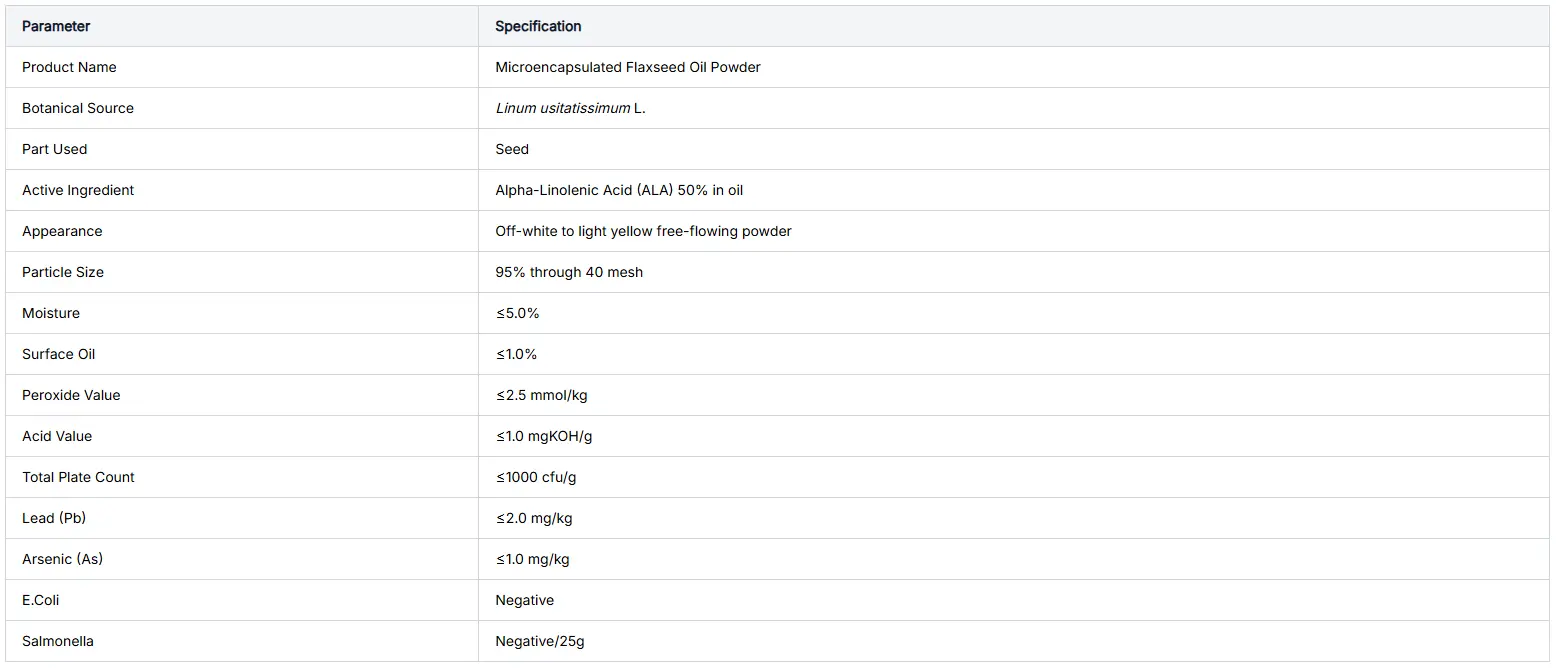
- ALA ≥55% confirmed by GC per batch — no cheap oils are added to meet basic standards
- Peroxide Value ≤2.5 mmol/kg — strict control of primary oxidation during production
- Acid Value ≤1.0 mgKOH/g — shows that the base oil is fresh
- Surface Oil ≤1.0% — relationships directly with shelf life and how well it tastes and smells
- Heavy metals compliant — Pb ≤2.0 mg/kg, As ≤1.0 mg/kg, Cd ≤1.0 mg/kg, and Hg ≤0.1 mg/kg at most
- Microbiological safety — A total plate count of 1000 cfu/g, no Salmonella negative/25g, and no E. coli negative
The manufacturing process meets the standards set by ISO, HACCP, Halal, Kosher, and the FDA. There are organic-certified (USDA NOP and EU Organic) choices that can help with clean-label placement in the US and EU markets. To keep the integrity of the microcapsules throughout the supply chain, keep them sealed in a cool, dry place that is below 20°C and has a relative humidity of 50%.
Applications and Advantages in Food Manufacturing
Where This Ingredient Performs Best?
The powder form lets you use it in ways that liquid oil just can't. Because it flows freely and doesn't cake, microencapsulated flaxseed oil powder can be used in both dry-blend and high-throughput production lines without any problems.
Here are some of the most popular types of applications:
- Dietary supplements — 5–20 tons of vegan omega-3 softgels, pills, and powder packs are bought every year by plant-based and heart health brands
- Functional foods and beverages — adding omega-3s to protein bars, granola, breakfast cereals, and drinks that already have them where liquid oil would make the fat clump or bloom
- Nutritional fortification products — meal replacements and clinical nutrition products that are fortified with nutrients and have low surface oil to keep their taste and shelf life without getting the "fishy" complaint
- Pet food — high-end dog kibble and horse feed recipes that support healthy coats and anti-inflammatory nutrition, with 5–20 tons of sales each year
- OEM/ODM contract manufacturing — co-packers who make omega-3 capsules and powders from plants for more than one brand, usually getting 10–40 tons per year
The microencapsulation matrix really protects the ALA from heat during baking cycles and extrusion, keeping its integrity when oil that wasn't protected would break down. This is the unique benefit for companies that make healthy foods and treat them at high temperatures.
The growing trend toward clean labels is also in line with these technical features. It's okay for brands to say they use "plant-based omega-3," "vegan certified," and "non-GMO" ingredients without having to worry about the safety of the ALA.
Procurement Guide for Manufacturers and Distributors
Evaluating Suppliers Before You Commit
Teams in charge of buying a lot of microencapsulated flaxseed oil powders need more than just a description sheet. In this group of risks, the most important ones are ALA adulteration (mixing with cheaper oils to increase volume), inconsistent wall-material quality that affects OSI performance, and poor deodorization that leads to sensory complaints further down the line.
Check more than just a generic certificate of analysis when you are looking for a provider. Check batch-level GC paperwork as well. Ask for specific data on the surface oil; it is a better way to tell how well the encapsulation is working than just looking at the total amount of oil. Make sure that the OSI number given is for the real wall system that is used in production and not a prototype made in the lab. Suppliers who offer 500g–1kg samples for recipe testing before committing to a MOQ show that they are sure their product will work well.
For cross-border compliance, make sure the supplier is registered with the FDA and can provide vegan declarations and botanical source certificates (from Linum usitatissimum L. seed). This is because both U.S. and EU food safety regulations need traceable ingredient documentation.
Brand and Supplier Landscape
Why the Wall-Material System Defines Supplier Tier?
Suppliers from Asia, Europe, and North America are all part of the global market for microencapsulated flaxseed oil powders. But location isn't what makes a difference; it's the encapsulation design. A commodity tier is made up of suppliers who use single-layer modified starch systems. People who have bought multi-layer systems that include cyclodextrin have much better oxidative defense, which can be proven by OSI tests.
Easy Health has been in business for more than 11 years and has full traceability from where the raw materials come from to where they are delivered. They also offer flexible OEM/ODM services, which include choosing ingredients and formulating new ones as well as packaging and labeling. This supply chain integration cuts down on wait times and compliance issues at the same time for OEM makers that make private-label omega-3 goods for various markets.
Conclusion
Microencapsulated flaxseed oil powder made from flaxseed has grown from a niche veggie option to a specification-driven ingredient category. What sets reliable sellers apart from commodity players are their wall-material engineering, ALA purity, and deodorization performance. When purchasing managers look at omega-3 sources for supplements, functional foods, or pet food, they must make sure that the ALA level is at least 55%, the OSI level is at least 16 hours, and the surface oil level is at least 1%. When those conditions are met regularly, the ingredient lives up to its claims for heart health, reducing inflammation, and skin support in a wide range of end-product forms.
FAQ
Does microencapsulated flaxseed oil powder really get rid of the smell of fish?
Yes. Flaxseed oil that is high in ALA naturally has strong off-notes. Our physical and enzymatic deodorization process cuts the powder's smell by 80%, making it ideal for oral dosage forms, flavored goods, and food fortification where high-quality taste is essential.
How does triple-wall encapsulation compare to standard single-wall systems?
Most single-wall powders have an OSI of 8 to 12 hours. Our triple-wall matrix, which is made up of modified starch, gum arabic, and cyclodextrin, aims for an OSI of at least 16 hours. This doubles the protection against oxidation and increases the shelf life of useful products in both food and supplement making.
Can this powder be used in baked goods without ALA degradation?
During normal baking and molding processes, the encapsulation material protects against heat. Extreme temperatures will eventually break down any sensitive fatty acid, but the wall system makes it take longer than with liquid oil or powders that only have one wall.
Is a vegan-certified version available?
Modified starch, gum arabic, and cyclodextrin are all plant-based products that are used to make walls. We offer full vegan declarations and botanical source certificates from Linum usitatissimum L. seed, which helps U.S. and EU markets follow clean-label rules.
What documentation comes with each batch?
There is a GC-verified certificate of analysis for each batch that lists the amount of ALA, the peroxide value, the acid value, the surface oil, the moisture, the heavy metals, and all the microbiological tests that were done. Traceability records go from where the raw materials come from to when they are shipped.
Partner With Easy Health — Your Trusted Microencapsulated Flaxseed Oil Powder Supplier
Work with Easy Health, the company you can trust to give you microencapsulated flaxseed oil powder. Each order from Easy Health is backed by their 11+ years of experience with plant extracts, their ISO/HACCP/Halal/Kosher-certified manufacturing, and a batch-level GC verification. Our team can help you with your creation from the idea stage all the way through to the finished product that meets all the requirements. To get your sample right away, email devin@easyhealthbio.com or visit easyhealthinc.com to request your sample today.
References
1. Barceló-Coblijn, G., & Murphy, E. J. (2009). Alpha-linolenic acid and its conversion to longer chain n-3 fatty acids. Progress in Lipid Research, 48(6), 355–374.
2. Berton-Carabin, C. C., & Schroën, K. (2015). Pickering emulsions for food applications: Background, trends, and challenges. Annual Review of Food Science and Technology, 6, 263–297.
3. Encina, C., Vergara, C., Giménez, B., Oyarzún-Ampuero, F., & Robert, P. (2016). Conventional spray-drying and future trends for the microencapsulation of fish oil. Trends in Food Science & Technology, 56, 46–60.
4. Simopoulos, A. P. (2002). The importance of the ratio of omega-6/omega-3 essential fatty acids. Biomedicine & Pharmacotherapy, 56(8), 365–379.
5. Shahidi, F., & Ambigaipalan, P. (2018). Omega-3 polyunsaturated fatty acids and their health benefits. Annual Review of Food Science and Technology, 9, 345–381.
6. Tonon, R. V., Grosso, C. R. F., & Hubinger, M. D. (2011). Influence of emulsion composition and inlet air temperature on the microencapsulation of flaxseed oil by spray drying. Food Research International, 44(1), 282–289.

_1784173402819.webp)