Why Is Arachidonic Acid Oil Microencapsulated?
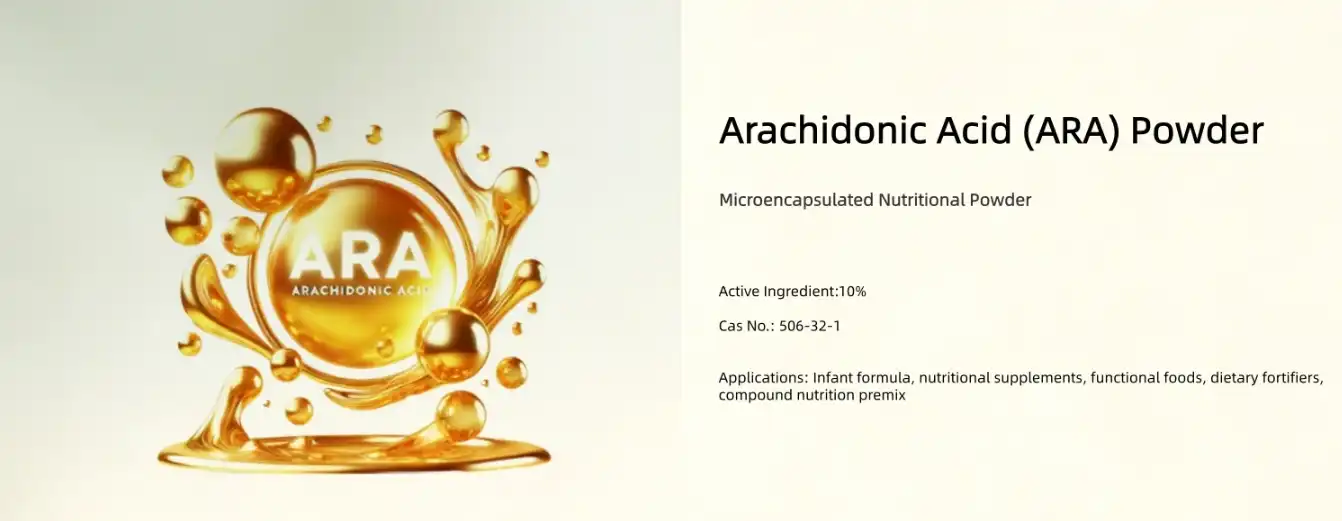
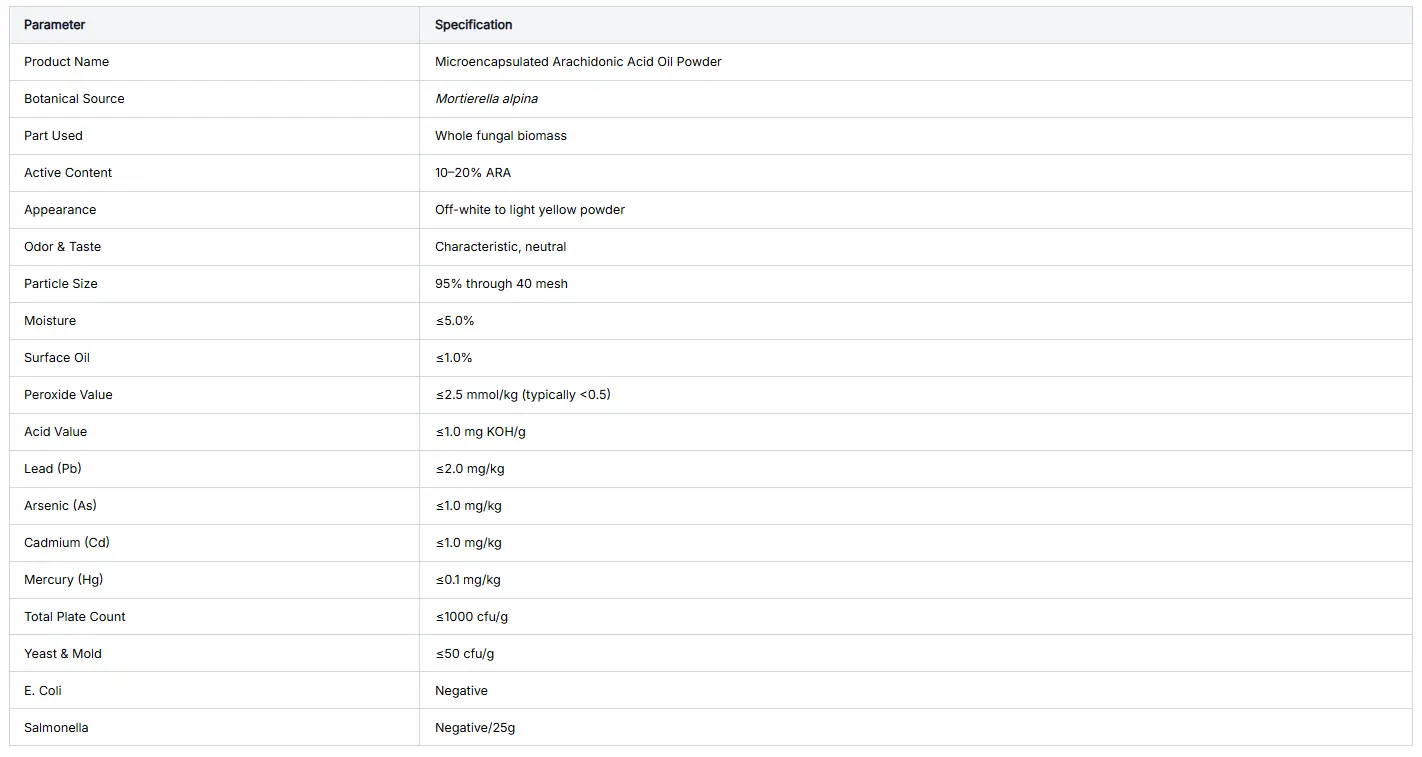
Arachidonic acid (ARA) oil is one of the omega-6 fatty acids used in baby feeding that breaks down the most quickly. If raw ARA oil is not protected, it breaks down quickly when it comes in contact with oxygen, light, or heat. This makes it less safe and makes it harder to trust what the label says. Microencapsulated arachidonic acid oil powder solves this problem by sealing each oil droplet in a food-grade protected shell through spray-drying. The result is a steady, free-flowing powder with a shelf life of 18–24 months, a peroxide value usually below 0.5 meq/kg, and surface oil kept under 1.0%—properties that raw liquid ARA simply cannot match.
Understanding Microencapsulation of Arachidonic Acid Oil
What Microencapsulation Actually Does?
Microencapsulation puts a polymer wall around each oil droplet. This wall is usually made of modified starch, gum arabic, or a mix of the two. The mix is then dried with a spray to make a dry powder. Without the cover, air, water, and UV light would be able to damage the ARA oil. This barrier is not just for looks when formulators use chemicals that are safe for kids; it is the major way that the fatty acids stay fixed from the plant to the meal.
How It Differs from Conventional ARA Oil Powder?
If you spray-dry ARA oil powder without adding anything else, you get one that isn't really enclosed. Being close to the particles' surface, the oil is what makes lower-grade goods often have more than 2–3% surface oil content. On the other hand, a well-thought-out double-layer control method keeps oil on the top below 1.0%. For sure, that is the best way to guess oxygen stability. When new raw materials come in at a Stage 1 formula plant, the first number the quality assurance team checks is the amount of surface oil.
Why Particle Architecture Matters for Industrial Processing?
How well ARA powder that has been encapsulated moves in automatic dosing systems depends on the particle size distribution of the powder. The best particle size range is between 150 and 400 microns. There is a real risk of caking in silos and hoppers in places with a lot of humidity. The enclosed form doesn't soak up water and can easily pass through standard dry-blend lines. This lowers the number of times the line has to be shut down and the number of batches that are rejected. These flow properties make microencapsulated arachidonic acid oil powder well suited for automated dry-blend and dosing systems.
Benefits of Microencapsulation for Arachidonic Acid Oil in B2B Applications
Extended Oxidative Stability Across the Supply Chain
In the business world, sealed ARA is important because it is stable against oxidation. When Rancimat checks encapsulated powder for faster stability, it finds that the rate at which the peroxide value rises is much slower than when it checks raw oil. As long as the formula is stored at room temperature for 24 months, the company that exports it will have lower write-off costs and fewer complaints from distributors in Southeast Asia or the Middle East.
Preserved Bioavailability Through the Gastrointestinal Tract
Encapsulation doesn't change how well absorption works. It is easy for digestive lipase to break down food-grade wall materials in the small intestine, which lets ARA oil be absorbed. LCPUFA delivery studies show that ARA from powder that has been encapsulated is just as bioavailable as ARA from oil that has been boiled down to the same amount. The claims about how well the product works don't have to change because the formulators can keep the same amount of ARA.
Operational and Formulation Advantages for OEMs
This is why crushed ARA powder is the best choice for companies that make dry blends:
- Dry-mix compatibility: The powder integrates directly into base powder blends without liquid injection equipment, avoiding heat exposure that degrades sensitive fatty acids during spray-drying of the finished formula.
- Sensory neutrality: The encapsulation shell masks the characteristic metallic and fungal odor of raw ARA oil, protecting the flavor profile of the finished product.
- Mineral matrix stability: The shell prevents direct contact between ARA and iron or zinc ions in complex nutrient matrices, reducing catalytic lipid oxidation that degrades both the oil and co-fortified vitamins.
All of these benefits work together to protect the "clean label" claims that premium infant formula brands rely on, lower the risk of having to change the formula, and cut down on production waste. These combined advantages make microencapsulated arachidonic acid oil powder a valuable ingredient for premium infant formula manufacturers.
Key Considerations for Procurement and Quality Evaluation
Encapsulation Technology and Quality Benchmarks
Not all enclosed ARA powders work the same. In terms of a single measure, the amount of oil on the top shows how well the sealing works. Teams that buy things should ask for both the standard Certificate of Analysis (COA) and Rancimat OSI data. Once you see that the peroxide level was less than 0.5 meq/kg when the ingredient was made and that it has been stable for 24 months with slow growth, you can get a good idea of how it will work after its shelf life is over.
Infant-Grade Microbiology and Contaminant Testing
The bacteria that is used in regular food is not enough for baby formula and FSMP. The standards for buying must include the following:
- Cronobacter sakazakii: Negative in 30g samples—a mandatory infant-grade standard.
- GE and 3-MCPD screening: Glycidyl fatty acid esters and 3-monochloropropanediol are process contaminants monitored under EU Regulation 2018/290 and increasingly required by Asian regulatory bodies.
- Heavy metals: Lead ≤2.0 mg/kg, arsenic ≤1.0 mg/kg, cadmium ≤1.0 mg/kg, mercury ≤0.1 mg/kg.
- GC fatty acid profiling: Confirms ARA content within specification and verifies zero trans-fatty acid formation during the spray-drying step.
They shouldn't move on to the next round of qualification if they can't give lot-specific numbers for each of these factors.
Supplier Credentials and Supply Security
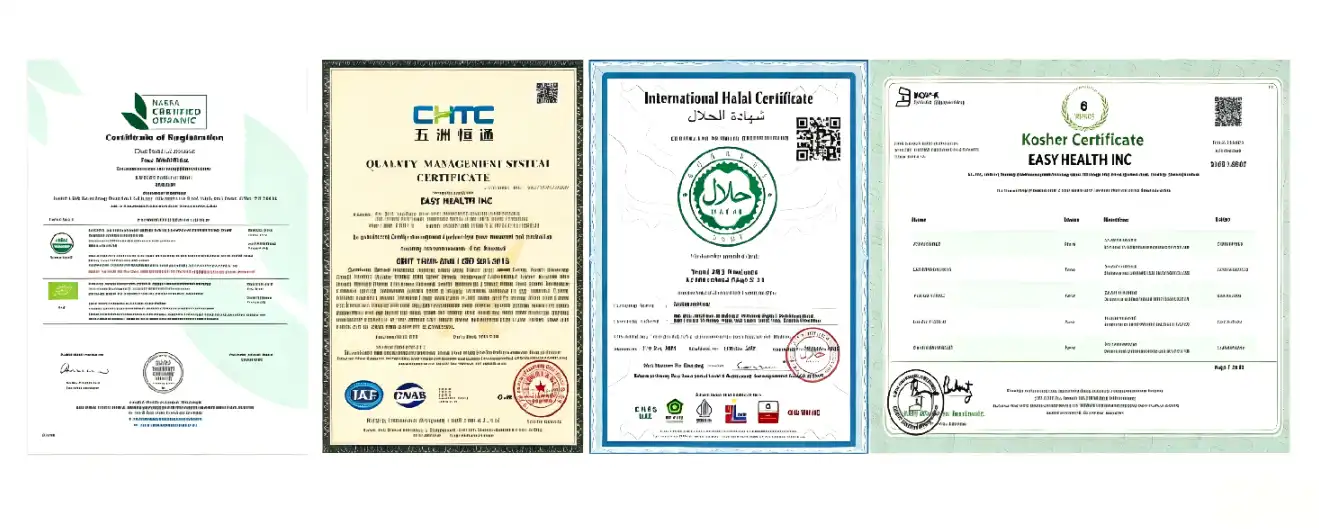
Certifications like ISO, Halal, and Kosher are necessary for supply lines that bring food to babies all over the world. Buyers should also look at how open the fermentation source is, along with the qualifications. True ARA content can only be found when pure Mortierella alpina deep-liquid fermentation is used without any vegetable oil. Labeling compliance risks can come from suppliers who add cheaper oils to increase the amount of fatty acids. In places like China, where GB 10765 makes it clear what chemicals are in Stage 1 baby formula, this could mean that the formula needs to be re-registered.
Comparative Analysis: Microencapsulated vs Non-Microencapsulated Arachidonic Acid Oil Powder
Oxidative Stability and Shelf Life
ARA powder that is encapsulated works differently than powder that is not encapsulated. This difference is most noticeable when aging is sped up. Within six months of being made and kept at room temperature, powder that isn't sealed generally has more than 2.5 mmol/kg of peroxide in it. When sealed in double-layer shells and nitrogen blankets, the amount of peroxide stays well below that for 18 to 24 months. For a formula registration project, that stability margin is needed. It takes 12 to 18 months from the time the ingredients are approved to the time the formula is approved for sale. There is a law and a business that says label claims must be true. Any encapsulated ARA supplier worth their salt should be able to use GC profiling on several different production lots to show that the ARA levels are different by less than 1% between batches. There can be a 3–5% difference in powder that isn't protected and comes from less controlled processes. This means that formulators have to either over-declare ARA or accept label-claim risk during stable testing. These stability and consistency differences make microencapsulated arachidonic acid oil powder the safer choice for formula registration projects.
Market Availability and Supplier Landscape
There aren't many skilled fermentation providers. In Asia, there are a lot of places that sell fermentation-derived ARA at fair prices, but the quality varies a great deal, especially when it comes to microbiology and contaminant panels for infants. The first time a procurement team buys from a new seller, they should give that source three to six months to get qualified. Before signing an annual framework agreement, this means getting samples, doing internal analytical testing, starting stability testing, plant audits, and a pilot-scale trial.
How to Choose the Right Microencapsulated ARA Powder for Your Business?
Match Specification to Application
The strictest requirements for stage 1 infant formula are that it has less than 1% surface oil, a peroxide value of less than 0.5 meq/kg when it is received, no Cronobacter, has been tested for GE/3-MCPD, and comes with full GC documentation. For therapeutic enteral feeding, the guidelines for purity are the same, but the size of the particles may not be as important. For functional foods like meal replacements and enriched grains to stay steady, they need to be extruded and mixed with a lot of force. On the other hand, they might be able to handle a few more ARAs.
Evaluation Checklist Before Committing to a Supplier
These things should be checked by the R&D and procurement teams before a big order is placed:
- Sample and COA review: Request 500g–1kg samples with a full lot-specific COA, OSI data, and microbiology report before internal testing begins.
- Stability initiation: Place samples under your storage conditions and set review intervals at 3, 6, and 12 months.
- Plant audit: Verify GMP compliance, fermentation source purity, and in-process QC checkpoints for surface oil during manufacturing.
- Pilot trial: Run a small-scale dry-blend trial to confirm dispersibility, flowability, and sensory performance in your specific formula matrix.
Conclusion
Because the raw oil form isn't stable enough for the production process, supply chain, and shelf life needs of baby formula and clinical nutrition, it's put into tiny pills. The shell keeps the fatty acids intact, gets rid of any taste or smell problems, and allows the dry-blend process to happen without the product breaking down due to heat. This encapsulation step is essential for microencapsulated arachidonic acid oil powder, because it transforms an unstable raw oil into a consistent, free-flowing ingredient that survives high-speed dry blending, long-distance shipping, and extended retail shelf life without losing its nutritional value or developing off-flavors.
FAQ
What is the shelf life of encapsulated ARA powder compared to raw ARA oil?
Properly packaged encapsulated ARA powder in nitrogen-flushed, vacuum-sealed bags maintains stability for 18–24 months under ambient conditions. Raw ARA oil typically shows significant oxidation within 3–6 months without controlled atmosphere storage. The encapsulation shell and inert gas packaging together account for that extended window.
How do I verify that an ARA powder is truly fermentation-derived and not blended with vegetable oil?
GC fatty acid profiling is the most reliable method. Pure Mortierella alpina fermentation produces a characteristic fatty acid profile dominated by ARA, with specific minor fatty acid ratios that differ from blended vegetable oil sources. Request full GC chromatograms, not just a summary table, and compare the minor fatty acid pattern against published Mortierella alpina fermentation profiles.
What storage conditions should I specify for encapsulated ARA powder?
Store in original sealed packaging at temperatures below 25°C, away from direct light and moisture. Once a bag is opened, reseal immediately and use within the timeline specified in the COA. Avoid storing near strong-smelling materials, as the powder can absorb ambient odors through damaged packaging.
Is Cronobacter sakazakii testing required for all ARA powder applications?
It is mandatory for infant formula and FSMP applications. For adult functional food or pet nutrition, standard food-grade microbiology specifications apply. However, sourcing an infant-grade tested material for adult applications adds a safety margin without meaningful cost difference at industrial volumes.
Partner with Easy Health for Premium ARA Powder Supply
You can buy microencapsulated arachidonic acid oil powder from Easy Health. It is made from deep-liquid fermentation of 100% Mortierella alpina. The levels of peroxide are usually less than 0.5 meq/kg, and there isn't much difference between batches. There is full evidence that the powder is safe for babies to use. We offer microencapsulated arachidonic acid oil powder that is ISO/Halal/Kosher-certified and has been fermented for over 11 years. We can help you with the whole process, from the sample to the yearly framework agreement. You can email devin@easyhealthbio.com to ask for a sample and COA.
References
1. Sijtsma, L., & de Swaaf, M. E. (2004). Biotechnological production and applications of the omega-3 polyunsaturated fatty acid docosahexaenoic acid. Applied Microbiology and Biotechnology, 64(2), 146–153.
2. Koletzko, B., et al. (2008). The roles of long-chain polyunsaturated fatty acids in pregnancy, lactation, and infancy. Journal of Perinatal Medicine, 36(1), 5–14.
3. Drusch, S., & Mannino, S. (2009). Patent-based review on industrial approaches for the microencapsulation of oils rich in polyunsaturated fatty acids. Trends in Food Science & Technology, 20(6–7), 237–244.
4. Kolanowski, W., Laufenberg, G., & Kunz, B. (2004). Fish oil stabilisation by microencapsulation with modified cellulose. International Journal of Food Sciences and Nutrition, 55(4), 333–343.
5. European Food Safety Authority (EFSA). (2014). Scientific opinion on the safety of arachidonic acid (ARA)-rich oil from Mortierella alpina. EFSA Journal, 12(10), 3851.
6. Regulation (EC) No 1881/2006 as amended by Commission Regulation (EU) 2018/290 on maximum levels for glycidyl fatty acid esters in processed cereal-based foods and infant formula. Official Journal of the European Union, 2018.