What Is Microencapsulated Sunflower Seed Oil Powder?
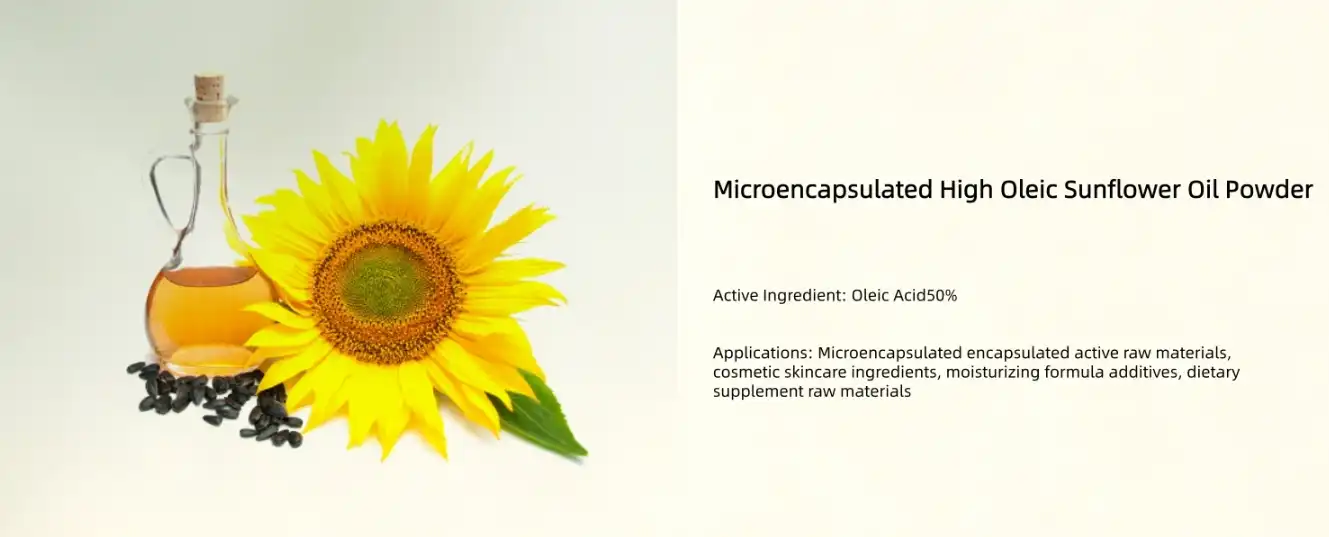
Microencapsulated sunflower seed oil powder is a functional lipid ingredient produced by embedding high-oleic sunflower seed oil within a protective micro-matrix through low-temperature spray drying. This process converts liquid oil into a stable, free-flowing powder with a surface oil content below 1.0% and a peroxide value of ≤2.5 mmol/kg. The result is a clean-label ingredient that resists oxidation, disperses instantly in cold water, and integrates cleanly into solid formulations — without synthetic antioxidants like TBHQ or BHA.
Understanding Microencapsulated Sunflower Seed Oil Powder
This process does more than just turn oil into a powder. That's the right way to do it. Each oil droplet has a food-grade wall made of modified starch or a plant-based protein. Pieces are made that shield the lipid core from light, air, and water this way.
How It Differs from Conventional Oil Powders
There is often a lot of oil on top of regular oil powders. This makes the oil go bad faster and reduces its shelf life. A well-thought-out compressed fat powder might be a good idea. That would keep the level of oil on the top below 1%. There is less chance that the powder will stick together while it is being stored or shipped.
The Production Process
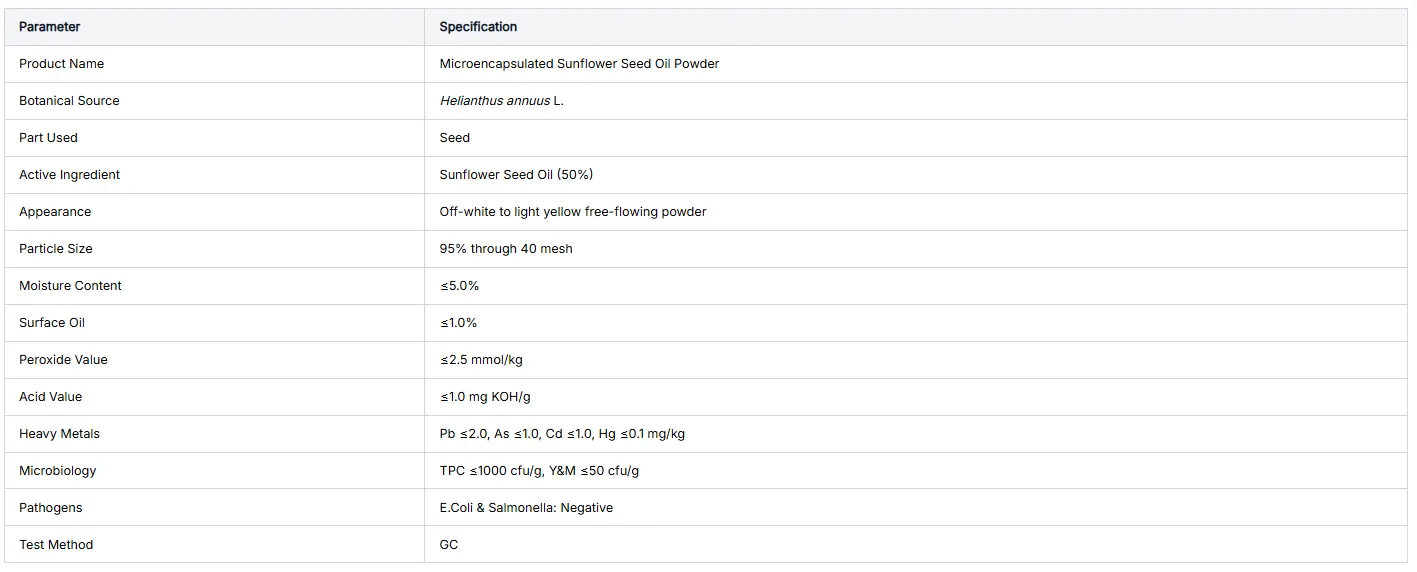
Easy Health does emulsification, flavor passivation, and low-temperature spray drying. This method doesn't add any man-made chemicals and keeps the vitamin E that is already there (≥600 ppm). Even better, 95% of the particles are so small that they can pass through a 40-mesh screen. This makes sure that the flow is always right in industrial blending lines.
Key Technical Specifications
This oil is mostly oleic acid (≥80%), and it makes up half of the oil load. The powder doesn't have any germs (E. coli and Salmonella negative) and the acidity level stays at 1.0 mg KOH/g. The moisture level stays at -5.0%. The amount of heavy metals in the food is below what is thought to be healthy around the world. These specifications make microencapsulated sunflower seed oil powder a clean and safe ingredient for food applications.
Benefits and Applications in the Food Industry
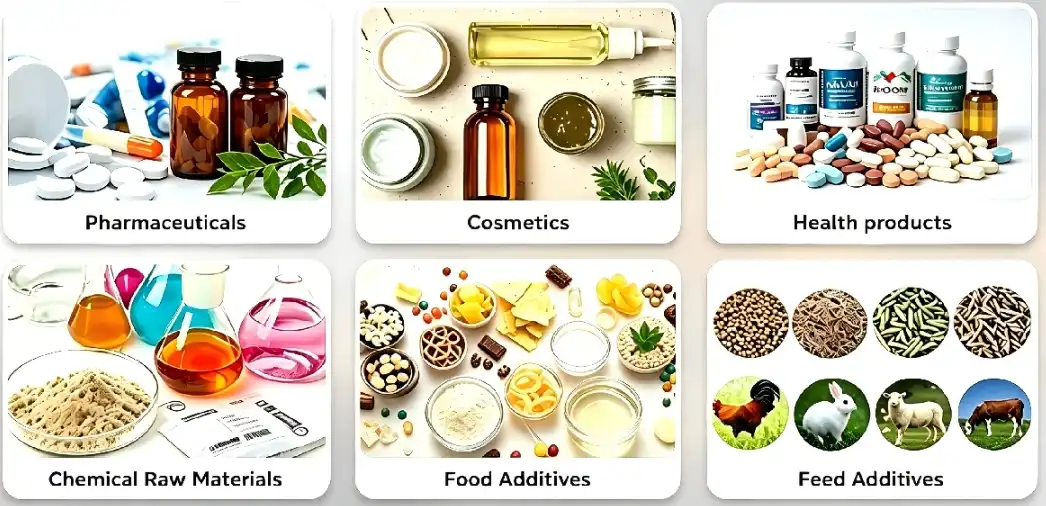
Oil problems are fixed when it is turned from a liquid to a powder that can be sealed. People who buy ingredients and come up with new ideas for baby foods, nutritional bars, baked goods, and drink powders always say that liquid fats cause three main problems: oil moving around, oxidation during storage, and problems with dry-blend production lines. This powder form does work on all three of them.
The ingredient works well in the following main ways:
- Industrial Bakery & Premixes: The encapsulated format prevents premature fat migration into flour matrices, improving dough elasticity and producing a more consistent crumb structure. Because the lipid core stays protected from atmospheric oxygen, finished baked goods maintain freshness longer than those made with unencapsulated fat sources.
- Sports Nutrition & Meal Replacements: High-oleic sunflower oil powder disperses cleanly in shaker bottles without leaving a greasy film. Athletes benefit from a calorie-dense, healthy fat source that delivers oleic acid and natural vitamin E in every serving, while the neutral flavour profile avoids interfering with other ingredients.
- Infant Formula & Clinical Nutrition: Precision dosing of essential fatty acids is non-negotiable for sensitive populations. The powder format allows exact measurement, and the micro-matrix shields the oil from light-induced oxidation — a mandatory consideration for products aimed at infants and clinical patients.
- Beverage Powders & Fortified Snacks: Cold-water dispersibility means no additional emulsification equipment is needed on the production line. The powder integrates into drink mixes, nutrition bars, and fortified cereals without creating off-flavours or oily textures.
Fat doesn't move into flour mixes too quickly because the case is covered. This helps the dough stretch and has a more even crumb structure. After baked goods are done, they stay fresh longer when fat sources are locked in. Why is this? Because oxygen can't get to the core of the lipid.
Comparing Microencapsulated Sunflower Seed Oil Powder with Alternatives
When purchasing goods, managers often look at different sources of concentrated lipids and compare them to high-oleic sunflower oil powder. Different ways of processing encapsulated oils might make them not work the same. It's important to know this comparison. Understanding these processing differences is essential when evaluating microencapsulated sunflower seed oil powder against other encapsulated lipid sources.
Oxidation Stability vs. Standard Sunflower Oil
High-oleic sunflower oil is three to five times more resistant to oxidation than sunflower oil that doesn't have at least 80% oleic acid. The Oxidative Stability Index (OSI) number changes right away because of this. This means that the powder will last 18–24 months instead of 6 months like the raw liquid sunflower oil that is stored the same way.
High-Oleic Sunflower vs. Fish Oil Powder
Omega-3 fatty acids are in fish oil pills, but they smell and taste strongly of fish and need to be sealed tightly to hide any bad smells. It's not very strong to smell or taste high-oleic sunflower oil powder. So it's a better choice for baking mixes that don't need to be smelled or tasted, drink powders with tastes added, and foods for babies.
Clean-Label Positioning vs. Flaxseed or Palm-Based Powders
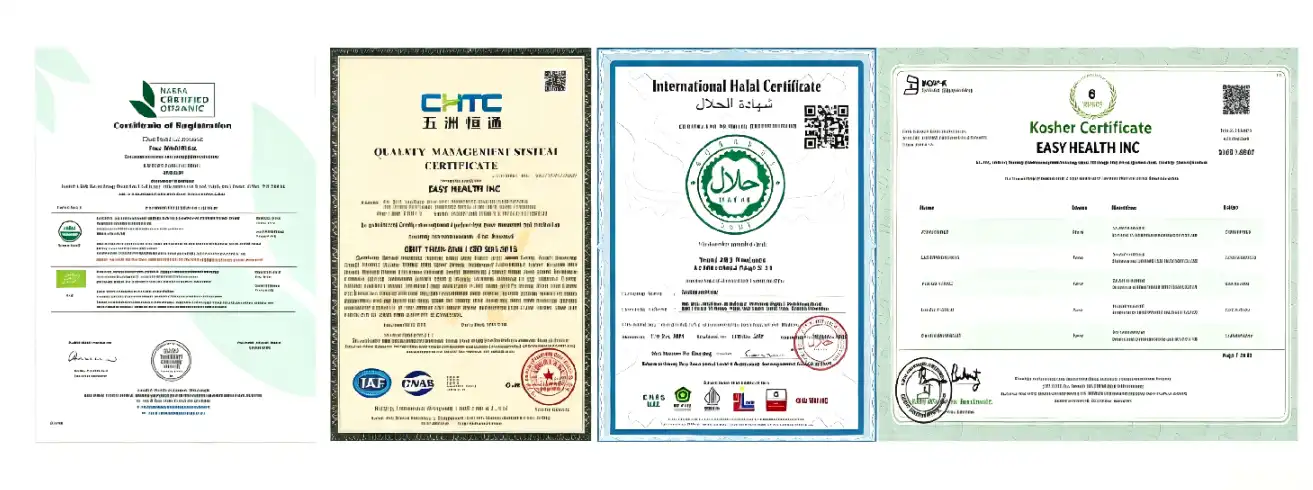
Omega-3s are good for you in flaxseed oil powder, but they don't hold up as well against oxidation. People who eat clean and care about the environment often worry about fat powders made from palm oil. High-oleic sunflower oil powder is pure and doesn't have any added vitamins. It is also Halal, Kosher, and non-GMO. They need all of these papers more and more to meet the needs of businesses and the government.
Procurement Insights for Global B2B Buyers
It's not enough to just look at prices when you need to buy food. A supply contract can change the total cost of buying something over time. Lead times, batch consistency, the length of time a certification is good for, and professional help can all make a difference.
Supplier Qualification Criteria
If you want to buy encapsulated lipid powder, you should ask for certificates of analysis (CoA) that show the microbiological results, the amount of surface oil, and the peroxide value. You should check how consistent each batch is with the last batch at least three times. In the US and most other places in the world, suppliers have to follow rules. Providers that are ISO, HACCP, Halal, Kosher, and FDA approved can do these things.
Sampling and Trial Process
People who want to join usually have to go through these steps: a free taste test; an in-house lab proof; a sample production trial (on a bread line, a beverage mixer line, or a baby cereal line); and then they place a big order. Most of the time, this stage lasts between 4 and 8 weeks. Simple things that Easy Health keeps on hand are ready to be sent out right away. Custom orders, on the other hand, are sent out within 3–5 business days, which is good for test runs. This structured onboarding process and fast sample turnaround make Easy Health a practical partner when evaluating microencapsulated sunflower seed oil powder for new product development.
Storage and Logistics Considerations
Do not put the powder in direct sunlight. Keep it below 25°C in containers that are sealed and can't get wet. Because it melts above 60°C, the product doesn't get hard in warm places. A lower melting point fat powder is not as good as this. All over the world, Easy Health ships with FedEx, DHL, UPS, air freight, and sea freight. The company picks the route based on how important it is to deliver the packages on time and where they need to go.
Why Choose This Ingredient for Your Business?
In the end, there are four good reasons to use high-oleic sunflower oil powder in your products: it stays stable, it doesn't make the label look bad, it doesn't change how the products are made, and you can always get it. It will be easier for stores to accept a product that is Halal, Kosher, non-GMO, and doesn't have any fake antioxidants. Brand owners will also be less likely to ask for ingredient swaps.
The teams that buy things can choose the particle size, oil load, and wall material composition that works best with their equipment and what the label says. For more than 11 years, the Easy Health R&D team has been making things. Because they can help with manufacturing problems, switching from a liquid fat to a powdered method in the middle of the production cycle is safer.
Conclusion
These days, encapsulated fat powders are used to make a lot of food and health goods. There is a lot of good sunflower oil powder in this group. It has a neutral flavor and works well in dry blends. Because of these things, it can be used in drinks, baby food, sports nutrition, and bread. It's easy to see the technical and business case for procurement teams that want to improve ingredients or combine suppliers: more stable ingredients with fewer additives and proof that can stand up to an audit. These advantages make microencapsulated sunflower seed oil powder a strong choice for procurement teams seeking stable, clean-label ingredients.
FAQ
What is the shelf life of encapsulated sunflower oil powder compared to liquid oil?
Raw sunflower oil typically degrades within 6 months under standard conditions. The microencapsulated powder maintains its nutritional and sensory profile for 18–24 months when stored in sealed, cool, and dry conditions — a meaningful improvement for supply chain planning.
Can the powder replace liquid oil directly in dry-blend formulations?
Yes. At a 50% oil load, you can calculate the equivalent fat contribution and substitute on a weight basis. The powder integrates into dry premix lines without liquid fat handling equipment.
Is a vegan or plant-based version available?
Easy Health can replace dairy-derived wall materials with modified starch or pea protein for vegan and plant-based label compliance. Confirm this requirement when requesting a sample.
Does the product carry Halal and Kosher certification?
Yes. The manufacturing facility holds Halal, Kosher, ISO, HACCP, and FDA registration, covering the compliance requirements of most international markets.
How does the powder behave in hot beverages?
The product is designed for thermal stability. It disperses evenly in hot liquids without separating or forming a surface film, making it suitable for hot drink mixes and instant beverage formats.
Partner with Easy Health — Trusted Microencapsulated Sunflower Seed Oil Powder Supplier
Easy Health has been in business for over 11 years and makes capsules with sunflower seed oil powder. They can keep an eye on each batch and make sure their products meet the rules for FDA, ISO, HACCP, Halal, and Kosher. You can get a free sample, learn about our OEM options, or get in touch with our team to talk about how much big orders will cost. To start the process of getting approved, email devin@easyhealthbio.com.
References
1. Shahidi, F., & Han, X. Q. (1993). Encapsulation of food ingredients. Critical Reviews in Food Science and Nutrition.
2. Drusch, S., & Mannino, S. (2009). Patent-based review on industrial approaches for the microencapsulation of oils rich in polyunsaturated fatty acids. Trends in Food Science & Technology.
3. Kaushik, V., & Roos, Y. H. (2007). Limonene encapsulation in freeze-drying of gum arabic–sucrose–gelatin systems. LWT – Food Science and Technology.
4. Koca, N., Karadeniz, F., & Burdurlu, H. S. (2003). Effect of storage on oxidative stability of high-oleic sunflower oil. European Journal of Lipid Science and Technology.
5. McClements, D. J., & Decker, E. A. (2000). Lipid oxidation in oil-in-water emulsions: Impact of molecular environment on chemical reactions in heterogeneous food systems. Journal of Food Science.
6. Reineccius, G. A. (2009). Spray-drying of food flavors in encapsulation technologies. Flavor Chemistry and Technology.