Microencapsulated Astaxanthin Powder vs. Astaxanthin Oil
When sourcing astaxanthin for product development, the form you choose directly affects bioavailability, formulation compatibility, shelf life, and regulatory standing. Microencapsulated astaxanthin powder — derived from Haematococcus pluvialis and protected by a triple-wall encapsulation system — delivers over 70% bioavailability in its natural esterified form, roughly 10 times higher than synthetic free-form astaxanthin oil (less than 10%). This comparison guide walks B2B buyers through the real performance differences between the two forms, so you can make a procurement decision backed by data, not guesswork.
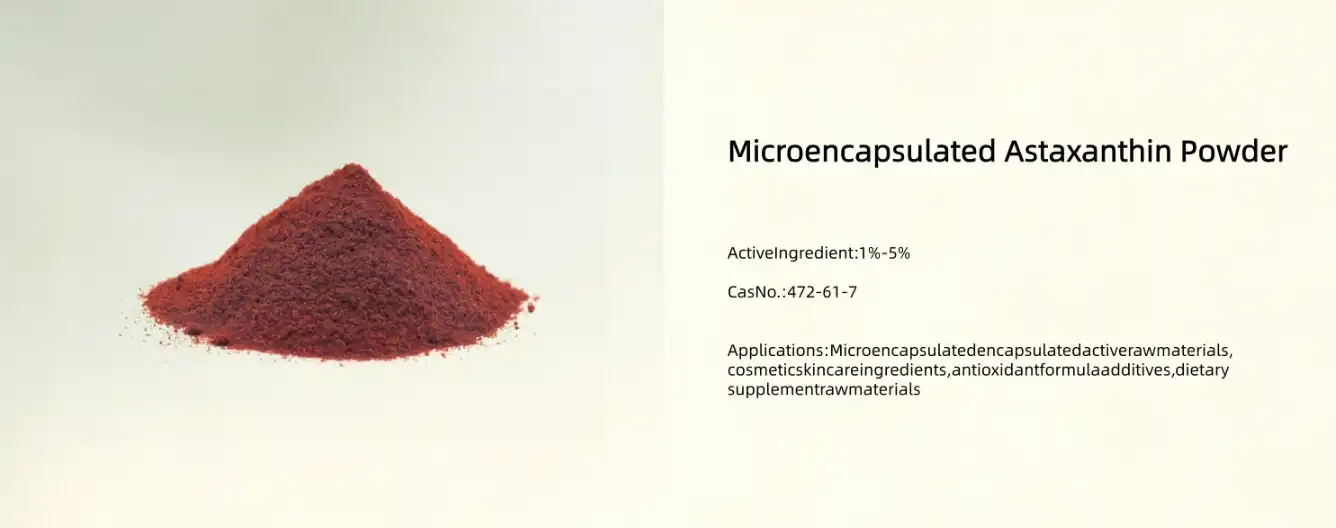
Understanding Microencapsulated Astaxanthin Powder and Astaxanthin Oil
The active pigment in both kinds of astaxanthin is the same (CAS No. 472-61-7), but they are very different in how they are built, how stable they are, and how well they work in different situations.
What Is Microencapsulated Astaxanthin Powder?
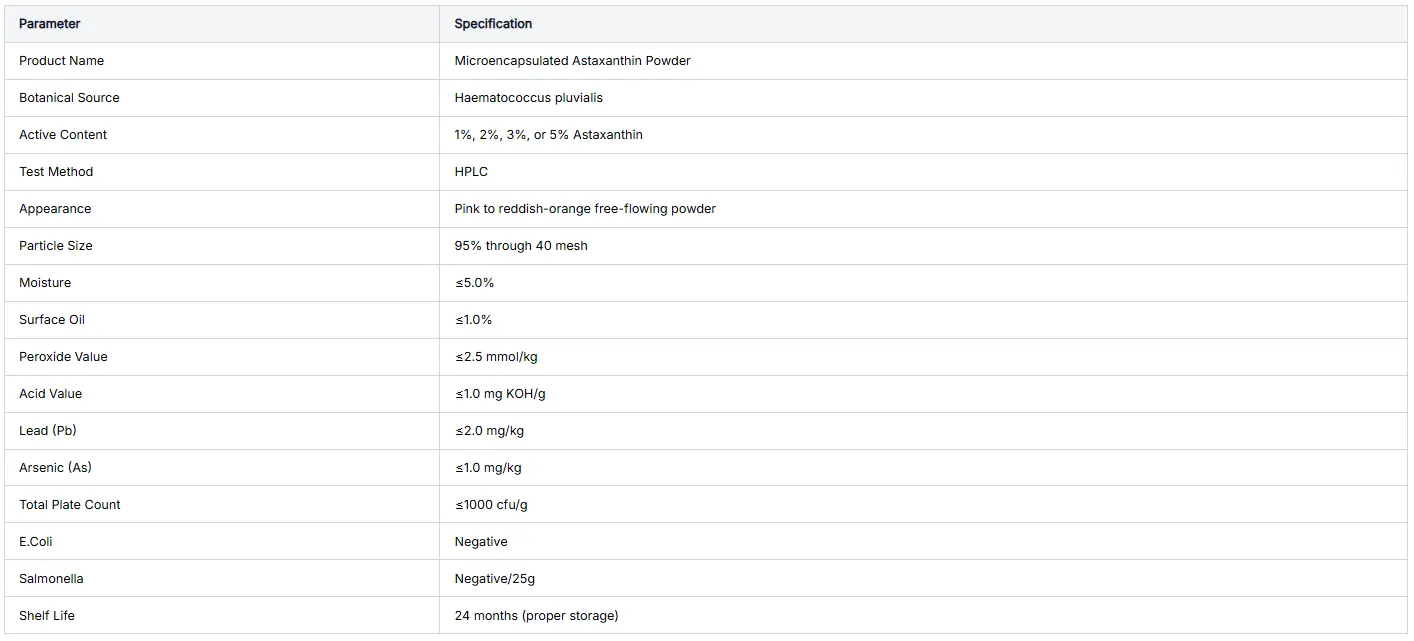
Some technologies, like spray-drying or micro-matrix technology, are used to protect lipophilic astaxanthin droplets inside a wall matrix. Most of the time, this wall matrix is made of dextrin or modified starch. The 40-mesh screen makes some of the powder get stuck, but most of it just runs right through. The color is between pink and orange-red. The active molecule is kept safe from light, heat, and oxygen by the three-wall structure. It also breaks down very quickly in cold water because it has a better hydrophilic-lipophilic balance (HLB).
What Is Astaxanthin Oil?
You can get astaxanthin oil, which is made of lipids, from H. pluvialis by using CO2 supercritical extraction or solvent extraction. Astaxanthin is concentrated in this oil, which is why it is used a lot in softgel capsules and lipid-based emulsion systems. It works well in oil-phase recipes, but it needs to be kept out of direct sunlight and temperatures that are too high or too low. It could go bad if it gets too much air.
Key Structural Difference
Astaxanthin from H. pluvialis naturally comes in two different types, each with its own set of side chains. This is how mono to stereo is split: about 7:3. When made in a lab, free astaxanthin doesn't have the ester bond that helps lipase-mediated uptake in the digestive system. This structure helps the body absorb astaxanthin better than free astaxanthin, an advantage preserved in microencapsulated astaxanthin powder.
Comparing Performance and Benefits for Industrial Applications
You can really tell the difference between the two types of performance when you use them at work.
Bioavailability and Absorption Kinetics
It takes two hours after eating H. pluvialis for astaxanthin to reach its highest level in the blood, where it stays for more than twelve hours as an antioxidant. More than 70% of the time, natural types that are esterified can be found, but less than 10% of the time, free-form man-made astaxanthin can be found. This difference is big, and brands that want to place themselves based on how well they work need to make this point. Astaxanthin oil should be kept in a cool, dark, and closed area so that peroxide doesn't build up and change the color or usefulness of the oil. With a peroxide level of ≤2.5 mmol/kg and a surface oil level of ≤1.0% per batch, this Easy Health powder stays sealed. The capsule is strong at this level. The powder will last for 24 months if you keep it below 15°C in containers that are tightly sealed.
This is how they fit into the main dosage types:
- Functional beverages and instant drink sachets: Encapsulated powder with optimized HLB disperses fully in cold water without sediment, floating particles, or container wall adhesion — a critical pass/fail criterion for ready-to-mix and single-serve formats.
- Softgel capsules (high-concentration): The 5% specification powder works well in softgel fill systems; oil-based astaxanthin also performs here but requires antioxidant co-additives to prevent in-capsule oxidation.
- Tablets and compressed solid dosage forms: Encapsulated powder's flowability and 40-mesh particle uniformity support high-speed tableting; oil forms are not compatible with direct compression.
- Gummies and chewables: The powder's thermal stability allows it to withstand pectin or gelatin cooking temperatures without meaningful loss of active content.
Procurement Insights: What B2B Buyers Need to Know
There are things besides price per kilogram that can alter how well a deal is made. The real value of each form is based on how much it costs to own, how well it follows the rules, and how reliable its supply chain is.
Certification and Compliance Requirements
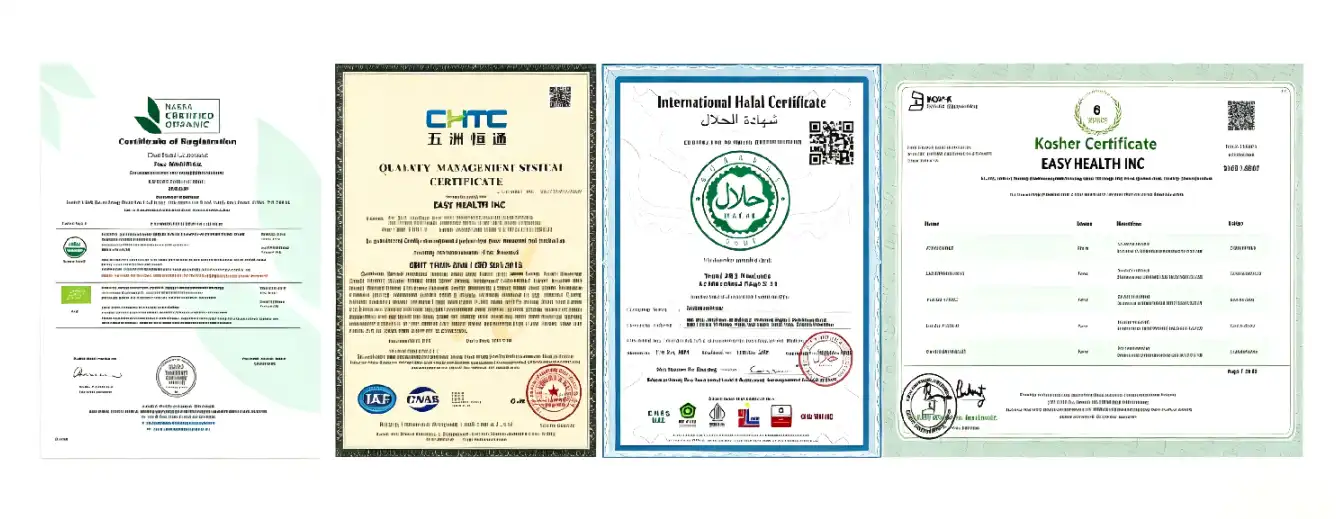
There are rules about Astaxanthin source and approval coverage that names that sell in more than one market must follow. The ISO, Halal, Kosher, FDA, USDA NOP, EU Organic, and HACCP all OK with Easy Health's pill powder. It is important to know that China does not allow food to have synthetic astaxanthin in it. This means that natural astaxanthin from H. pluvialis is the only way to legally get into the market in Asia and the Pacific. In China and some Southeast Asian markets, brands whose ingredients come from unknown or man-made sources may have to recall their goods.
Quality Documentation Per Batch
Every shipment from Easy Health comes with a Certificate of Analysis that tells you how much astaxanthin it has, as well as information about heavy metals (Pb ≤2.0 mg/kg, As ≤1.0 mg/kg), microbiological screening (Salmonella negative/25g, E.coli negative, Total Plate Count ≤1,000 cfu/g), stability, and allergens. It also says that the product is vegan and doesn't contain shellfish.
Supply Chain and MOQ Considerations
When they place their first order, small to medium-sized direct-to-consumer brands often have to worry about how they will pay for it. Easy Health keeps standard sizes in stock so that orders can be sent out right away. Custom marks take three to five days to finish. Different strengths of 1%, 2%, 3%, and 5% are all made on the same quality-controlled line. This makes it less likely that the recipe will need to be changed when the dose type changes.
How to Choose Between Microencapsulated Astaxanthin Powder and Astaxanthin Oil
What you pick will depend on what you're making, who you want to buy it, and the style you want it to have.
Choose Encapsulated Powder When:
If you want to make a "clean-label" claim that is backed up by organic approval, your product must melt in cold water, come in pill or sachet form, be sold in more than one market (including Asia), and pass those tests, which is why microencapsulated astaxanthin powder is often specified. The 1% number is good for daily functional drinks, and the 5% number is good for high-potency softgels and high-end oral beauty medicines.
Choose Astaxanthin Oil When:
There are no other ingredients in your recipe besides lipids. It could be an oil-in-water emulsion, a pure softgel oil-fill, or a formula that doesn't need to dissolve in water because it's going to be used on the skin. Small amounts of oil-based systems can carry a lot of astaxanthin, and they can naturally mix with vitamin blends that break down in fat.
Decision Criteria Summary
If you use them both right, they can both make good things. When people buy oil, the main risk is oxidative, so sellers need to show that the oil is stable with antioxidants and has low levels of peroxide. How well the powder is sealed is what you need to watch out for when you buy it. The walls aren't strong enough if there is more than 1.5% oil on the surface. This makes oxidation inside the package happen faster. You should never buy from someone until they show you third-party batch COAs.
Future Trends in Natural Astaxanthin Sourcing
For healthy eyes, teeth, and bodies, more and more people want pills with only carotenoids. In 2022, the global market for astaxanthin was worth USD 284.6 million, according to Grand View Research. Their guess is that it will keep going up until 2030. Food coloring agents are being regulated more strictly and "clean label" pills are becoming more popular.
New improvements in enclosure technology are making it possible to build walls on a nanoscale level. These walls squeeze particles together even more, which helps them spread out more. If a brand wants to sell in North America, Southeast Asia, and the Middle East at the same time, it needs to make more products that are USDA Organic and Halal or Kosher. It will be very helpful for suppliers who can show full traceability from algae growth to packaging as government and store audits become stricter.
Conclusion
It is not possible to get astaxanthin powder or oil in a better form than this. You should pick the form that works best for your product, your market, and the law. Astaxanthin from H. pluvialis that has been naturally esterified is the most soluble and controls the most areas. That's something that oil can't do for solid doses, drinks, and many other uses. The packed powder form can, which is exactly what microencapsulated astaxanthin powder delivers. For more than 11 years, Easy Health has been in business and has a full stack of certifications. It has four different product lines. Because of this, brands can start there when they want to build on an ingredient that has been checked out and can be tracked.
FAQ
Is encapsulated astaxanthin powder safe for daily supplement use?
Astaxanthin from H. pluvialis is safe, and there is a lot of proof of that. A lot of people can eat it because it's vegan and doesn't contain any shellfish. Microbiological tests are done on every batch of food to make sure there are no Salmonella or E. coli in it.
What concentration specification should I start with?
Start with the 1% grade for drinks that are good for you. For gummies or softgels, the 2% or 3% grade is a good balance between strength and ease of use. The 5% grade works well for high-end oral care products and softgels with a lot of dose because it doesn't need a lot of filler.
Can it be combined with lutein or zeaxanthin in the same formula?
Yes, the enclosed powder form can be mixed with eye health products that contain both lutein and zeaxanthin. There is no known effect on how stable the formula is when these carotenoids are mixed together. In order to do a mixed HPLC content test, Easy Health can help you with the steps.
How do I verify the natural source before ordering?
Please ask for the statement about the seaweed source, the HPLC isomer profile that shows the mono- and diester ester peaks, and any papers that are USDA NOP or EU Organic certified. All of these come with every sample order from Easy Health.
What is the minimum order quantity for a first trial?
Email devin@easyhealthbio.com to ask Easy Health if they offer samples and how much you need to make in order to place your first order.
Source Your Astaxanthin Supply with Easy Health
At Easy Health, you can buy astaxanthin powder that is made from Haematococcus pluvialis. It has four concentration levels and is fully certified. The four levels are meant to give you a lot of freedom in how you make things. Our company has been making microencapsulated astaxanthin powder for over 11 years and has been checked out by the government. When you place an order for a special grade, we can get it to you within days. To begin, email devin@easyhealthbio.com with the recipe you need or visit easyhealthinc.com and ask for a sample.
References
1. Ambati, R. R., et al. "Astaxanthin: Sources, Extraction, Stability, Biological Activities and Its Commercial Applications." Marine Drugs, 2014.
2. Fassett, R. G., & Coombes, J. S. "Astaxanthin: A Potential Therapeutic Agent in Cardiovascular Disease." Marine Drugs, 2011.
3. Nishida, Y., et al. "Quenching Activities of Common Hydrophilic and Lipophilic Antioxidants against Singlet Oxygen Using Chemiluminescence Detection System." Carotenoid Science, 2007.
4. Coral-Hinostroza, G. N., et al. "Plasma Appearance of Unesterified Astaxanthin Geometrical E/Z and Optical R/S Isomers in Men Given Single Doses of a Mixture of Optical Antipodes." Comparative Biochemistry and Physiology, 2004.
5. Grand View Research. "Astaxanthin Market Size, Share & Trends Analysis Report." Grand View Research, 2023.
6. Régnier, P., et al. "Astaxanthin from Haematococcus pluvialis Prevents Oxidative Stress on Human Endothelial Cells without Toxicity." Marine Drugs, 2015.