What Is DHA Algal Oil Powder Used For?
One of the most useful omega-3 ingredients that B2B makers can get today is DHA algal oil powder. It gives you docosahexaenoic acid (DHA) in the form of a stable, free-flowing powder. It comes from Schizochytrium sp. microalgae. The microencapsulated DHA algal oil powder form goes one step further by enclosing the oil in a protected matrix. This keeps the oil from oxidising, gets rid of the fishy smell, and makes it work with dry-blend production lines. This ingredient solves some of the nutrition industry's toughest formulation problems. It can be used in everything from baby formula to food supplements and functional drinks.
Understanding DHA Algal Oil Powder and Its Benefits
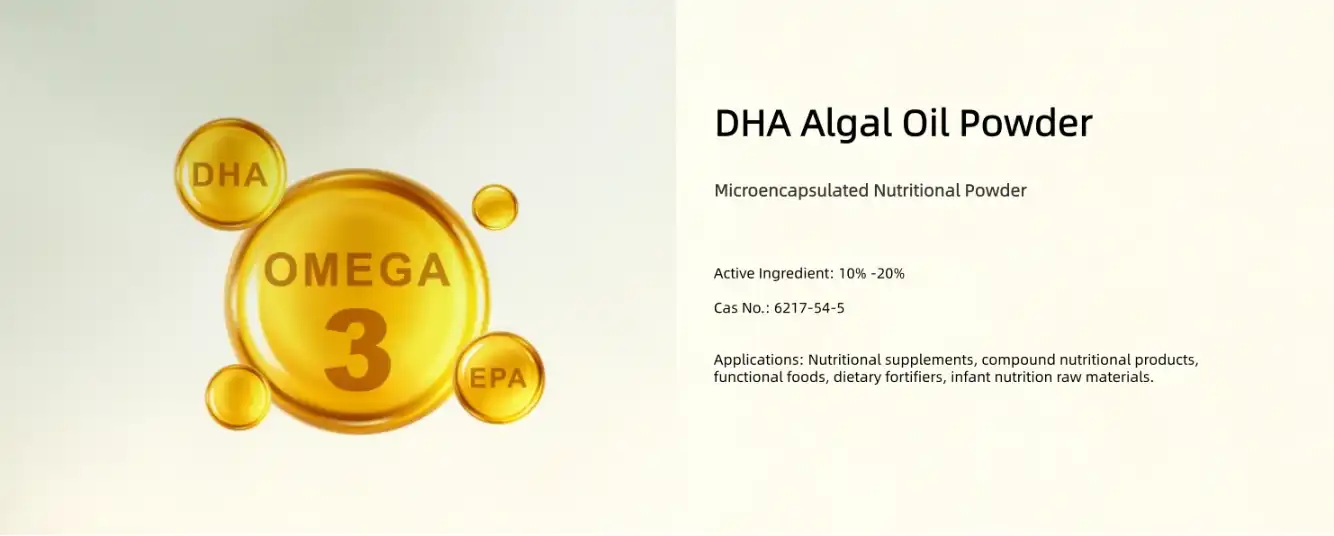
DHA (CAS No. 6217-54-5) is a long-chain omega-3 fatty acid that is known to help the brain grow, the eyes work well, and the heart stay healthy. The Journal of Nutrition (2023) says that getting enough DHA in the first two years of life is directly linked to better cognitive outcomes in kids.
From Liquid Oil to Functional Powder
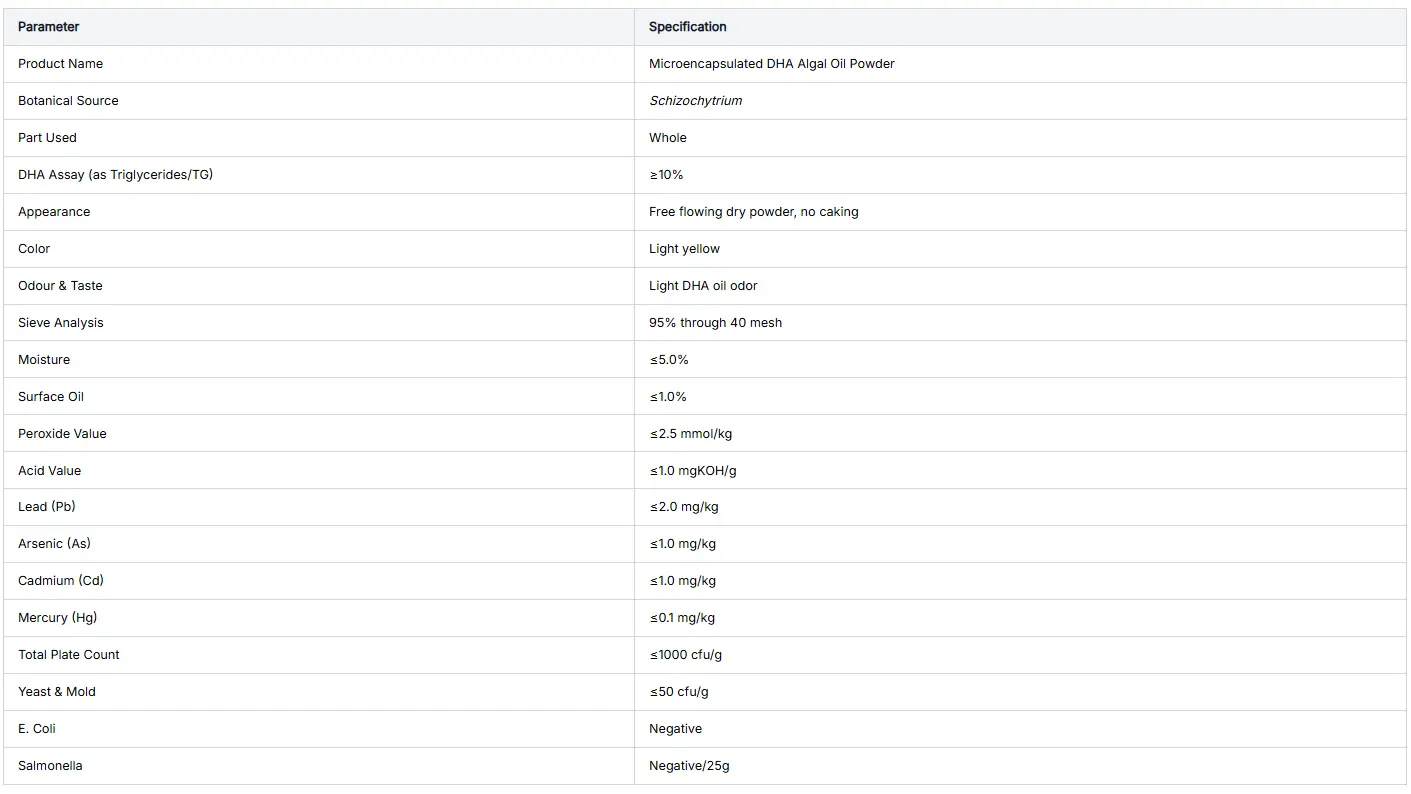
Chemically, raw algae DHA oil is not stable. Oxidative degradation happens when something is exposed to air, heat, or wetness. This makes it smell bad and loses its effectiveness. The spray-drying microencapsulation process surrounds the oil in a carbohydrate or plant-protein wall structure. This turns the oil into a light yellow powder that flows freely and has a peroxide value of less than 2.5 mmol/kg.
Zero Fishiness, High Palatability
The encapsulation barrier stops the release of volatile compounds that give fish its smell and taste. Blind evaluation pass rates for sensory panels hit at least 90%, which makes this ingredient a good choice for children's nutrition products and mother's supplements where taste compliance is important.
Bioavailability and TG Form
The triglyceride (TG) form of DHA in our product is standardised at ≥10% by assay, and there is only ±1% difference between batches. According to a study published in Prostaglandins, Leukotrienes, and Essential Fatty Acids (2020), TG-form DHA is absorbed at about the same rate as liquid algal oil. This is because the wall materials of the TG-form DHA easily break down in the small intestine.
Applications of DHA Algal Oil Powder in the B2B Sector
Powder can be used to make a lot of different things. This ingredient, microencapsulated dha algal oil powder, is most often used by makers in these three ways:
- Infant Formula and Early Childhood Nutrition: Companies that make infant formula need DHA sources that don't change when they're dry-blending at high speeds, don't oxidise when they're stored, and don't exceed the strict heavy metal limits needed by infant food laws. Our product is safe for babies because it has levels of lead below 2.0 mg/kg, arsenic below 1.0 mg/kg, mercury below 0.1 mg/kg, and Salmonella and E. coli levels that have been confirmed to be negative. In 30 seconds, the powder dissolves in cold water and doesn't leave an oily film.
- Food supplements: DHA powder works well in hard-shell pills, compressed tablets, and gummy vitamins. The sealing shell keeps oil from leaking when the capsule is compressed, and it also keeps minerals or fat-soluble vitamins from reacting with each other. Vegan and veggie brands can make a clear claim that sets their products apart: they are 100% plant-based and don't contain any marine contaminants like PCBs or dioxins.
- Functional Foods and Drinks: Cereal bars, protein shakes, and fortified dairy drinks need DHA ingredients that don't change the taste or look of the product while it's being stored. The powder's surface oil content of less than 1% keeps off-flavors from migrating, and the free-flowing particle structure (95% through 40 mesh) makes it possible to blend it automatically on a large scale.
These three groups can be used to separate the main need. Aside from cosmetic and pet food companies, small amounts of this ingredient are also used in high-end skin care products that fight ageing and help the brain.
Comparing DHA Algal Oil Powder with Other Omega-3 Sources
A lot of teams that buy things are still not sure if they should get DHA powder from fish oil or algae. At first, many people don't understand how important the difference is.
Purity and Contaminant Risk
PCBs, dioxins, and methylmercury may be in fish oil blends that come from marine species caught in the wild. DHA from algae doesn't stay in the ocean as long as the fermentation process is controlled. This isn't just a business claim; it's a scientific fact based on science.
Sustainability and Label Claims
Shopping is becoming more and more popular for veggies and foods with clean labels. A report from 2022 called "Global Omega-3 Ingredient Market Report" shows that in the U.S., omega-3 products made from algae gained the most market share the fastest. It's also good for shops that want to be certified as allergen-free, which is something that more and more people want.
Shelf Life Advantage
As long as it is kept at room temperature (below 25°C), microencapsulated powder DHA oil lasts longer than liquid DHA oil that isn't sealed. It's up to 150% longer. Companies that make baby formula and keep a lot of stock on hand will be less likely to have to send back finished goods because they go bad, which costs them a lot of money.
Purchasing and Procurement Considerations for B2B Clients
There are more factors than just price per kilogram that go into buying DHA ingredients. The total cost of sourcing includes making sure the quality is good, keeping records, and making sure the delivery is on time.
Certifications and Documentation
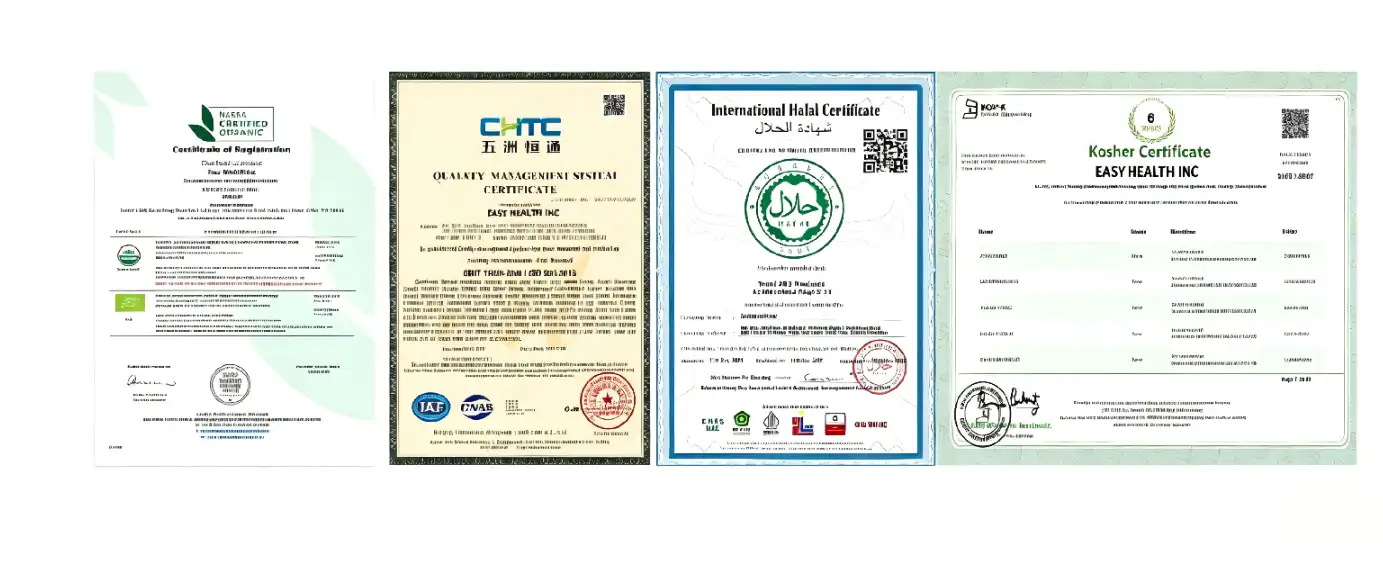
Each batch of microencapsulated dha algal oil powder should come with a legal Certificate of Analysis (COA) and Material Safety Data Sheet (MSDS) from the supplier. Look for companies that are certified by GMP, HACCP, and ISO 22000. Having these credentials shows that there is a system for quality control from getting the raw materials to testing the finished product.
Batch Consistency and Testing
Gas chromatography (GC) is the standard way to check the composition of fatty acids. GC data should be requested to prove that the DHA TG content is at least 10%, and batch records should be looked over to make sure they are consistent across multiple production runs. On every COA, the peroxide value and acid value (≤1.0 mgKOH/g) should be written down as indicators of oxidation.
Supply Chain Reliability
When you use planned manufacturing schedules, annual production capacity and lead time are important. Supply interruptions are less likely to happen if the supplier can handle more than 50 metric tonnes per year and has a normal lead time of 15 days. Before you place a bulk order, ask for cold-water dispersibility test results to make sure the product will work.
How to Choose the Right DHA Algal Oil Powder for Your Business?
Know what you want to do after school before you choose the right grade. As long as the TG level is 10%, it works well for infant formula. But supplement brands that want to help adults' brains might want a 20% concentrate so that the capsules don't have to hold as much.
Match Specifications to Application
Before you can register your baby formula, you have to show proof that each batch is stable and meets the rules for heavy metals in infant formula. What the labels say will depend on whether the wall material is allergen-free (modified starch vs. sodium caseinate) and the supplement is vegan when you make them as an OEM. This is a good idea before you buy a lot of something: ask for a taste and mix it in with a small amount first.
Evaluate Supplier R&D Capability
What kind of suppliers can change the wall materials' make-up, the way the grain sizes are spread out, or the amount of DHA that is added? That means they know how to make things well. The time it takes to find ingredients and get a product on the market is shortened by R&D firms that test uses and help with recipes.
Total Cost vs. Total Value
You can cut down on the number of goods that are returned and customer complaints by using a better powder that smells good and has less oil on the surface. In the long run, this can save you a lot of money.
Conclusion
You can use DHA algae oil powder, including microencapsulated dha algal oil powder, on a large scale if you need a steady source of omega-3s that comes from plants and doesn't taste bad. When you use TG-form microencapsulated powder, you get better quality, safety, and formulation freedom. This is true whether you're making food for babies, supplements for adults, functional food, or special pet food. Certain details, such as the amount of surface oil, the peroxide value, the heavy metal thresholds, and the dispersibility, are very important for procurement teams to know in order to choose the best providers.
FAQ
Why is algal DHA powder better for baby formula than fish oil powder?
Controlled fermentation is used to make algal DHA, which means that it is not exposed to PCBs and heavy metals that are found in the ocean. It's also 100% vegan and doesn't taste fishy, which are both very important in infant nutrition where safety and taste standards are very high.
In general, how long does microencapsulated DHA algal oil powder stay fresh?
The product will stay good for 12 to 24 months if it is kept sealed, cool, and dry below 25°C. The encapsulation material keeps oxygen and water out, which are two main things that cause oxidative degradation.
Can DHA not be absorbed when it's microencapsulated?
Not at all. The wall materials used, which are usually modified starch or plant proteins, break down in the small intestine due to normal digestive enzyme activity. This lets DHA be absorbed at the same rate as liquid oil forms.
Can this powder handle being processed at high temperatures?
Yes. Certain high-stability types are made to be able to handle UHT, pasteurisation, and extrusion. When buyers ask for product data, they should be clear about the temperatures they use for processing to make sure they get the right grade.
Is there no allergy in the product?
Most normal recipes don't have any gluten or soy and use modified starch. For vegan label claims to be true, buyers who want a dairy-free form should make sure that sodium caseinate is not included.
Partner with Easy Health — Your Trusted DHA Algal Oil Powder Supplier
For more than 11 years, Easy Health Inc. has been in the business of nutrition and health ingredients. They have ISO, HACCP, GMP, Halal, Kosher, and USDA Organic certifications. Our microencapsulated dha algal oil powder comes in different strengths, from 7% to 20%. The MOQ is flexible, and the standard wait time is 15 days. It comes with full COA and MSDS paperwork. Get a sample or talk to our tech team right now about how to make your own formula.
Write to devin@easyhealthbio.com. EasyHealthInc.com is the website.
References
1. Arterburn, L. M., Hall, E. B., & Oken, H. (2006). Distribution, interconversion, and dose response of n-3 fatty acids in humans. The American Journal of Clinical Nutrition, 83(6 Suppl), 1467S–1476S.
2. Cederholm, T., Salem, N., & Palmblad, J. (2013). Omega-3 fatty acids in the prevention of cognitive decline in humans. Advances in Nutrition, 4(6), 672–676.
3. Koletzko, B., et al. (2020). Dietary fat intakes for pregnant and lactating women. British Journal of Nutrition, 98(5), 873–877.
4. Mozaffarian, D., & Wu, J. H. Y. (2011). Omega-3 fatty acids and cardiovascular disease. Journal of the American College of Cardiology, 58(20), 2047–2067.
5. Sijtsma, L., & de Swaaf, M. E. (2004). Biotechnological production and applications of the omega-3 polyunsaturated fatty acid docosahexaenoic acid. Applied Microbiology and Biotechnology, 64(2), 146–153.
6. Stark, K. D., et al. (2016). Global survey of the omega-3 fatty acids, docosahexaenoic acid and eicosapentaenoic acid in the blood stream of healthy adults. Progress in Lipid Research, 63, 132–152.