Extraction of lutein from marigold flower using solvent extraction
Solvent extraction is the most established and scalable method for recovering lutein from Tagetes erecta L. petals. The process uses food-grade solvents—typically ethanol or hexane—to dissolve carotenoid pigments from dried marigold florets, followed by saponification, crystallization, and drying to yield a standardized powder. At Easy Health Inc., our marigold extract lutein is produced through this controlled process and verified by HPLC to contain 2%–6% lutein with ≥82% trans-lutein purity, meeting the active-form requirement for both nutraceutical and animal nutrition applications.
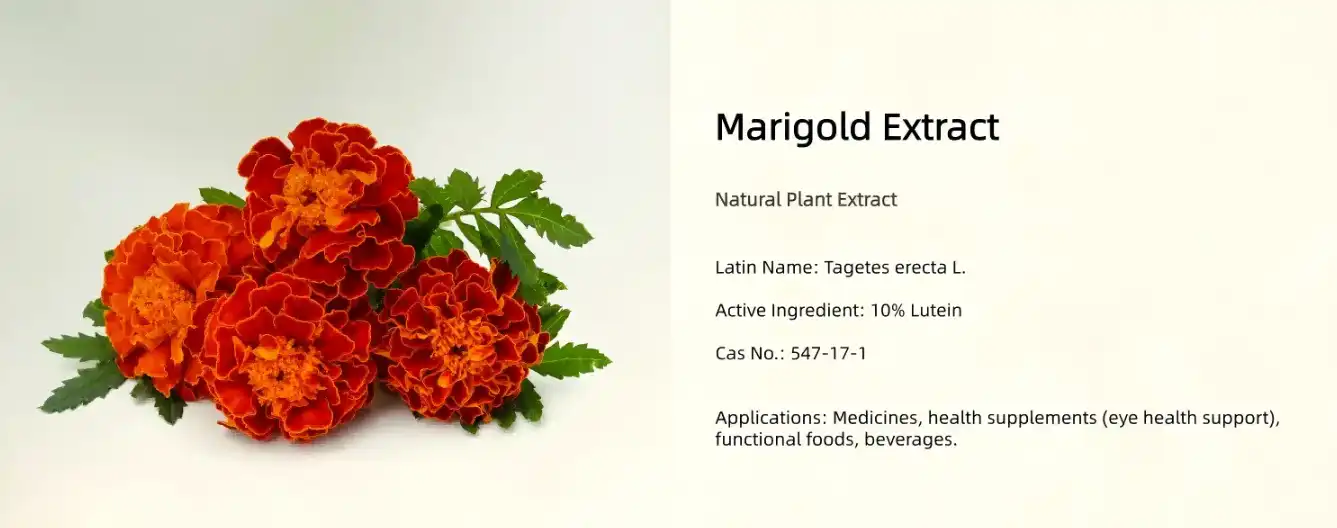
Understanding Lutein and Its Source in Marigold Flower
What Is Lutein and Why Does It Matter?
Lutein is a type of xanthophyll carotenoid and its formula is C₄₀H₅₆O₂ (MW: 568.87 g/mol, CAS: 127-40-2). That's where it grows up and is the main macular color there. Blue light with a lot of energy is blocked, and oxidative stress is lowered. Both of these things are linked to AMD. A study in the journal Ophthalmology found a link between the amount of lutein in the food and the amount of macular pigment optical density that can be measured. This means lutein is a good thing to put in products that are good for your eyes.
Why Marigold Is the Preferred Raw Material?
You can find 5–10 grams of lutein in the flowers of the African marigold (Tagetes erecta L.) plant. This is a lot more than you can find in green foods. After the soap is made, the free trans-lutein is released in its cleanest form. The natural isomer profile of lutein from marigolds is the same as that of human retinal tissue. Because of this, it is better for living things than manufactured substitutes. This makes it the world's most important commercial source of lutein, giving the world more than 90% of its needs.
Safety Profile and Dosage Norms
Most of the time, the U.S. Food and Drug Administration (FDA) says that lutein from marigolds is safe. The EFSA says that most people should get between 6 and 20 mg of vitamins every day for eye health. For chickens, the first 0.25 kg per metric ton of feed will work, and you'll see the effects in 10–15 days. Formulators can use these data points to make clear rules when they make new goods.
Solvent Extraction Method for Lutein from Marigold Flowers
Raw Material Preparation and Solvent Selection
Marigold petals must be properly dried so that they have no more than 10% water content for high-yield marigold extract lutein extraction to work. When used for food or supplements, ethanol is best because leftover levels can be kept below 50 parts per million (ppm), which is what the EU and U.S. rules say must happen. The first outputs are higher with hexane, but the residues need to be cleaned up more carefully to make them safe. It's easier for the solvent to reach the smaller pieces of dried petals when they are broken up. This makes the extraction rate 15–25% higher.
Step-by-Step Extraction Process
This is the standard order of steps for solvent extraction:
- Maceration or percolation: Dried petals are contacted with ethanol or hexane at controlled temperature (40–60°C) for 2–4 hours, dissolving carotenoid esters into the solvent phase.
- Filtration and solvent recovery: The miscella (solvent + extract) is filtered to remove plant debris, then the solvent is recovered under vacuum at low temperature to preserve carotenoid integrity.
- Saponification: The crude oleoresin undergoes alkaline hydrolysis to cleave ester bonds, releasing free trans-lutein. This step is critical for achieving ≥82% trans-lutein purity.
- Crystallization and drying: The purified lutein is crystallized, washed, and spray-dried or fluid-bed dried into a stable orange-yellow powder.
Everything that is done has a direct effect on the final CoA profile. For B2B supply lines that need stability from batch to batch, process control is a must.
Comparison with Supercritical CO₂ Extraction
Making solvent-free oleoresin with supercritical CO₂ extraction is a very pure process, but it costs a lot to get started and can only make a small amount at a time. This means it's not good for making large amounts of nutraceuticals or bulk feed. For businesses that need a lot of normal 2%–6% lutein powder, solvent extraction with strict residue solvent control (ethanol ≤50 ppm) is the best way to go because it saves money, can be scaled up, and follows the rules.
Factors Affecting Quality and Bioavailability of Marigold Lutein Extract
Role of Co-Occurring Carotenoids
Commercial marigold lutein extract naturally contains zeaxanthin and β-carotene alongside the primary lutein fraction. This co-carotenoid matrix influences antioxidant potency and may improve bioavailability compared to isolated single-carotenoid preparations. For eye health supplement formulators targeting the AREDS2 framework, the natural 10:2 lutein-to-zeaxanthin ratio present in marigold-derived extracts is particularly relevant.
Microencapsulation and Thermal Stability
Free trans-lutein is sensitive to oxygen, light, and heat. Standard powder forms lose significant potency during feed pelleting at 85–90°C. Microencapsulation with antioxidant coating resolves this problem: our nitrogen-flushed, microencapsulated marigold extract lutein retains bioactivity through pelleting and extrusion processes, with a verified shelf life of ≥12 months in 25 kg sealed packaging. This is a non-negotiable technical parameter for poultry premix manufacturers.
Supplier Vetting and Certification Standards
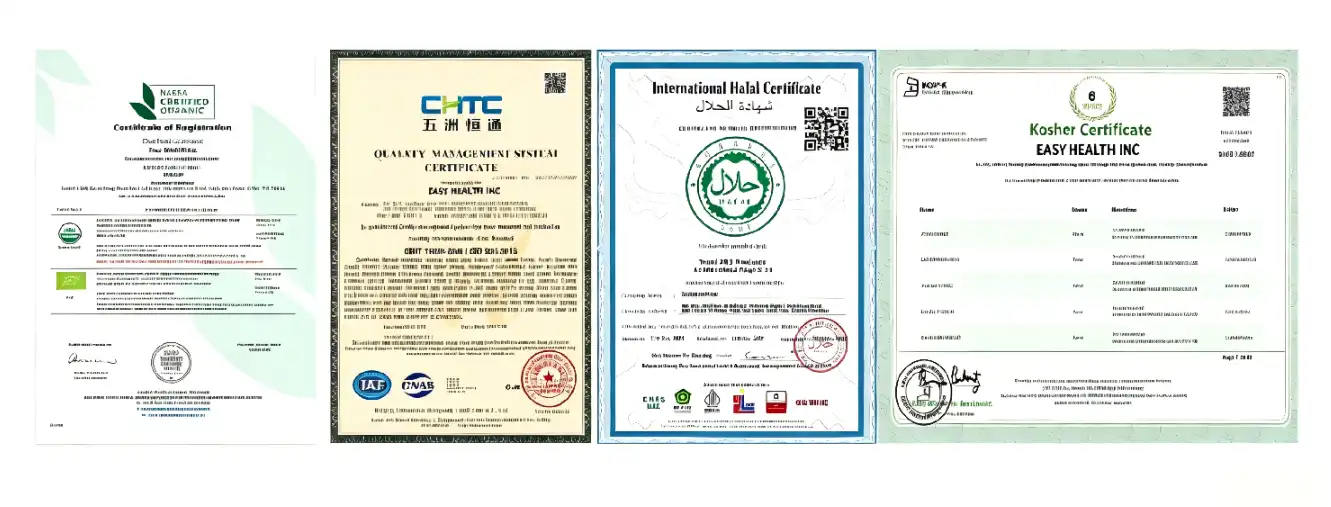
B2B buyers should require HPLC-confirmed trans-lutein assay, full heavy metal panels (Pb ≤3 mg/kg, As ≤3 mg/kg, Cd ≤1 mg/kg, Hg ≤1 mg/kg), residual solvent data, and microbiological testing (total plate count ≤1,000 CFU/g; Salmonella negative in 25g). Certifications that carry real compliance weight include ISO 9001, ISO 22000, HACCP, FAMI-QS for feed applications, and Halal/Kosher for export-facing supply chains.
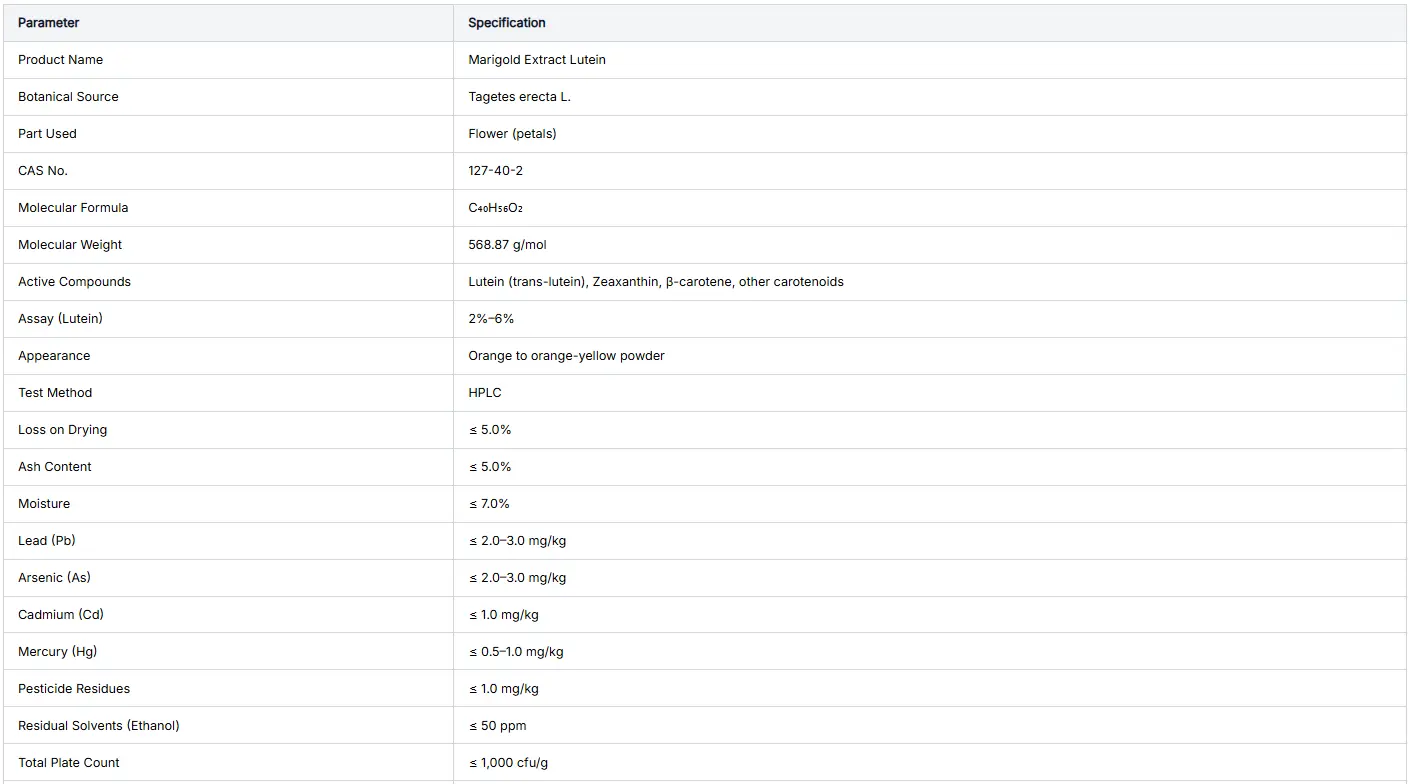
Market Comparison and Procurement Considerations for B2B Buyers
Marigold Lutein vs. Algae and Synthetic Sources
For businesses, marigold is still the best natural source of trans-lutein in terms of price. You can find lutein from microalgae like Chlorella or Scenedesmus in more grocery stores, but it costs a lot more. There is synthetic lutein, but it can't be sold in some places because of rules, and people don't like it as a clean label product. When it comes to supplements and feed, trans-lutein from marigolds is the best choice because it works and is safe for the supply chain.
Practical Procurement Checklist
Are you looking for a supplier of marigold lutein? These things will help you figure out if the ingredient works in your recipe and passes customer checks:The trans-lutein test (≥82% by HPLC) is more important than the total carotenoid content because the latter can hide a lower amount of the active isomer.
This is a must for large feed group audits and can't be changed: FAMI-QS certification for feed-grade applications.
- Trans-lutein assay ≥82% by HPLC, not total carotenoid content, which can mask lower active-isomer concentration.
- FAMI-QS certification for feed-grade applications—this is a non-negotiable audit requirement for large feed group accounts.
- Microencapsulated powder format that survives 90°C pelleting without degradation.
- Nitrogen-flushed 25 kg packaging with ≥12-month shelf life for stable inventory management.
- Full CoA transparency, including pesticide residues, residual solvents, heavy metals, and microbiological data per batch.
Heavy metals, herbicide residues, solvent residues, and microbial data for each batch are all included in the full CoA.
Logistics and Regulatory Compliance
For the plant to be able to import into the U.S., it needs to be registered with the FDA. People from Southeast Asia and the Middle East who want to buy something from another country should make sure that the Halal certification covers both the extraction solvent and the materials used to package the medicine. Sellers who are FAMI-QS certified can give buyers audit documents that are already filled out and ready to use. This makes it much easier for buyers to get pre-approved.
Future Outlook and Innovation in Marigold Lutein Extraction
Green Extraction and Process Efficiency
Food-grade ethanol is quickly becoming more popular than hexane because of EU REACH rules and clean label standards for stores. Scientists are becoming more interested in extraction with enzymes. Food Chemistry (2022) says that this method can increase yields by 20–30% compared to traditional liquid methods when cellulase is added first. Some of these changes will help business buyers in the long run by making purity ratings better and lowering the costs of environmental compliance.
Rising Demand for High-Bioavailability Formats
It's becoming more popular to use higher-bioavailability lutein delivery formats because people want natural ingredients, formulations that are AREDS2-referenced, and aquaculture products with clean labels. Nano-emulsified shapes that break down in cold water (CWS) get rid of oil rings in functional drinks, and beadlet shapes work for pill and capsule lines. The market for eye health supplements will keep growing at a rate of 9% per year until 2030. Companies that invest in these delivery technologies now will be able to keep their positions.
Conclusion
Solvent extraction, when properly controlled, delivers consistent, high-purity trans-lutein from marigold petals at the scale and cost efficiency that B2B production demands. Key quality markers—trans-lutein ≥82%, residual ethanol ≤50 ppm, FAMI-QS certification, and thermal-stable microencapsulation—separate dependable marigold extract lutein ingredients from problematic ones. Procurement teams that validate these parameters before committing to a supplier reduce reformulation risk and protect their end-customer relationships. With demand for natural carotenoids accelerating across supplements, feed, and beverages, securing a qualified, certified marigold lutein source is a supply chain decision with compounding returns.
FAQ
Is solvent-extracted marigold lutein safe for human consumption?
FDA says it is GRAS. There should be a full residual solvent panel for each batch in the CoA.
What does "trans-lutein ≥82%" actually mean for my formulation?
That type of trans-lutein is chemically active and is the same one that is found in the retina of a human eye. There are more inactive cis-isomers when there is less trans-lutein, which lowers both the effectiveness and the potency as tested by HPLC. The total lutein content and the trans-lutein content of AREDS2-aligned eye health goods need to be checked.
Which certifications should I prioritize when sourcing lutein for feed applications?
To make sure the quality of feed products is managed, FAMI-QS is the main certification used. All of the world's big feed groups accept it. As you can see, ISO 22000 is about a lot more than just managing food safety. Goods made from animals that are sent to Middle Eastern markets must be halal-certified. If a company makes poultry premix and sells it in international markets, all three of them are good rules to follow.
What is the recommended shelf life and storage condition for marigold lutein powder?
Microencapsulated lutein powder that has been nitrogen-flushed and put in 25 kg sealed containers will work for at least 12 months as long as it is kept below 25°C and out of direct sunlight and water. When the temperature or humidity is high, oxidative breakdown happens more quickly, and test values measured by HPLC go down.
Partner with Easy Health — Your Trusted Marigold Extract Lutein Supplier
For more than 11 years, Easy Health Inc. has sent high-quality plant products to businesses all over the world. HPLC was used to test our marigold extract lutein for lutein, and it has been approved by FAMI-QS and is Halal. It is also microencapsulated to keep the pellets stable, and you can buy it from stock with a wait time of 3–5 days. Our skilled staff will help you get it right from the start, whether you need a normal ingredient for feed or a unique CWS style for use in drinks. You can go to easyhealthinc.com or email devin@easyhealthbio.com to get a sample or technical data sheet.
References
1. Bhosale, P., & Bernstein, P. S. (2005). Microbial xanthophylls. Applied Microbiology and Biotechnology, 68(4), 445–455.
2. Carpentier, S., Knaus, M., & Suh, M. (2009). Associations between lutein, zeaxanthin, and age-related macular degeneration. Critical Reviews in Food Science and Nutrition, 49(4), 313–326.
3. Nwachukwu, I. D., Udenigwe, C. C., & Aluko, R. E. (2016). Lutein and zeaxanthin: Production technology, bioavailability, mechanisms of action, visual function, and health claim status. Trends in Food Science & Technology, 49, 74–84.
4. Picciano, M. F. (2003). Dietary reference intakes: The essential guide to nutrient requirements. Journal of the American Dietetic Association, 103(12), 1600.
5. Rivera, S. M., & Canela-Garayoa, R. (2012). Analytical tools for the analysis of carotenoids in diverse materials. Journal of Chromatography A, 1224, 1–10.
6. Surai, P. F., & Fisinin, V. I. (2016). Antioxidant-prooxidant balance in the chicken egg: Biochemical and nutritional aspects. World's Poultry Science Journal, 72(4), 731–746.