What Is Curcumin Powder And What Is It Used For?
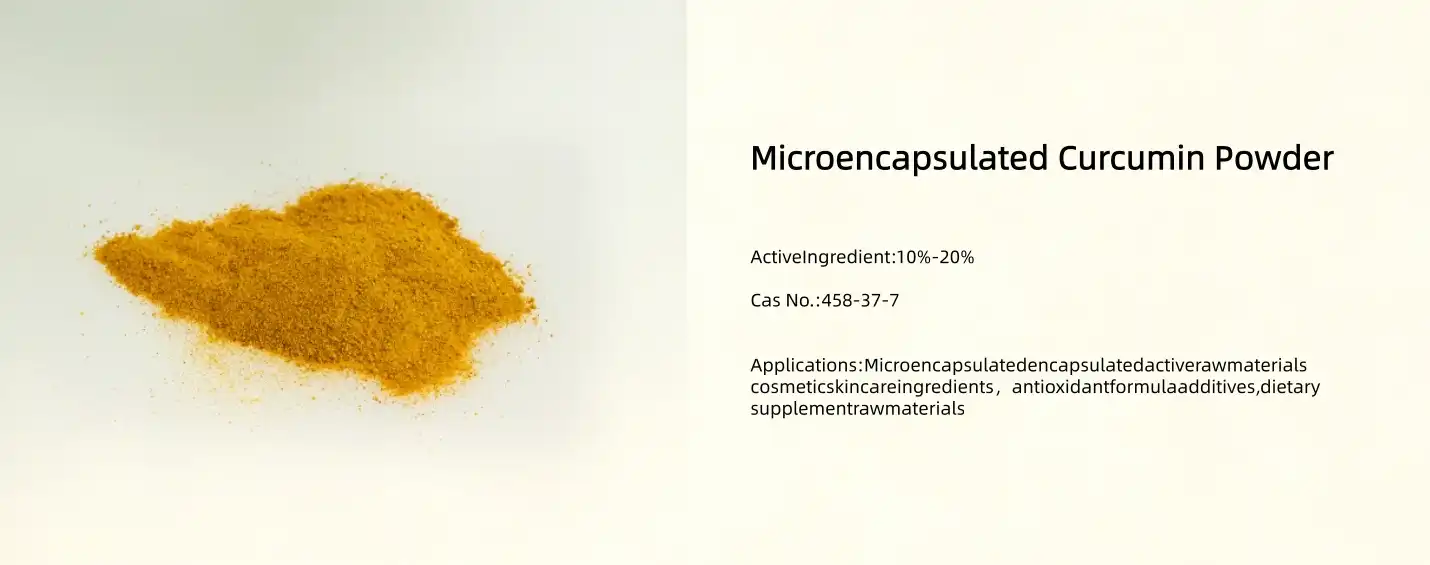
Curcumin powder is the concentrated bioactive extract derived from the rhizome of Curcuma longa (turmeric). It belongs to the curcuminoid family and carries well-documented antioxidant and anti-inflammatory properties. Raw turmeric contains only 2–5% curcumin by weight, which is why standardized extracts matter for product formulation. Among available forms, microencapsulated curcumin powder represents a significant advancement — wrapping curcuminoids in a protective matrix to improve water dispersibility, absorption efficiency, and shelf-life stability, making it suitable for dietary supplements, functional beverages, and anti-inflammatory health products.
Understanding Curcumin Powder and Its Uses
What Is Curcumin, Chemically Speaking?
Curcumin is a polyphenolic compound (CAS No. 458-37-7) that is found in turmeric root. It is a diarylheptanoid in particular. It yields the orange-red color that makes turmeric stand out. Curcuminoids like curcumin (C1), demethoxycurcumin (C2), and bisdemethoxycurcumin (C3) are usually found in measured samples. The standard way to check the concentration of curcuminoid is to use HPLC, and the concentration range for pharmaceutical-grade ingredients is between 10% and 20%.
How Is Curcumin Powder Different from Turmeric?
Along with curcumin, turmeric is a whole spice that contains starch, fiber, and volatile compounds. Curcumin powder is the concentrated or separated product that has been tested to have the same bioactive strength. This difference is very important for B2B formulators: turmeric can add color and taste, but it can't give the exact doses needed for supplement labels to be true. In addition to curcuminoids, full-spectrum turmeric root products that keep turmerones and volatile oils offer more natural interaction.
Why Does the Industry Need Advanced Delivery Forms?
Native curcumin has a major problem with absorption. Standard curcumin powder has an absorption of less than 1% when taken by mouth. This is mostly because the molecule is hydrophobic, breaks down quickly in the body, and is greatly affected by stomach acid. Studies have shown that around 60% of the curcumin we eat is lost before it gets to our intestines. This is exactly why the supplement and functional food industries have switched to forms like microencapsulated curcumin powder, which are designed to keep the active compound safe and get it to the right place to be absorbed.
Key Benefits and Performance of Microencapsulated Curcumin Powder
Bioavailability Backed by Science
Absorption is much better with encapsulated curcumin, which is its most important performance benefit. Adding natural piperine at a rate of 5 mg/g along with microencapsulation can make the curcumin powder up to 15 times more bioavailable than when it is not mixed with anything else. In vivo pharmacokinetic comparisons back up this number. This difference means that companies that make goods for joint health, sports healing, or pain relief can make claims about their products that are true when tested.
Enteric Coating for Targeted Intestinal Release
Our microencapsulated curcumin powder has an enteric covering that stays in place in the stomach's acidic environment and only comes off when the pH level is above 6.5, which is what it is in the small intestine. This makes sure that the active ingredient doesn't break down in the stomach and has an intestinal release rate of ≥ 85%. This tailored transport method means that more of the active substance gets to the target tissue and the systemic circulation, which is good for companies making supplements for liver health or digestive health.
Stability Against Light, Heat, and Oxidation
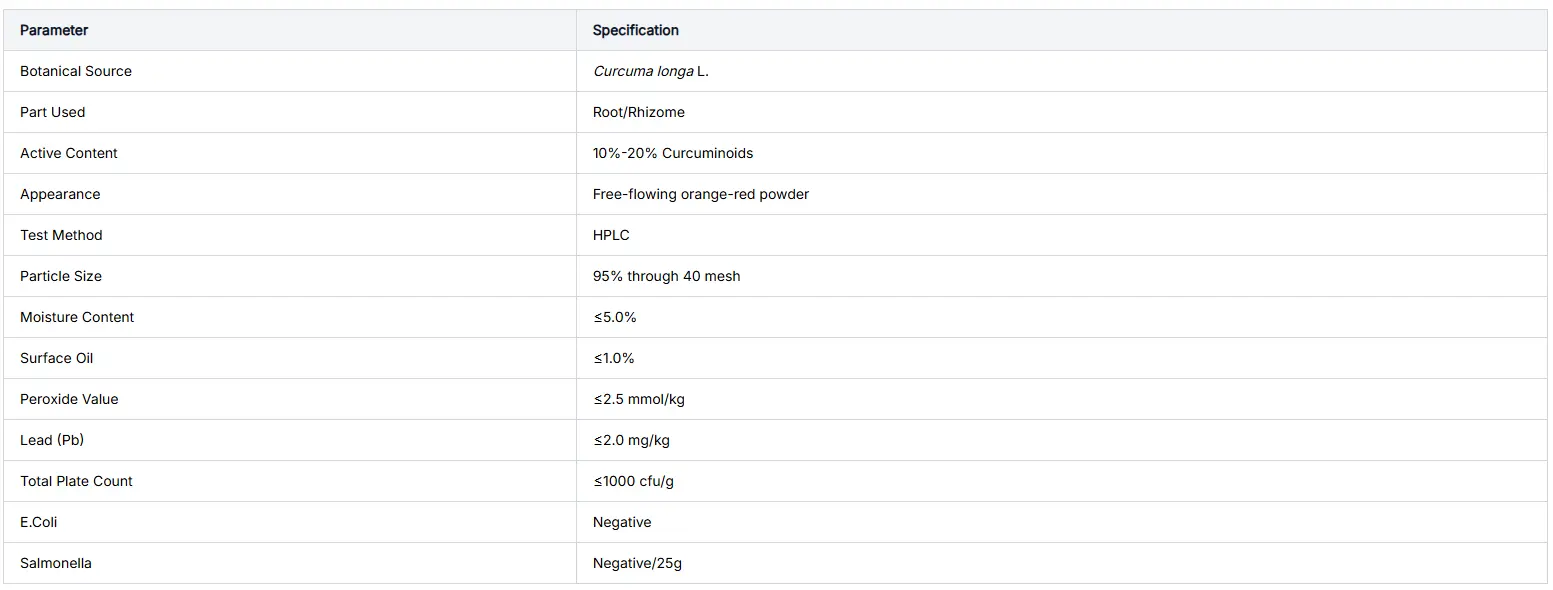
Because curcumin breaks down in light and heat, it is always hard to make sure that the mixture is consistent. In our encapsulated version, the protective wall structure keeps the chemical safe from outside influences. Color steadiness over 72 hours of light and temperature changes of ≤ 5%, which is an important requirement for the shelf life of a final product. The product is a free-flowing orange-red powder that doesn't stick or clump, and the moisture content is kept at ≤ 5.0%. It can be used with high-speed tableting and encapsulation equipment.
These technical specs fix the most common problems formulators have with production: uneven strength, discoloration during processing, and problems with absorption. When these problems are fixed at the material level, they are easier to fix, cost less, and get to market faster.
Comparing Microencapsulated Curcumin Powder with Other Forms
Microencapsulated vs. Standard 95% Curcuminoids
Standard 95% curcuminoid extracts are the most common type used in supplements, but they have a known drawback: they are not very bioavailable without extra helpers, and they tend to color equipment and become unstable when mixed with liquids. Microencapsulated versions solve both problems: they spread out evenly in cold water without settling, and they keep their color during processing. The capsule matrix, which is usually modified starch, gum arabic, or maltodextrin, keeps the color from mixing with the formula around it.
Microencapsulated vs. Liposomal Curcumin
Liposomal curcumin gets through the gut wall with the help of phospholipid vesicles. Even though liposomal forms work, they are usually more expensive to make, need to be made in controlled environments, and don't work well with dry powder applications. Formulations in microencapsulated forms can be used in more areas, like instant drinks, functional foods, gummy bears, and capsules, and they are cheaper to buy in bulk.
| Format | Bioavailability Boost | Water Dispersibility | Cost Structure | Best Application |
|---|---|---|---|---|
| Standard 95% Curcuminoids | Baseline | Poor | Low | Capsules/Tablets |
| Liposomal Curcumin | 5–10x | Moderate | High | Liquid Supplements |
| Microencapsulated Curcumin | Up to 15x | Excellent | Moderate | Beverages, Powders, Tablets |
Full-Spectrum vs. Isolated Curcuminoid Blends
Most common microencapsulated curcumin powder products only have pure C1/C2/C3 curcuminoids in them. Our full-spectrum turmeric root extract still has turmerones and volatile oils in it. These are natural compounds that add to the biological activity profile as a whole. This difference is important for brands in the anti-aging and antioxidant market, where natural synergy between substances is used more and more as a label feature to set products apart.
Procurement Guide for Bulk Curcumin Powder
Certifications and Quality Documentation
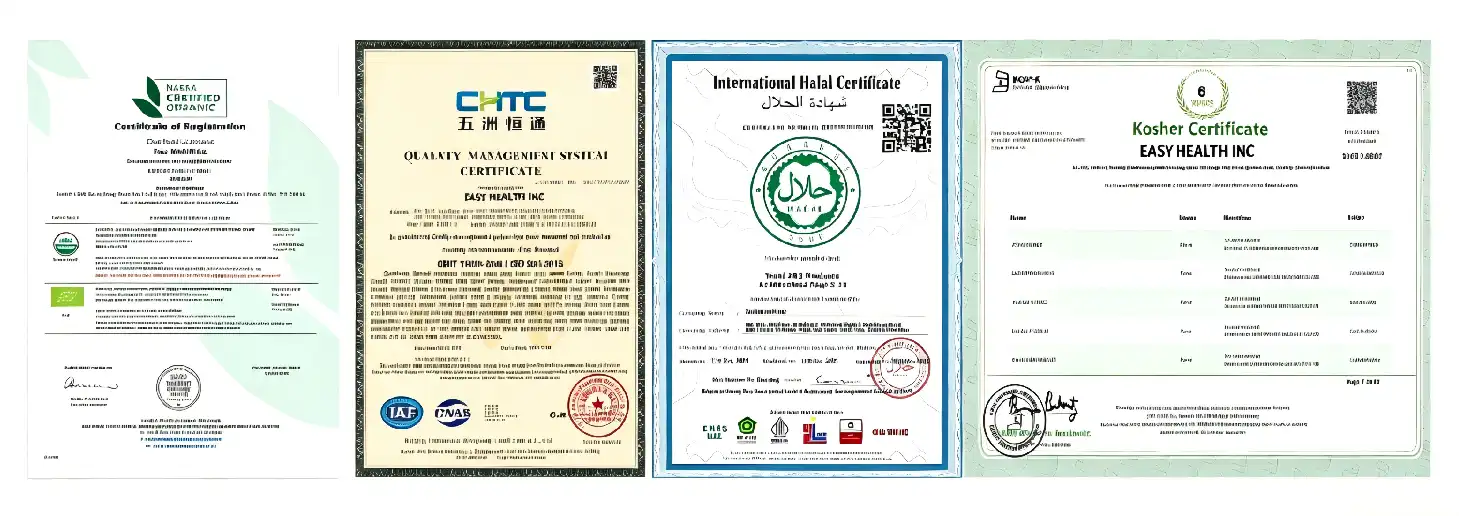
For entering the U.S. market, buying teams should give top priority to sellers who are registered with ISO, GMP, and FDA. Certifications like Halal and Kosher help you reach more customers. Heavy metal testing must be done according to the following guidelines: Mercury ≤ 0.1 mg/kg, Arsenic ≤ 2.0 mg/kg, Cadmium ≤ 1.0 mg/kg, and Lead ≤ 2.0 mg/kg. Microbiological details, such as negative results for Salmonella and E. coli, must be recorded for each batch. At Easy Health, every lot of products can be fully tracked from where the raw materials come from to where they are delivered.
OEM Flexibility and Lead Times
Buyers in large quantities need more than just raw materials; they also need help with preparation. Look for suppliers that offer OEM and ODM services that include changing specifications, adapting packaging, and making sure labels are legal in the target markets. Standard items that can be shipped right away and special orders that are usually finished in 3–5 days are good standards for responsive providers. Easy Health offers a full range of technical services, such as formula development, application guidance, and support for product research and development (R&D).
Evaluating Bioavailability Data
Before you decide on a supplier, you should ask for bioavailability comparison reports for both in vitro and in vivo. Any trustworthy company that sells microencapsulated curcumin should give you external bioavailability data as well as their own claims. Piperine's source is also important. For clean label purposes, real piperine (from black pepper extract) is better than manufactured piperine. Make sure the piperine content is 5 mg/g and look at the supplier's specification sheet to see where it comes from.
These standards for buying things help brands avoid having to make expensive changes to their recipes and wait for regulatory approvals after they've been released.
Conclusion
Curcumin powder is a natural ingredient that has been proven to work by science. It can be used to support liver health, support joint health, and speed up recovery from sports. The difference between regular curcumin extracts and clinically useful delivery, on the other hand, is all in the technology used to make them. Microencapsulated curcumin powder with enteric coating, piperine enhancement, and full-spectrum extraction directly solves the problems that procurement teams face every day when it comes to absorption, stability, and formulation. A successful product launch starts with getting materials from a supplier that is certified, honest, and offers full traceability and technical support.
FAQ
What is the difference between microencapsulated and regular curcumin powder?
Regular curcumin powder has less than 1% oral bioavailability and poor water solubility, limiting its use in beverages and functional foods. Microencapsulated curcumin uses a protective coating to improve dispersibility, shield the compound from heat and light, and significantly increase absorption in the gastrointestinal tract.
How do I verify curcumin content in a bulk shipment?
HPLC (High-Performance Liquid Chromatography) is the standard analytical method for verifying curcuminoid concentration. Request a Certificate of Analysis (CoA) from each production batch, confirming specification compliance between 10%–20% curcuminoids.
Is natural piperine safe at 5 mg/g?
Yes. Natural piperine derived from black pepper (Piper nigrum) at 5 mg/g is within recognized safe intake ranges and has been used in curcumin absorption studies for decades. It is preferred over synthetic piperine for clean-label supplement formulations.
What applications is encapsulated curcumin best suited for?
It works well in dietary supplement capsules and tablets, functional beverages (including ready-to-mix powders and turmeric lattes), gummies, and nutritional fortification products where water dispersibility and color stability are required.
What certifications should I ask for when sourcing bulk curcumin?
At minimum, request ISO, GMP, and FDA registration documentation. For specific market access, Halal, Kosher, USDA Organic, or EU Organic certifications may be required depending on the target customer base.
Partner with Easy Health for Certified Curcumin Ingredient Solutions
Every bulk order from Easy Health comes with over 11 years of experience working with plant extracts. As a reliable company that makes microencapsulated curcumin powder, we back up every batch with quality systems that are ISO, GMP, Halal, Kosher, and FDA-registered. We also offer full technical support for formula development and application guidance. Ask for a sample or talk about your OEM requirements right now. You can reach our team at devin@easyhealthbio.com or by going to easyhealthinc.com.
References
1. Anand, P., Kunnumakkara, A. B., Newman, R. A., & Aggarwal, B. B. (2007). Bioavailability of curcumin: Problems and promises. Molecular Pharmaceutics.
2. Shoba, G., Joy, D., Joseph, T., Majeed, M., Rajendran, R., & Srinivas, P. S. (1998). Influence of piperine on the pharmacokinetics of curcumin in animals and human volunteers. Planta Medica.
3. Prasad, S., Tyagi, A. K., & Aggarwal, B. B. (2014). Recent developments in delivery, bioavailability, absorption and metabolism of curcumin. Cancer Research and Treatment.
4. Menon, V. P., & Sudheer, A. R. (2007). Antioxidant and anti-inflammatory properties of curcumin. Advances in Experimental Medicine and Biology.
5. Hewlings, S. J., & Kalman, D. S. (2017). Curcumin: A review of its effects on human health. Foods.
6. Yallapu, M. M., Nagesh, P. K., Jaggi, M., & Chauhan, S. C. (2015). Therapeutic applications of curcumin nanoformulations. AAPS Journal.

_1784173402819.webp)