How Is Microencapsulated Astaxanthin Powder Made?
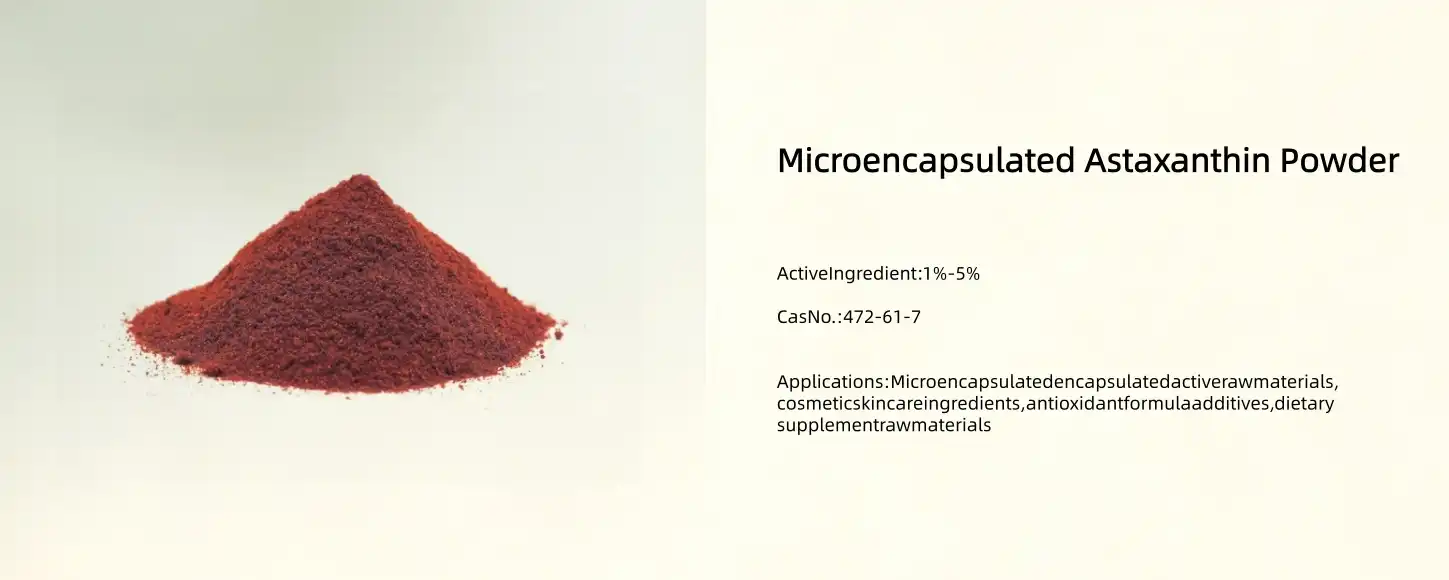
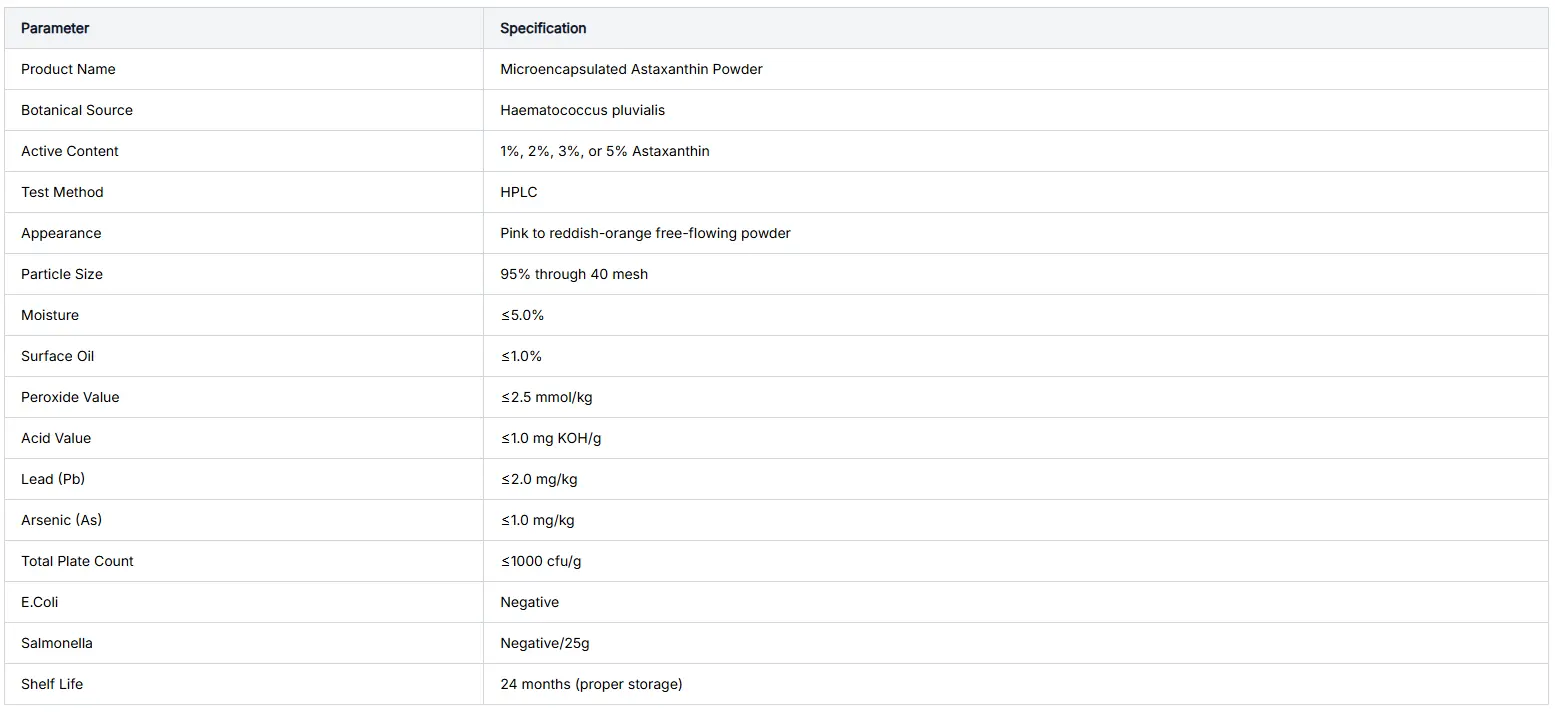
Microencapsulated astaxanthin powder is produced by wrapping concentrated astaxanthin oil—extracted from Haematococcus pluvialis algae—inside a protective wall material through a controlled spray-drying or emulsification process. The result is a free-flowing, pink-to-reddish-orange powder that resists oxidation, disperses in cold water within seconds, and delivers the active carotenoid to the body far more efficiently than raw astaxanthin oil. At Easy Health, our triple-wall encapsulation technology produces four concentration grades (1%, 2%, 3%, and 5%) from a single quality-controlled production line, with surface oil ≤1.0% and a peroxide value ≤2.5 mmol/kg per batch.
Understanding the Core Challenges in Astaxanthin Powder Stability
Astaxanthin is one of the most powerful antioxidants found in nature, but it is also very dangerous because it reacts so quickly. The molecule breaks down quickly in light, air, heat, or water if it is not protected. It loses its colour and antioxidant properties long before the product gets to customers.
Why Raw Astaxanthin Degrades So Fast?
It reacts very quickly with oxygen because it has 13 double bonds in its twisted polyene chain. Scientists have found that if you leave astaxanthin out in the open for a few weeks, it can lose more than half of its medicinal value. For high-end brands, this is very important. People won't buy a product again if it turns pale pink on the shelf.
The Compounding Problem of Oil-Based Formats
This is harder to do because astaxanthin is only sold as an oil. It can't be mixed directly into tablets or instant drink powders, and it tends to separate in water. Most of the time, formulators will find oil rings in drinks or pigments that aren't spread out properly in capsules if they don't do the right packaging.
How Microencapsulation Addresses These Weaknesses?
It is literally blocked from oxygen, light, and water when astaxanthin is inside a wall matrix. The protective shell slows down oxidation, keeps the colour stable, and turns the oil into a dry, powdery material that can be taken as a solid or a liquid.
The Science and Technology Behind Microencapsulation of Astaxanthin
You have to do more than just cover an oil droplet in something to make something. Controlling the emulsion chemistry, the wall material, and the drying conditions are very important if you want to make a particle that protects the core and releases it well in the gut.
Step 1 — Emulsification and Wall Material Selection
To begin, emulsifiers and wall materials that are safe for food are used to mix the astaxanthin oleoresin into microencapsulated astaxanthin powder that is microencapsulated. Many things are carried by maltodextrin, modified starch, and gum arabic. At Easy Health, we use a better hydrophilic-lipophilic balance (HLB) mixture to make powder that can be mixed with cold water without any sediment, floating particles, or side sticking to the walls.
Step 2 — Spray Drying Into Structured Particles
It goes through a high-pressure sprayer in a room for spray drying. When droplets touch dry, hot air, they lose water very quickly and turn into solid microspheres that can cover more than 95% of the droplet. On top of a standard single-coat design, our triple-wall architecture adds two more layers of defence. This cuts down on surface oil to ≤1.0%.
Step 3 — Quality Verification Before Release
There is a full microbial screening, an oxidative stability test (peroxide value ≤2.5 mmol/kg), a heavy metal study (Pb ≤2.0 mg/kg, As ≤1.0 mg/kg), and an HPLC measurement of the astaxanthin content for each batch. There are screens that range in size from 95% to 40 mesh. There is a Certificate of Analysis, a vegan statement, and a shellfish-free declaration with every order.
Comparative Benefits of Microencapsulated vs. Regular Astaxanthin Powder
The performance gap between encapsulated and non-encapsulated formats is significant enough to affect both formulation outcomes and end-consumer results.
Bioavailability: A 10× Difference That Changes Product Claims
The natural esterified astaxanthin from Haematococcus pluvialis already works better than the synthetic free-form astaxanthin—its bioavailability is over 70% compared to less than 10% for the synthetic version. The ester form stays the same during processing and storage thanks to encapsulation, so the benefit stays the same for the consumer. The monoester/diester ratio of about 7:3 supports two-phase plasma release: peak levels in two hours and antioxidant activity that lasts for more than 12 hours.
Stability and Shelf Life Across Applications
Microencapsulated astaxanthin has a proven 24-month shelf life when kept below 15°C in containers that are sealed and don't let light in. This is an easy requirement for normal ingredient storage. Conventional astaxanthin oil, on the other hand, needs to be kept cold and packaged in nitrogen-flush containers in order to be as stable, which increases the cost and makes it harder to handle.
Industry Applications Where Encapsulation Is Non-Negotiable
Encapsulated astaxanthin powder opens formulation doors that raw oil cannot enter. Here are the primary application areas where the encapsulated format provides a clear advantage:
Functional beverages and instant sachets: Cold-water dispersibility means uniform color and consistent dosing without a high-speed mixer or heating step.
Softgel capsules and gummies: Dry powder eliminates oil-fill variability and supports accurate weight-per-capsule control.
Tablets: The 40-mesh particle size and low moisture (≤5%) give adequate flowability for high-speed rotary tablet presses.
Oral beauty and premium skincare: The 5% grade delivers high actives per serving, supporting collagen-protection and anti-photoaging claims.
These application advantages directly translate into fewer reformulation cycles, more consistent finished-product appearance, and stronger consumer-facing benefit claims.
How to Choose the Right Microencapsulated Astaxanthin Powder Supplier?
When picking a place to buy encapsulated herbs, you should think about more than just the price per kilogram. A trustworthy long-term partner is not the same as a one-time buyer in the ways below:
Verify the Algae Source and Certification Stack
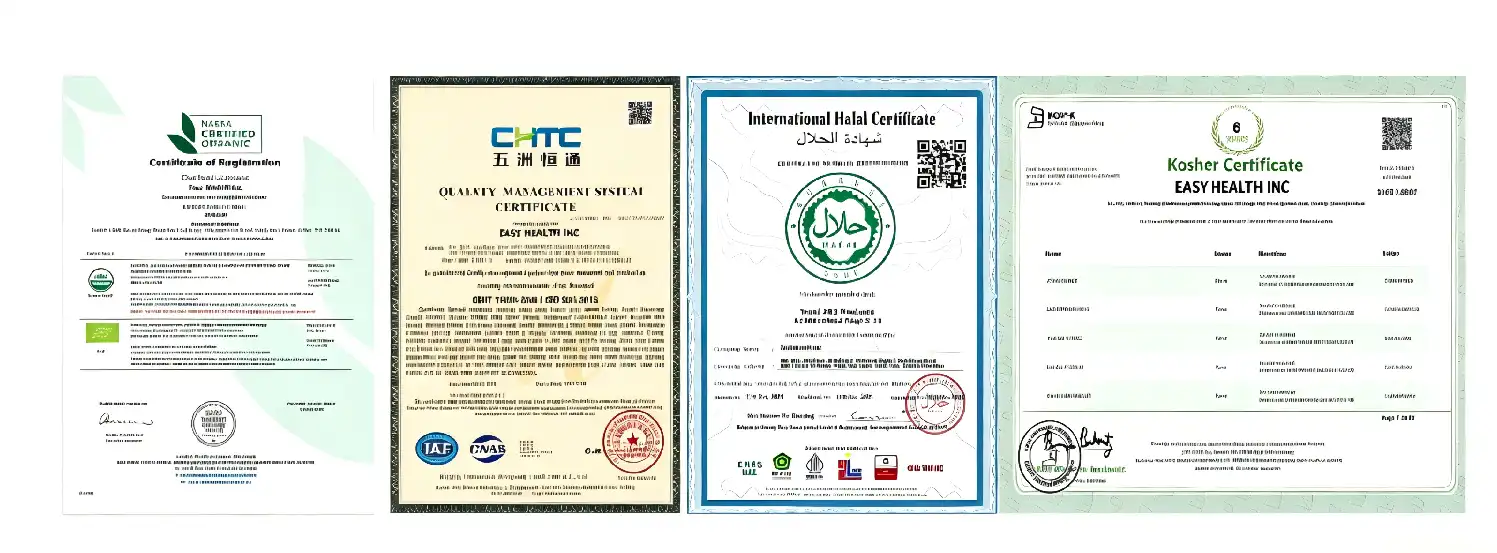
Make sure that the microencapsulated astaxanthin powder really comes from Haematococcus pluvialis and not from yeast or industrial processes made by people. Astaxanthin made in a lab can't be in food in China, so any brand that wants to sell in Asia needs to prove that their astaxanthin comes from algae. Suppliers should have more than just one or two badges. They should also be registered with the FDA, have ISO, Halal, Kosher, and HACCP certifications.
Request Samples and Validate Cold-Water Performance Yourself
Just looking at the spec sheet doesn't help me figure out how something goes away. Some should be added to water that is at room temperature. After five minutes, check to see if sediment forms. Bits that float or stick to the walls show that the HLB blend isn't working right. It will be talked about on social media before it shows up in your QC report.
Assess MOQ Flexibility and Supply Continuity
Once they get a big order, small brands that sell straight to customers really need to watch their cash flow. If a supplier has more than one concentration grade on the same line, there is no need for a special production run. You can ask them to send the exact standard that you need. There is no longer a small order requirement, and wait times are gone. Make sure you know how much safety stock is on hand and if more can be made before you agree.
Future Outlook and Innovations in Astaxanthin Microencapsulation
It is not possible to fix the field of containment. Taxol could be even more bioavailable with liposome delivery systems that use phospholipid bilayers to work like cell membranes. These systems could make it easier for the lymphatic system to take in the chemical. Nanoencapsulation looks at particles smaller than 200 nm, which means that less of them may be needed to get the same level of concentration in the bloodstream.
Market Demand Is Accelerating
In 2023, the global market for astaxanthin was worth around USD 890 million. It's going to grow at a rate of more than 7% per year until 2030 because more people want to take care of their eyes, face, and bodies so they're ready for sports. In both the US and Asian markets, rules are getting stricter. Brands that can find a natural algae source will be better able to meet those needs.
Sustainability Is Becoming a Sourcing Requirement
When Haematococcus pluvialis is grown in photobioreactors, it uses closed-loop water systems and doesn't make any waste, which means it is much better for the environment than chemical synthesis. Organic approval from the EU and the USDA NOP gives brands a history of being environmentally friendly, which is appealing to high-end customers.
Conclusion
Microencapsulating astaxanthin is an important part of the manufacturing process because it turns a fragile, oil-based pigment into an ingredient that can be stored for a long time and dissolves in water. This microencapsulated astaxanthin powder can also reach the bloodstream at clinically relevant concentrations. If a finished product can command a higher price and pass regulatory review in every target market, it depends on how well it is packaged, how real the algae source is, and how full the certification stack is. The most important thing to do when buying astaxanthin is to find a supplier that can provide verified Haematococcus pluvialis sourcing, published batch data, and the ability to adapt to your formulation needs.
FAQ
Why is encapsulated astaxanthin more effective than raw astaxanthin oil?
Encapsulation protects the ester bonds from oxidation during storage and keeps the molecule intact through the digestive tract. This allows the lipophilic carotenoid to absorb more efficiently in the small intestine, producing measurably higher plasma concentrations than unprotected oil.
Is microencapsulated astaxanthin safe for vegan and allergen-sensitive consumers?
Yes, provided the wall materials are plant-derived (modified starch, maltodextrin, gum arabic) rather than bovine gelatin. Easy Health's product carries a verified vegan declaration and shellfish-free statement with every batch.
How do I confirm the astaxanthin is genuinely from Haematococcus pluvialis and not synthetic?
Request the HPLC isomer profile from your supplier. Natural esterified astaxanthin shows a specific monoester/diester pattern that synthetic free-form astaxanthin cannot replicate. Organic certification (USDA NOP or EU Organic) provides an additional independent verification layer.
What concentration grade should I start with?
The 2% grade suits most softgel and gummy launches. The 1% grade works well for daily-use beverage formats. If you are formulating a high-potency beauty supplement or premium softgel, the 5% grade reduces the amount of powder per serving while maintaining the active dose.
What is the minimum order quantity for sampling?
Contact Easy Health directly at devin@easyhealthbio.com to request a sample and discuss order quantities suited to your stage of development.
Source Premium Astaxanthin Powder From Easy Health — Request a Sample Today
You can trust Easy Health to make high-quality microencapsulated astaxanthin powder. They have been in business for over 11 years and have all the necessary certifications, including ISO, Halal, Kosher, FDA approved, USDA NOP, EU Organic, and HACCP. We have four concentration grades on one quality-controlled line, batch-level COA, and cold-water dispersibility testing that is done here in the company. To get a sample and talk about how we can help you develop your product, send your formulation brief to devin@easyhealthbio.com or visit easyhealthinc.com.
References
1. Ambati, R. R., Phang, S. M., Ravi, S., & Aswathanarayana, R. G. (2014). Astaxanthin: Sources, Extraction, Stability, Biological Activities and Its Commercial Applications — Marine Drugs, 12(1), 128–152.
2. Régnier, P., Bastias, J., Rodriguez-Ruiz, V., Caballero-Casero, N., Caballo, C., Sicilia, D., & Mena, P. (2015). Astaxanthin from Haematococcus pluvialis Prevents Oxidative Stress on Human Endothelial Cells — Marine Drugs, 13(5), 2857–2874.
3. Tran, T. N., Nguyen, T. H., & Nguyen, T. T. (2020). Microencapsulation of Astaxanthin by Spray Drying: Effects of Wall Materials on Physicochemical Properties and Stability — Food Chemistry, 309, 125698.
4. Rao, A. R., Raghunath Reddy, R. L., Baskaran, V., Sarada, R., & Ravishankar, G. A. (2010). Characterization of Microalgal Carotenoids by Mass Spectrometry and Their Bioavailability and Antioxidant Properties Elucidated in Rat Model — Journal of Agricultural and Food Chemistry, 58(15), 8553–8559.
5. Higuera-Ciapara, I., Félix-Valenzuela, L., & Goycoolea, F. M. (2006). Astaxanthin: A Review of Its Chemistry and Applications — Critical Reviews in Food Science and Nutrition, 46(2), 185–196.
6. Koller, M., Muhr, A., & Braunegg, G. (2014). Microalgae as Versatile Cellular Factories for Valued Products — Algal Research, 6, 52–63.

_1784173402819.webp)