How Is Arachidonic Acid Oil Microencapsulated?
Arachidonic acid (ARA) oil is microencapsulated by atomizing refined ARA oil — sourced from Mortierella alpina fermentation — into fine droplets and coating each droplet with a food-grade wall material, typically proteins, modified starches, or gum arabic, through spray drying. The resulting microencapsulated arachidonic acid oil powder is a free-flowing, off-white powder with surface oil below 1.0% and a peroxide value typically under 0.5 meq/kg. This physical barrier shields the highly unsaturated omega-6 fatty acid from oxygen, heat, and light, delivering 18–24 months of shelf stability that raw ARA oil cannot match.
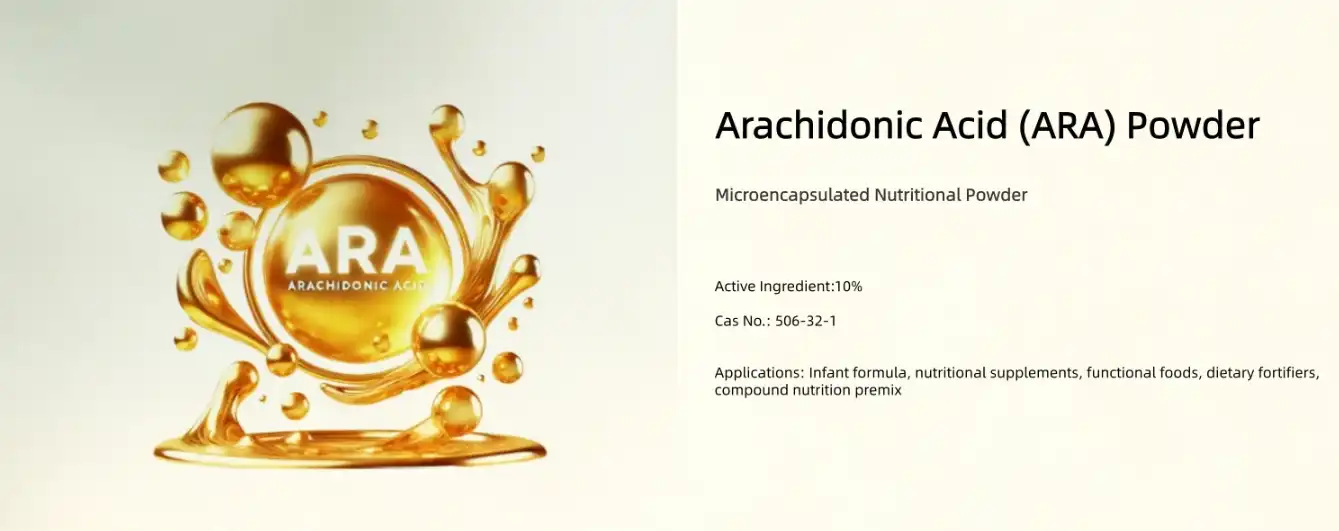
Understanding Microencapsulation of Arachidonic Acid Oil
Why Raw ARA Oil Is Difficult to Handle
There are a lot of double bonds in raw ARA oil that break down quickly when they come in contact with air, water, or heat. This oxidation causes flavors to go bad, smells to become rancid, and fatty acid profiles to break down. This is a big problem for businesses that make baby formula because they have to follow strict label claims while the product is in stores.
What Encapsulation Actually Does
. During microencapsulation, all of the ARA oil droplets are protected by a polymer shell. Lipids are mixed with many different nutrients, so air and minerals that speed up the oxidation process, like iron or copper, can't get to the shell directly. The powder form also gets rid of the issues that come up when working with thick oil when making a dry blend.
Bioavailability Is Not Compromised
A question that R&D teams often ask is whether the packaging shell makes it harder for ARA to be taken in. Researchers have found that digestive lipases in the digestive tract do a great job of breaking down food-grade wall materials. This makes ARA available for normal absorption. When the oil is encapsulated, bioavailability stays the same. This means that the powder form is still a good choice because it doesn't lose any nutritional value. These findings confirm that microencapsulated arachidonic acid oil powder delivers both stability and bioavailability.
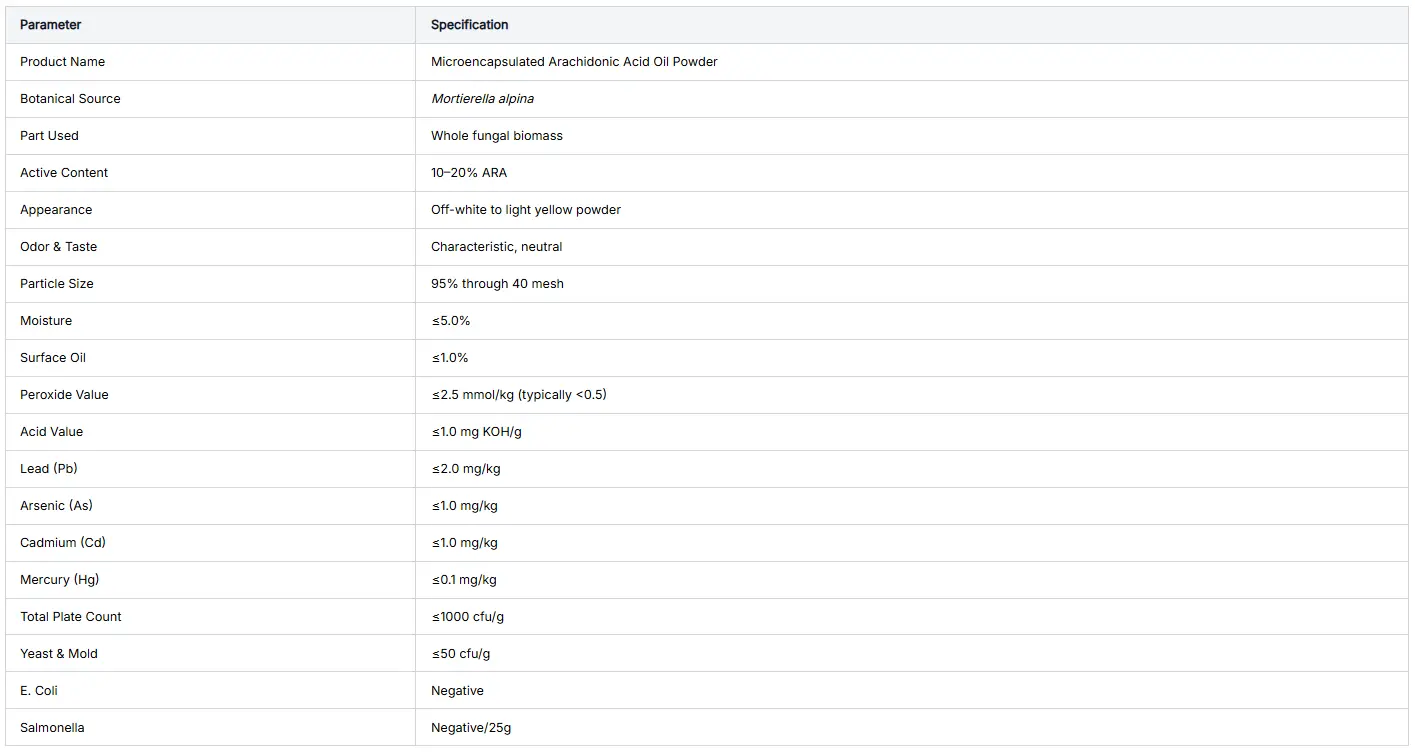
Step-by-Step Microencapsulation Process for Arachidonic Acid Oil
Emulsification and Feed Preparation
The first step is to mix oil and water in a steady way. Mortierella alpina ARA oil that has been refined is mixed with a water-based solution of wall materials. These are usually a mix of modified starch, sodium caseinate, and gum arabic. The coating is spread out evenly before the emulsion goes into the drying chamber. This is done by high-shear homogenization, which shrinks the droplets to the micron range.
Spray Drying Under Inert Conditions
The homogenized emulsion is spread out into tiny droplets by a two-fluid nozzle. These droplets then go into a heated drying chamber. This step is done at Easy Health while nitrogen blankets are in place to get rid of the oxygen in the drying area. The temperatures at the entrance are controlled so that the heat doesn't break down the double bonds in ARA. In the end, there is a dry powder with particles that are just the right size, between 150 and 400 microns. This powder works well for both flowability and keeping its shape.
Quality Gates During Production
Three different readings of the oil's surface are taken at different times during each production run. Before it is packed, any batch that has more than 1% oil on the top is thrown away. Gas chromatography (GC) checks the fatty acid profile of each lot to make sure that the ARA content stays between 10 and 20 percent and that thermal processing doesn't create any trans-fats. Powder made for babies is different from regular powder made for businesses because of these steps in the process.
Benefits and Applications of Microencapsulated ARA Powder
Nutritional and Formulation Advantages
In a baby's brain, ARA is the main omega-6 long-chain polyunsaturated fatty acid. Cell walls are made with its help, and it keeps the defense system in check. It doesn't combine with vitamins and minerals that are mixed in with baby formula Stage 1–3 powders when it's given as a powder. This means that dry-blend production lines can give exact amounts and there is no need for liquid injection systems.
Here are some of the most important ways that this powder format clearly makes production better:
- Infant Formula (Stage 1–3): The powder survives high-shear mixing and extended shelf storage without potency loss, meeting the ARA dosage requirements set by Codex Alimentarius and regional regulatory frameworks including China's GB 10765 and EU Commission Directive 2006/52/EC.
- Clinical and Medical Nutrition (FSMP): Enteral feeding formulas and elderly nutrition powders benefit from the neutral taste profile. The powder dissolves fully in cold water without leaving oily residues or clogging feeding tube systems.
- Functional Foods and Meal Replacements: Fortified cereals, nutrition bars, and meal sachets retain label claim accuracy through mechanical processing, variable moisture environments, and the full shelf life of the finished product.
Because of these things, powder is the best form for OEM manufacturers who need the same performance in different production runs without having to change the mix.
Why Powder Outperforms Liquid ARA in Manufacturing?
ARA oil that is liquid needs to be kept in a cool place and can only be injected with special tools. Also, dry-blend lines could get wet. There are no issues with the encapsulated powder going through standard automatic dosing systems. It can also be kept at room temperature and can handle the high humidity that is common in plants in Southeast Asia, the Middle East, and Latin America. These handling advantages make microencapsulated arachidonic acid oil powder a practical choice for high-humidity production environments.
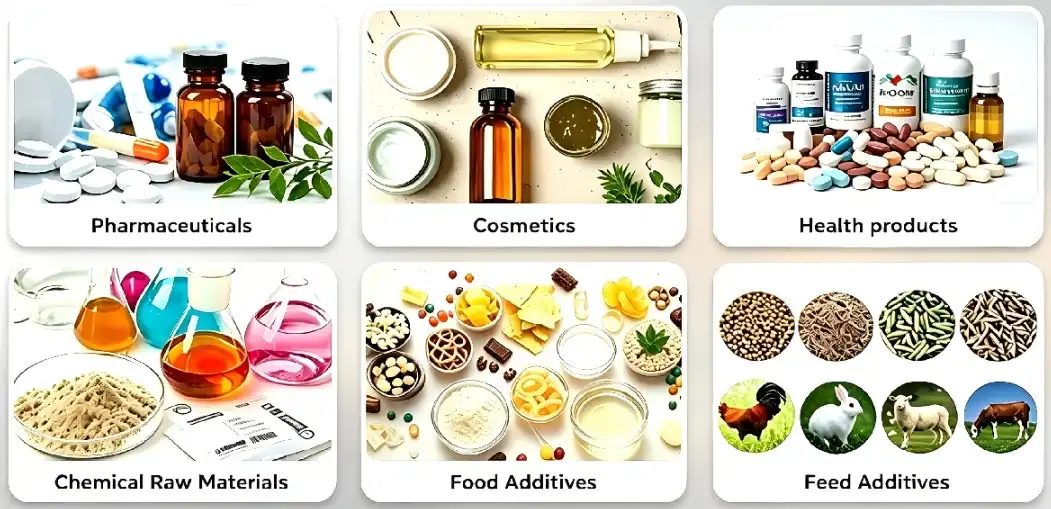
Comparative Insights for Procurement and Product Development
Powder vs. Liquid vs. Non-Encapsulated Powder
More than 3–5% of ARA powder that isn't enclosed usually has oil on the top of it. The powder oxidizes quickly, sticks together in silos, and doesn't last as long because of this oil. It's hard to do wet processing with liquid ARA oil because it needs to be moved in a cold chain and is very clean. ARA powder is the most stable and easy to check way to make regulated nutrition products as long as it is properly sealed and has a peroxide value below 0.5 meq/kg and a surface oil value below 1%.
What to Verify When Selecting a Supplier?
When it comes to feeding babies, picking a supplier isn't as simple as comparing prices. Before they agree to work with a new ARA source, the buying team should check that the following are true:
- Source purity: Confirm the ARA oil comes from 100% Mortierella alpina deep-liquid fermentation with no vegetable oil blending, which would dilute ARA content and create labeling compliance issues.
- Batch consistency documentation: Batch-to-batch variance must be ≤1% to avoid triggering formula re-registration, which in markets like China can delay production by six months or more.
- Infant-grade contaminant testing: The supplier must provide negative results for Cronobacter sakazakii (30g samples), GE (glycidyl fatty acid esters), and 3-MCPD — all required for infant-grade ingredient approval.
- Certifications: ISO, Halal, Kosher, and GMP certification, plus willingness to support factory audits.
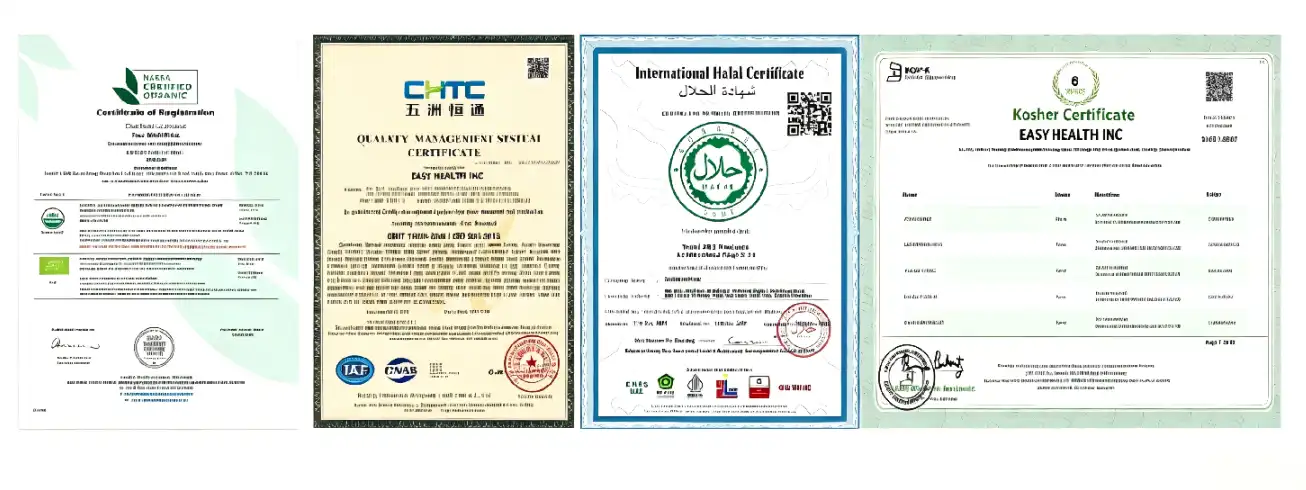
Procurement Guide — How to Source ARA Encapsulated Powder?
Sample and Evaluation Protocol
If you want to work at Easy Health, you have to send in a 500g to 1kg sample with a full COA, GC fatty acid report, OSI rapid oxidation data, heavy metal analysis, and microbiological proof. If you want to make sure everything is stable before agreeing to a trial production run, this paperwork package can be used.
Packaging and Lead Times
The goods are sent out in double-sealed, nitrogen-flushed aluminum foil bags inside fiber drums that are the right size for buying in bulk. The standard item can be sent out right away. By the agreed upon date for development, custom specs are complete. For example, the ARA loads are changed from 10% to 20%, and the wall material systems are changed. For two years, samples from every output lot can be tracked back to the source.
Conclusion
The volatile ARA oil is turned into a stable powder through microencapsulation. This powder is made from fermenting plants and meets all the requirements for making baby formula, FSMP, and clinical nutrition. After several quality checks and emulsification, the process creates a powder that has less than 1% oil on the surface, peroxide levels that are usually less than 0.5 meq/kg, and a difference of no more than 1% between batches. Buying teams that have to deal with formula registration deadlines and supply continuity risks should choose a supplier that has been fermenting foods for over 11 years, is fully certified for ISO, Halal, and Kosher, and has tested their products for infant use. This choice will protect both the product's quality and the supplier's good name with the government. These production and certification standards make microencapsulated arachidonic acid oil powder a reliable ingredient for infant formula and clinical nutrition applications.
FAQ
What is the shelf life of encapsulated ARA powder?
When stored in original nitrogen-flushed, vacuum-sealed packaging at ambient conditions, the powder maintains stability for 18–24 months. This significantly exceeds the 3–6 month usable window of raw ARA oil under comparable storage.
Does the spray-drying process create trans fats?
No. GC analysis performed on every production lot confirms zero trans-fat formation. The nitrogen-blanketed drying environment and controlled inlet temperatures protect ARA's cis double bond configuration throughout processing.
Can this powder be used in Halal- and Kosher-certified finished products?
Yes. Easy Health's manufacturing facility holds both Halal and Kosher certification. Supporting documentation is included in the standard shipment package for use in your own certification applications.
How does the powder perform in high-humidity manufacturing environments?
The double-layer encapsulation shell is designed to resist moisture uptake at typical factory humidity levels. Optimized particle sizing in the 150–400 micron range also prevents caking in hoppers and silos under humid conditions.
Is Cronobacter sakazakii testing provided as standard?
Yes. Every infant-grade lot is tested negative for Cronobacter sakazakii in 30g samples, along with GE and 3-MCPD screening, as part of the standard COA documentation package.
Partner With Easy Health for Your ARA Powder Supply
Easy Health is a company that makes microencapsulated arachidonic acid oil powder. They have been producing Mortierella alpina for more than 11 years and have ISO/Halal/Kosher approval as well as quality control records for babies. We can help you find a new ARA source to register a formula or switch to a tonnage supply. Our technical team can also help you request samples, review COAs, and set up factory audits. You can email devin@easyhealthbio.com to ask for a sample and full papers package.
References
1. Brenna, J. T., et al. "Docosahexaenoic and arachidonic acid concentrations in human breast milk worldwide." The American Journal of Clinical Nutrition, 2007.
2. Koletzko, B., et al. "Long chain polyunsaturated fatty acids (LC-PUFA) and perinatal development." Acta Paediatrica, 2001.
3. Shahidi, F., & Han, X. Q. "Encapsulation of food ingredients." Critical Reviews in Food Science and Nutrition, 1993.
4. Drusch, S., & Mannino, S. "Patent-based review on industrial approaches for the microencapsulation of oils rich in polyunsaturated fatty acids." Trends in Food Science & Technology, 2009.
5. Commission Directive 2006/52/EC. "Infant formulae and follow-on formulae." Official Journal of the European Union, 2006.
6. Favaro-Trindade, C. S., et al. "Microencapsulation of long-chain polyunsaturated fatty acids." Food Hydrocolloids, 2010.