Does Microencapsulation Protect Sunflower Seed Oil From Oxidation?
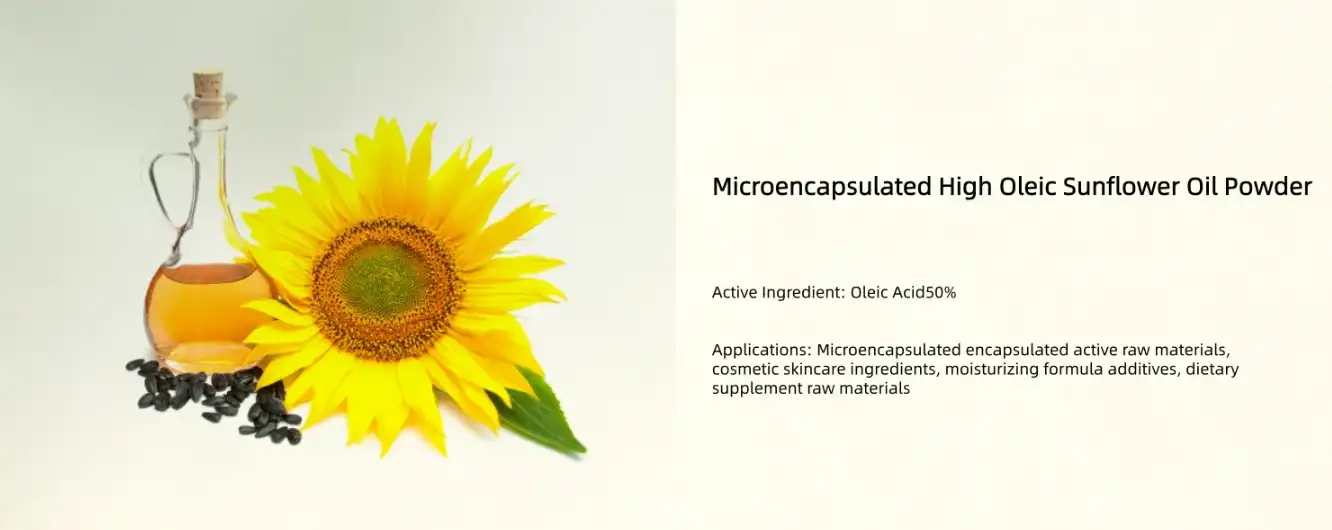
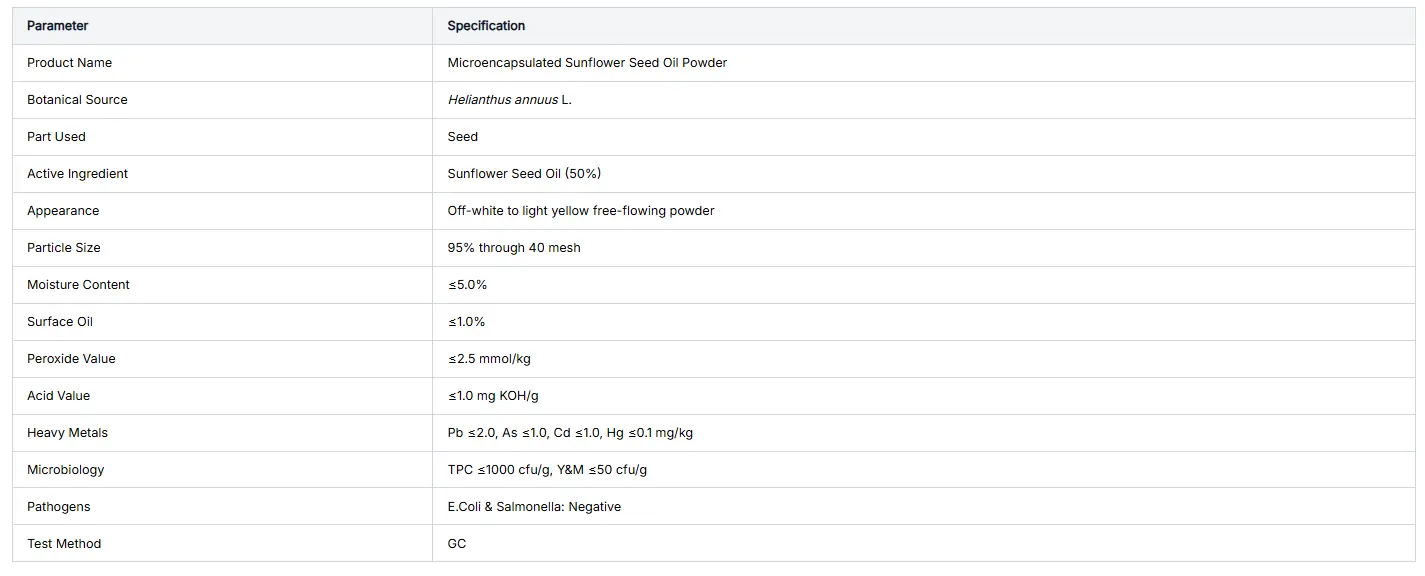
Yes — microencapsulation significantly protects sunflower seed oil from oxidation. By encasing the oil within a protective micro-matrix through spray drying, the technology creates a physical barrier that blocks oxygen, light, and moisture — the three primary triggers of lipid degradation. In the case of microencapsulated sunflower seed oil powder, this barrier keeps peroxide values at ≤2.5 mmol/kg and surface oil below 1.0%, delivering oxidative stability far beyond what liquid oil can achieve on its own. For food manufacturers, this translates directly into longer shelf life, cleaner labels, and more consistent product quality.
Understanding Oxidation in Sunflower Seed Oil
In business, the main thing that can go wrong with sunflower seed oil is that it can brown. When buying teams know why and how fast something happens, they can better choose the ingredients they need.
What Triggers Oxidative Degradation
Oxygen can easily break down polyunsaturated fatty acids. A lot of them are in sunflower oil. A chain reaction can begin with lipid peroxidation and air, bright light, or low heat. The reaction may only last a short time. A small bit of vitamin E is lost and the food starts to smell bad. The end result is not as good because of all of these things.
Liquid Oil vs. Powder: A Stability Comparison
After 6 months at room temperature, sunflower oil that is liquid tends to lose some of its quality. POWDER forms can make this last 18–24 months if they are made right. The most important thing is that the oil doesn't touch the surface while it's being made. This is because oil and fat on the powder's surface that aren't covered burn off at the same rate.
Why Standard Sunflower Oil Falls Short in High-Oleic Applications?
A lot of linoleic acid can be found in sunflower oil. It also has about 20–25% oleic acid. High-oleic types have at least 80% oleic acid. Because it is a monounsaturated acid, oleic acid is much more stable when stored in the same way. Also, it's not as likely to rust. High-oleic oil powder is more stable because it has different kinds of fatty acids. This fatty acid profile is what makes microencapsulated sunflower seed oil powder more oxidatively stable than standard sunflower oil powder.
Microencapsulation Technology: How It Protects Sunflower Seed Oil?
Sealing isn't just "putting oil in a shell." A certain step in the process changes the quality of everything that comes after it.
How Spray Drying Creates the Protective Matrix
By spray drying at low temperatures, a steady mix of oil and water is broken up into tiny drops. The drops dry out quickly and shape into rounds. A wall made of modified starch goes around the oil core. That wall stuff keeps the oil on top below 1%. Because the shell is so thick, water and air can't get to the mixed fatty acids inside.
Why Encapsulation Technique Selection Matters
When you spray dry, coacervate, or use fluidized bed coating, the particles, oil loads, and release patterns are all different. Natural vitamin E and other chemicals that break down when heated should be dried at low temperatures, which is best for large amounts of food. For that reason, Easy Health doesn't add TBHQ or BHA to their goods, so they keep around 600 parts per million of natural vitamin E. This makes sure the list of ingredients is clean.
The Role of Surface Oil Control in Shelf Life
The fat that isn't inside the matrix is called surface oil. Taking it off with a solvent is the only way to really tell how well the seal worked. It's not good if the surface oil reading is more than 2%. It means that the process is being closely watched if it's less than 1%. Easy Health's sunflower oil powder can be kept for 18 to 24 months because it keeps the oil on top at less than 1%.
Benefits of Encapsulated Sunflower Oil Powder for B2B Applications
Manufacturing an oily liquid into an encapsulated powder improves handling and formulation choices. The key B2B buyer advantages are:
Vitamin E at ≥600 ppm may delay oxidation and eliminate the need for synthetic antioxidants like TBHQ or BHA, depending on formulation and labelling restrictions. This aids bakery, sports nutrition, and other food product clean-label development.
Powder handling and dry mixing may be possible with a 95% passing through a 40-mesh sieve and a melting point over 60°C. Flowability, caking resistance, and performance during warm-weather transit rely on carrier system, moisture, and packing.
The powder dissolves quickly in cold water without leaving an oil film, making it acceptable for beverage powders, protein shakes, and instant oatmeal compositions, subject to application testing.
Encapsulation may delay fat release in bread premixes until baking warms them. Depending on formulation and processing, this may reduce premature fat migration and improve dough handling and crumb structure.
These functional properties make microencapsulated sunflower seed oil powder a versatile ingredient for beverage, bakery, and dry-blend applications.
Comparing Encapsulated Sunflower Oil Powder Suppliers
Not all oil powders on the market offer the same protection. Procurement teams evaluating suppliers should look beyond price per kilogram and assess the technical depth behind the product.
Quality Certifications as a Baseline Screen
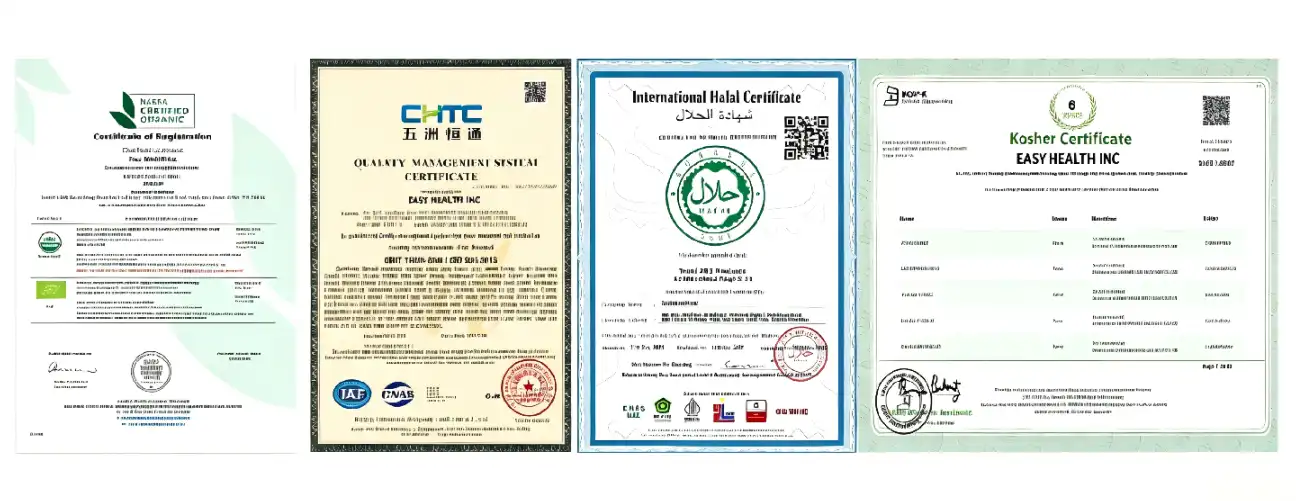
ISO, HACCP, Halal, Kosher, FDA registration, and USDA NOP organic certification are the baseline documents a credible supplier should carry. These certifications confirm that the manufacturing environment and quality controls meet international standards — a prerequisite for brands selling into regulated markets like the United States, Europe, and the Middle East.
Batch Consistency and Traceability Documentation
A supplier worth working with at scale can provide full traceability from raw material sourcing through final shipment, with batch-level certificates of analysis (CoA) showing GC-verified fatty acid profiles, peroxide values, moisture content, and microbiological results. This documentation package is what protects your brand during compliance audits.
OEM Flexibility and Lead Time
For a procurement manager juggling many SKUs, OEM customization capabilities is a must. Easy Health provides custom specifications with standard products that ship immediately and customized formulations that are usually completed in 3-5 days. This response window allows just-in-time supply chain planning without the need for excess safety stock. This flexibility makes Easy Health a strong partner for microencapsulated sunflower seed oil powder programs with diverse SKU requirements.
Practical Guidelines for Procurement and Storage
If you choose the right one and treat it properly, the coating will keep the oil powder safe for a long time.
Matching Specifications to Application Requirements
It works well for snack bars, baking mixes & drink powders with a 50% oil load. The particles are 95% through 40 mesh. Call your supplier to check if they can fulfill your demands for a different wall material or oil load before you make a complete purchase. You should chat to them about topics like if you need a wall covering created from plants to get vegan approval.
Storage Conditions That Preserve Shelf Life
Keep the powder in a dry environment with less than 60% humidity and below 25°C. Over time, the matrix of the capsule might soak in water. This may make the shell thinner, which would allow the oil core shine through. When you wish to transport a lot of products, you generally place them in multi-layer foil bags with desiccant.
Accelerated Stability Testing Before Scale-Up
Faster stability data should be asked for before you order a whole container. Most of the time, this is done every 12 weeks at 40°C and 75% RH. So your R&D team can observe how the product will really operate. This pleases them with it before it is built.
Conclusion
The magic word is microencapsulation. Chemical changes are made to an oil to make a steady, dry, clean-label ingredient that can be used in baking, drinks, baby food, and sports nutrition. For this technology to work best, the base oil needs to be high-oleic (≥80% oleic acid), the surface oil needs to be tightly controlled (≤1.0%), and the natural vitamin E needs to be kept because the temperatures need to be low. Managers who buy things look for two different things in encapsulated lipid ingredients: a reliable annual supplier and a one-time deal. A reliable annual supplier has verified batch documentation, certified manufacturing, and supply logistics that are quick to respond. These criteria are what distinguish a dependable microencapsulated sunflower seed oil powder supplier from a transactional one.
FAQ
Does microencapsulation really extend shelf life compared to liquid sunflower oil?
If you leave raw sunflower oil out in the open for 6 months, it does go bad. It will stay healthy and tasty for 18 to 24 months if you store a high-oleic powder with controlled surface oil in the right way.
Is this powder suitable for infant food formulations?
Yes, as long as they follow the rules of the market they were made for. Sunflower oil powder from Easy Health is Halal, Kosher, and ISO approved. It also doesn't have any added vitamins, so it's clean-label dog food.
What is the minimum order quantity, and how fast can orders ship?
Everyday specs are kept on hand so they can be sent out right away. Most unique recipes are sent out in three to five days. Get in touch with Easy Health to find out the MOQ and wait times for your project.
Can the powder be used in cold-water beverage formulations without extra equipment?
Yes. The powder is meant to be mixed right away with cold water. You don't need any other tools to mix the oils because it makes a stable mix that doesn't split the oils or leave a film on top.
Do you offer vegan-certified versions?
Yes. What you eat that comes from animals can be switched out for things like modified starch that come from plants. When you ask for a sample, make sure you ask for this step.
Partner with Easy Health for Reliable Encapsulated Sunflower Oil Supply
Easy Health has helped food companies all over the world for the past 11 years. Some of the groups that have approved our microencapsulated sunflower seed oil powder are ISO, HACCP, Halal, Kosher, and the FDA. It's not expensive and comes with all the paperwork you need to keep track of it. Our tech team gets back to you quickly whether you need a standard guideline or a unique OEM recipe. Talk to our microencapsulated sunflower seed oil powder partner team at devin@easyhealthbio.com to get samples right away.
Drusch and Mannino did a study in 2009 on patent-based ways to put oils that are high in polyunsaturated fatty acids into small capsules.
A study by Hogan, S. A., McNamee, B. F., O'Riordan, E. D., and O'Sullivan, M. looked at how well sodium caseinate and carbohydrates mix and how they form microcapsules.*The Dairy Journal of the World.
Kohlberg, Laufenberg, and Kunz wrote it in 2004. Microencapsulation with different cellulose to keep fish oil stable.This is a free magazine about diet and food science.
References
1. Drusch, S., & Mannino, S. (2009). Patent-based review on industrial approaches for the microencapsulation of oils rich in polyunsaturated fatty acids. Trends in Food Science & Technology.
2. Hogan, S. A., McNamee, B. F., O'Riordan, E. D., & O'Sullivan, M. (2001). Emulsification and microencapsulation properties of sodium caseinate/carbohydrate blends. International Dairy Journal.
3. Kolanowski, W., Laufenberg, G., & Kunz, B. (2004). Fish oil stabilisation by microencapsulation with modified cellulose. International Journal of Food Sciences and Nutrition.
4. Rubilar, M., Morales, E., Contreras, K., Ceballos, C., Acevedo, F., Villarroel, M., & Shene, C. (2012). Development of a soup powder enriched with microencapsulated linseed oil as a source of omega-3 fatty acids. European Journal of Lipid Science and Technology.
5. Velasco, J., Dobarganes, C., & Márquez-Ruiz, G. (2003). Variables affecting lipid oxidation in dried microencapsulated oils. Grasas y aceites.
6. Shahidi, F., & Han, X. Q. (1993). Encapsulation of food ingredients. Critical Reviews in Food Science and Nutrition.